I almost forgot…

…that another key difference between bialys and bagels is in the way you eat them. You don’t slice a bialy cross-wise like you do a bagel. Rather you just eat them whole, preferably fresh and warm and with a schmear of butter or cream cheese over the top. If they’re small you can gobble them down in a couple of bites. The smaller versions are only about 3 inches across. Most commonly they’re about six inches across, but I’m told that the original Polish bialys could be up to 9 inches across. And they weren’t just for breakfast in Poland a hundred years ago, oh my no. Back then you ate them with any meal of the day.

READ ON
What is a Bialy?

Bialys are small ring-like rolls, though instead of a hole in the middle there’s a flat crater that’s usually filled with chopped onions. They’re reminiscent of bagels but ultimately quite different. Sure they’re round, traditionally Jewish and made with high-gluten flour, but that’s where the similarity ends. Unlike bagels they aren’t boiled before they’re baked. Also unlike bagels the dough isn’t sweetened with malt syrup or sugar. So on the one hand they’re a rather basic bread: flour, yeast, salt, water. They aren’t even glazed, so they’re pale and floury on the outside and fluffy on the inside.

READ ON

What’s the difference between cream cheese and quark (farmer’s cheese)?

That’s what reader Gerhard in Vienna wants to know. We here in the States know quark as “farmer’s cheese” or “fresh cheese” and, as in northern Europe, it is often used as a filling or to make cheesecakes. Gerhard writes:

What is the difference between creamcheese (like Philadelphia) and curdcheese (called Topfen over here or Quark in Germany). One difference is surely the huge amount of fat in creamcheese compared to even the fattest variety of curdcheese; another would be that there are several ingredients in creamcheese (like salt or carob gum) while curdcheese is… well, all milk. And there is a taste-difference of course, and an enormous price-difference. I always considered both to be fresh cheese and I wonder when to use one over the other… curd cheese in a cheesecake for instance is much more flavorful and light, and curd cheese also seems to be the much more natural option….?

READ ON

A Little Filo Dough History

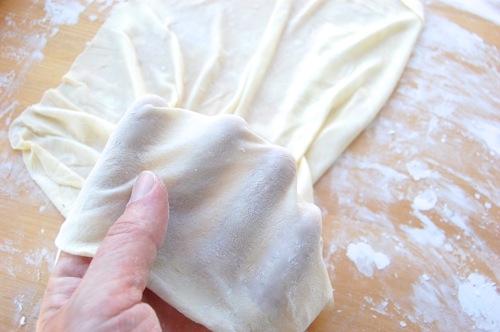
It’s funny how unusual questions tend to come in two’s and three’s. When that happens it makes me wonder if there’s a pastry class out there somewhere conducting an essay exam. Anyway, the question goes like this: when did the Greeks first start using filo dough?

It’s hard to say precisely. As far as I know the ancient Greeks didn’t have thin, filo-like doughs. Their hostile eastern neighbors the Persians, however, did. Ultra-thin doughs have a long history in the Middle East, dating back perhaps to the ancient Egyptians. The Persians invaded Greece in 492 B.C. and then again in 480 B.C., but didn’t stay more than a year in either case. No time for dessert-making classes, in other words.

READ ON

Next Up: Bialys

Reader Carmy requested these a couple of weeks ago – how can I resist? I made these in a bakery I once worked in and I haven’t eaten a good one since (the owners had a great formula). I’ll be interested to see if I can reproduce that same yeasty, oniony flavor. Let’s go!

READ ON

On the Gelling Problem

Several readers have written in to say they’d love to make a pecan pie, but they’ve been burned too many times with a filling that didn’t gel. There’s only one place to look for an answer to that problem: the eggs, as they’re solely responsible for creating the gel that all custards depend upon. The way I see it there are two potential areas of failure.

READ ON

Making Pecan Pie

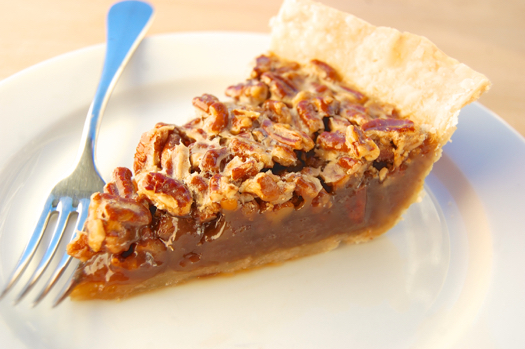
Thanks to some terrific reader input I made the best pecan pie of my life yesterday. It’s the little tweaks to the recipe that really make the difference. The devastating effects of this pie were on display this morning when Mrs. Pastry’s badly shaken colleague brought the empty plate to her office. I only gave him the finished pie (minus the above piece) last evening. Evidently he set it down in front of his in-laws and something of a frenzy ensued. I don’t have full details because he was speaking rapidly and in Spanish, but it was something to the effect of: there was pie…on the ceiling…on the walls…on the windows…my God…it was horrible!

READ ON

Happy MLK Day!

For those who have it off and for those who don’t! It’s awfully easy to forget about the real people behind these federal holidays (Washington, Columbus, our veterans both alive and dead). For those who might need a little primer to get in touch with the meaning of the day, and to get a sense for the sense for the moral clarity and iron resolve King possessed, you couldn’t do better than his Letter from Birmingham City Jail.

READ ON

Pecan Pie Recipe

This pecan pie recipe incorporates lots of reader wisdom: extra nuts to keep it from getting too sweet, a toasting step for extra flavor, and a little vinegar for interest. I should add that lemon zest and bourbon also make terrific enhancements. This formula represents my best attempt to stay within the bounds of a classic pie while still incorporating what corporate types might call “best practices”. But do as you see fit!

1 recipe standard or perfect pie crust.
3 ounces (6 tablespoons) unsalted butter
7.5 ounces (1 cup packed) light brown sugar
1/2 teaspoon salt
3 eggs, room temperature
8 ounces (3/4 cup) light corn syrup
2 teaspoons vanilla extract
0.65 ounce (2 teaspoons) white or cider vinegar (1-2 tablespoons of Kentucky bourbon or a heaping teaspoon of fresh lemon zest are promising alternatives)
7.5 ounces (2 cups) pecans

READ ON