What about the viennoiserie?

Who bakes that? The boulanger or the pâtissier? An excellent question, reader Tom! The viennoiserie, loosely translated as the “stuff from Vienna”, is the portion of the French baking canon that hails from the former Austrian empire. Most people are quite surprised to discover all that’s in it, the stereotypically French items that it turns out aren’t really French at all: croissants, brioche, pain au chocolat, the list goes on.

The products of the viennoiserie all share certain characteristics. First they’re all made, at least classically, from fine white wheat flour. Second, packaged yeast cultures are critical ingredients (“brewer’s” yeast back in the day, granulated yeast products today). These concentrated yeast populations — which you could never achieve via natural “starter” cultures — create a quick rise and by extension the fluffy, light and/or crispy textures that are synonymous with “Vienna” breads. Lastly they are rich. The Viennese have never been content to leave bread alone. They add milk. They add eggs. They add butter. And the results speak for themselves: wow.

READ ON
Go Cards!

It’s a happy but bleary day here in Louisville as a result of the Cardinals clinching the NCAA basketball championship last night. But it ain’t over yet! Amazingly, U of L’s women’s team is also in the NCAA finals and that game is tonight. Talk about a rare treat – two nights and two national […]

READ ON

Team Effort of the Warring Tribes

Where does brioche Polonaise come from? Not Poland, at least I haven’t found any reference to Poland in my research so far. Brioche Polonaise is a Parisian sweetmeat, perhaps a take on a Polish-style cake, probably invented in the mid-to-late 1800’s, about the time that the fluted brioche mold became popular. Today it’s something of a staple of the Parisian pâtissier’s repertoire, though it’s little known in the States.

What makes brioche Polonaise so remarkable is not its name or its origin, but the fact that it’s a product of both the boulangerie (bakery) and the pâtisserie (pastry shop).

READ ON

“Chocolate Smack” Motherlode Hits the Streets

German police reported today that a truck containing five metric tons of Nutella has been stolen from a parking lot in the town of Bad Hersfeld in the central part of the country. The load is reportedly worth some $21,000 U.S., but that of course is its bulk value. Once the addictive cargo is portioned out for sale in hits of a few grams each, its street value will be inestimably higher. No doubt pale, trembling junkies in slums all over Europe are already lining up for their chance at a cheap, quick ride on the cocoa-hazelnut horse.

We here at joepastry.com believe in pragmatic solutions to these sorts of broad-based societal ills. Which is why this morning we’re pleading with any chocolate paste users out there who might be listening to please, put your own safety first. If you must indulge your addiction, do it out of the presscake dens and off the street corners. With a little equipment and some know-how you can learn to make your own at home. Yes, mainlining homemade Nutella may be sad and ugly, but at least it’s safe, and hopefully a first step toward getting the help you need.

READ ON

Next Up: Brioche Polonaise

Every time I start to get simple I feel the urge to go get all fancy again. Since I’ve gotten about as simple as a baker can get over the last week (at least where ingredients were concerned, flatbread techniques turned out to be surprisingly involved) I figure it’s time to rebound with something rather […]

READ ON

Making Lavash

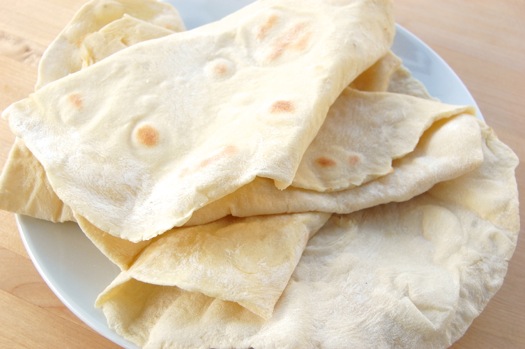
Now THIS is something I’m very excited about: homemade lavash. Wrap up some of your best sandwich fixin’s in some of this, straight from the oven, and get ready for the blank stares of wonder. In my universe lavash is the ultimate “wrap” bread, far preferable to tortillas, not only because it’s more flexible and tender, but because it’s larger and can more easily enclose…lots of stuff. Try this and you’ll probably never go back. Start by getting your ingredients together. Put the dry ingredients in the bowl of a stand mixer fitted with a paddle.

READ ON

The more I learn about flatbreads…

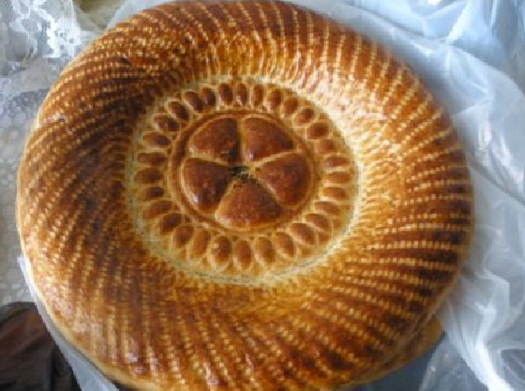
…the more I realize I’m woefully under-utilizing the baking space in my brick oven (it has a perfectly good ceiling!). These breads from Uzbekistan are truly amazing, both in the way they look and they way they’re baked, which is quite similar to naan and lavash. However whereas naan and lavash are adhered to vertical oven walls, these truly defy gravity stuck to the curving ceilings of barrel-style ovens. Check it out — and how about that groovy round-ended rolling pin? Those little decorative stamps they use in the center are pretty hip too. And if you’re wondering how they get that nifty scalloped edge on the sides, it’s a spoon! I tell you, breads don’t normally get me all that excited, but the world of flatbreads is truly amazing. Where can I get an oven mitt that reaches my neck? Thanks to reader Dani for putting me on the trail!

READ ON

Lavash Recipe

This is another very simple dough that you can have ready in less than two hours. It contains:

2 teaspoons instant yeast
16 ounces (about 3 1/4 cups) bread flour
2 teaspoons salt
12 ounces (1 1/2 cups) water
3 tablespoons olive oil

In the bowl of a stand mixer fitted with a paddle, stir together the dry ingredients. Combine the water and oil and add it to the mixer. Keep stirring until the dough comes together, then turn up the mixer to medium high and beat for about 5 minutes until the dough is smooth and elastic. It will be quite wet…that’s a good thing.

READ ON

OK, just ONE more flatbread.

Lavash is my favorite flatbread. It’s extremely thin and is traditionally made in large sheets. When it’s fresh it’s ideal for making wrap-type sandwiches, and is far superior to tortillas for that purpose. I’ve never tried making it at home since it’s tough to get the heat just right. Leave this ultra-thin bread in the oven too long and you get crackers. Too short and it’s pale and pasty.

How is lavash traditionally made? Like naan it’s slapped against the vertical wall of a large clay pot oven, though in the case of lavash a large pillow applicator makes the job easier. Here are some Armenian women doing that very thing. Cool, no? This bread is popular in Iran, Iraq, up into Armenia, Azerbaijan and the Eurasian steppes. I have no idea how I’ll pull it off.

READ ON

Brisée, Sucrée, Sablée

Reader Brendan also writes:

Also, a quick definition request. Sablée, brisée and sucrée. I understand the basic concept but they are so interchangeable between different sources i’m finding it hard to nail down the exact terms.

Sure thing, Brendan! Think of pâte brisée as your standard savory tart crust. It’s roughly analogous to American pie crust, though the French don’t worry about “rubbing in” butter in the same way we do. They usually make theirs with a mixer as they favor a much more even distribution of fat through the dough. Sometimes they’ll even go so far as to add egg yolk (at which point it’s known as pâte à foncer). Either way, the end result is a crust that is both finer of crumb and stronger than American pie crust, but that lacks a pie crust’s flakiness.

READ ON