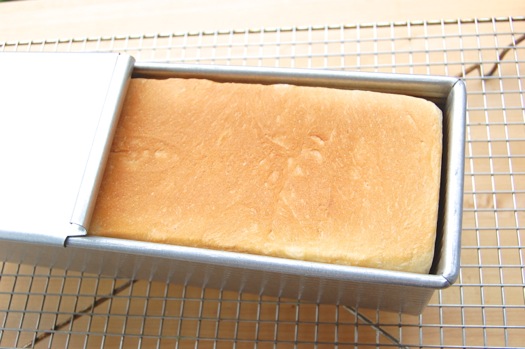
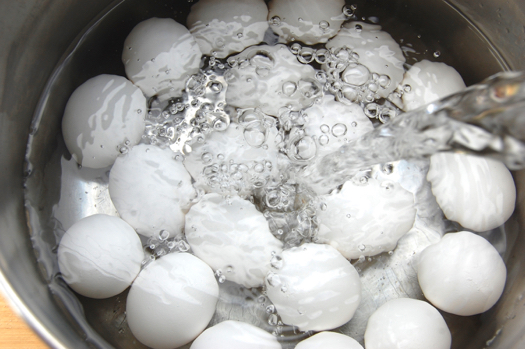
Anyone who’s ever made a pudding cake has, for all intents and purposes, employed the tangzhong method. It’s the same basic idea: you add a pre-prepared starch gel to your batter/dough and what you get in return is a finished product that’s higher and lighter than it would otherwise be, that retains more moisture and that has a very tight and even crumb. The big difference of course that in a tangzhong (essentially “soup starter” in Chinese) there’s no sugar or flavorings in the mix — just flour and water combined at a ratio of 1-5 and cooked to roughly 150 degrees Fahrenheit.
But then what does the tangzhong gel do in the bread dough? It’s a very good question since baked bread is already a starch gel to some extent. But let’s back up a bit. Flour (white flour) as you’ll recall is nothing more than the finely ground endosperm of the wheat berry. Think of the endosperm as a dense pack of very long and stringy starch molecules all packed in together. Grind it and you get endosperm granules, which I think of as tightly bound bundles of sticks.
READ ON