How do you say “eek!” in French?

Reader Lee alerts me to the initial reactions to the new Pierre Hermé Pastries, which technically isn’t out yet but which is available on Amazon. Apparently the book, while visually stunning, is rife with recipe and language errors. Of course errors are nothing terribly new in the realm of celebrity cookbooks, nor among cookbooks translated from other languages. I guess in this particular instance the combination is pretty devastating. It would be a shame for an average cookbook author, but it’s inexcusable for a pastry chef of Hermé’s renown. That’s gonna hit him where it hurts the most — right in the brand!

READ ON
On High-Heat Baking

Of course most home ovens don’t go above 550 or so degrees Fahrenheit. That’s because for most people even 500 is more than enough. It isn’t for me, which is why I built a brick oven in my back yard. That thing can sustain a heat of over 850 if need be. If worse comes to worst I’ll go that route, but it’s no fun for me when I’m making something that no one else out there can do. And anyway I’ve seen some very good looking pastéis de Bélelm/nata that were baked at 550.

READ ON

What are Pastéis de Belém?

They’re actually pastéis de nata, which is to say, custard tarts. The “Bélem” comes from the name of the neighborhood on the outskirts of Lisbon where they were first made. “Cream pastries” is the literal translation, but outside the Portuguese-speaking world they also go by the name of “cream tart” “egg pastry” or “egg tart.” They are the de-facto national pastry of Portugal, though in recent years they’re become hugely popular in parts of Southeast Asia.

READ ON

A Little Housekeeping

We made a couple of technical adjustments over the weekend here at Joe Pastry World Headquarters. Nothing most of you will notice, save for the fact that we fixed a little bug that’s kept you folks on mobile devices from accessing the site. I still don’t have a mobile-specific site up (what do you think, […]

READ ON

Next Up: Pastel de Belém

I’ve been baking over my head the last several weeks, taking on recipes I know nothing about and succeeding about as much as you’d expect. The smart thing at this point is to retreat into something comfortable and familiar. But then why do the smart thing? Why not tempt fate even further, try to climb one of the Everests of pastry wearing nothing but sneakers, and risk total disaster and humiliation? Is that even a question? Let’s go!

READ ON

Making Pão de Queijo

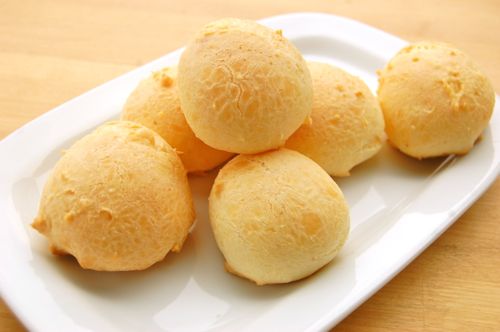
Pão de queijo (pãos de queijo?) are a lot like gougères, but with a little less fat and zero gluten. Why’s that? Because they’re made from tapioca starch, a derivative of the cassava root, not wheat flour. This gives them a somewhat different texture, like a soft wheat bun when cool, like a hot air ballon made of molten cheese when warm. They’re really quite a delicious experience either way, no wonder they’re one of the national foods of Brazil.

READ ON

Pão de Queijo Recipe

One of the more interesting quirks of the human brain (or at least MY human brain) is that once it starts down a path with the wrong set of assumptions it doesn’t return easily to the right track, even if that track is relatively easy to get onto. So it was with me and pão de queijo. Squaring the right technique (since there are at least three possibles) with the right cassava product (since there are at least three of those as well) took me the better part of a week. Thankfully with a little help from some of my readers, I finally arrived at the right recipe, cassava flour and technique. Whew! You’ll need:

READ ON

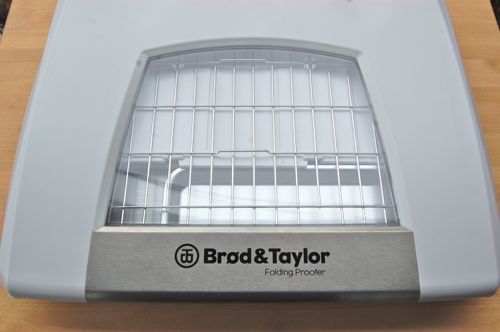
Product Review: The Brod & Taylor Folding Proofer

As home cooks and bakers get more sophisticated, they’re becoming increasingly frustrated by the limitations of their standard array of kitchen appliances, i.e. the contemporary quartet of refrigerator, freezer, oven and microwave. They see the results professional culinarians get from subtle manipulations of temperature and they want the same thing at home. Up until very recently, the vast majority of us have been completely out of luck on that front.

READ ON

What’s a good substitute for nuts?

…asks reader Suzanne from South America (she didn’t tell me where). Suzanne, there are a lot of good substitutes for nuts, since they have no real functional purpose in a recipe other than to add texture and/or flavor. Thus you can replace them with lots of things. More flour is the most obvious choice. Maybe supplement with a little flavoring of some kind and…problem solved!

But then most people miss nuts more for what they bring to a recipe texturally. For these folks there are all sorts of things to choose from: ground up granola, wheat bran, soy nuts, toasted chickpeas or other legumes…the list goes on. Head to a health food store that carries bulk “veggie” snacks and you’ll find all kinds of things. Suzanne says she already uses ground up stale cookies, which is genius.

READ ON

Can you freeze chocolate?

That’s an excellent question, reader Clare. It something that’s surely on the minds of many whose Valentine’s bounty exceeds their capacity to consume it. Yes, there are those people out there.

But to the question: can chocolate be frozen? The answer is that it can be, but it must be frozen carefully, and even when it is frozen carefully, it can still be damaged (at least cosmetically). The reason is because freezing accelerates the crystallization process. Certainly for water, but also for other key chocolate components like fat and sugar. It’s crystallized fat and sugar that’s responsible for the “bloom” one finds on chocolate that’s been stored for too long.

READ ON