Where does Black Forest cake come from?

It’s not the Black Forest if that’s what you were thinking you goof. Whatever gave you that dumb idea? The birthplace of Black Forest cake was a small university town called Tübingen, which truth be told is only a stone’s throw from the real Black Forest in the extreme southwestern corner of Germany, right along the border with France and Switzerland. No doubt the forest did influence the thinking of the pastry chef who invented it, a fellow by the name of Erwin Hildebrand. He was the one who first conceived the magnificent combination of chocolate spongecake, sour cherries, whipped cream and kirsch — in 1930.

READ ON
And going and going and going…

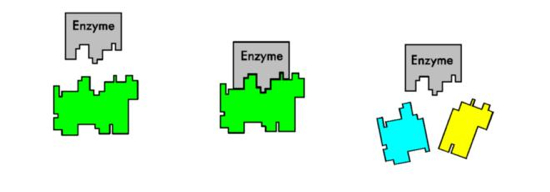
Reader Nico has an interesting question on the subject of enzymes: do they ever quit? Which is to say, do they stop working at some point just naturally, run out of go-juice or something along those lines? Nico, I’m not an organic chemist but when’t the last time I let that stop me? I believe the answer is no. Enzymes are not living organisms, so as far as I know they don’t run out of energy or anything like that. They are organic molecules (proteins) that living organisms use to perform very specific chemical jobs, converting x molecule — but only x molecule — into molecules y and z if that makes sense.

READ ON

Next Up: Black Forest Cake

I still have some sour cherries left from The Great Sour Cherry Windfall of 2014. Just enough for a cake filling by my reckoning. Let’s see…what famous cake that I haven’t made yet on the blog that calls for a filling of sour cherries? Don’t tell me now…don’t tell me…

READ ON

How to Mess Up Enzymes

Reader Hermes asks, since I mentioned that heat treating is only the “most popular” way to denature (wreck) browning enzymes in fruit, what other methods are there? A great question I’d be happy to answer, Hermes.

Acids do a great job of stopping browning enzymes from going to work on phenols. Depending on how strong they are they can slow down the the functioning of an enzyme, stop it from functioning altogether, or denature (gank) it. Ascorbic acid (lemon juice) and acetic acid (vinegar) are popular for this purpose.

READ ON

Making Caged Pears (Poires en Cage)

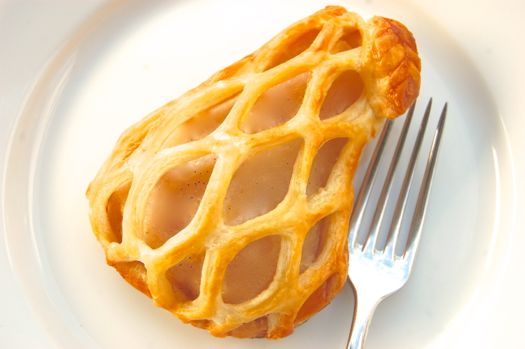
Pears are too dangerous to be allowed to roam freely, hence this ingenious preparation which safely confines them behind bars of buttery pastry. For goodness’ sake don’t go sticking your fingers in there. What goes in that cage may not come out. Still if you’re the kind of baker who craves adventure and doesn’t mind working around savage fruit, then these might be for you.

READ ON

Why bother poaching pears…

…when you’re just going to cook them in the oven anyway? A good question, reader Toni. The answer is: enzymes. Pears will turn brown when they’re baked if they aren’t poached first. That browning is a result of enzymes that activate when the flesh of the pear is cut.

In an uncut pear these browning enzymes (polyphenoloxidase and peroxydase) are kept inside special compartments in the flesh of the pear, away from both oxygen and the compounds these enzymes commonly interact with, molecules called phenols. The trouble comes when those tiny structures are damaged by, say, cutting or bumping the fruit. At that point the enzymes are freed from their little holding cells and start to run wild. With plenty of oxygen at their disposal (which they need in order to do their job) they hop from phenol to phenol breaking each one into pieces. The resulting wreckage is a variety of smaller molecules, some of which are melanins, or brown pigments. The longer cut pear flesh is exposed to oxygen the browner it will get until all the phenols on the cut surface of the flesh have been sliced and diced, and the flesh is a mottled tan.

READ ON

Paint and Its Consequences II

I liked the job on the house so much that I asked the crew to do the kitchen. They showed up yesterday, again a week ahead of schedule. Who are these people? But I can’t cook or bake at the moment. The kids can’t believe their luck that they get carryout two night in a […]

READ ON

Seasoning a Pan With a Wooden Handle

Reader Annemarie writes:

This is off topic for this question, but something that you might be able to help me with. A few months ago I won a “Le Crueset” cast iron saute pan, with a wooden handle. I know that you are supposed to season the pan before use, but I’ve only been able to find methods that involve putting the entire pan into the oven. I’m reluctant to do that with the wooden handle. Can you suggest a method? I’ve tried just heating oil in the pan, but that doesn’t do the trick.

Hey Annemarie! First, congratulations on a nice pickup! This is an obvious question, but did the pan itself come with any instructions? I ask because Le Creuset is obviously a very respectable brand, as such the odds are very good that it’s pre-seasoned and all you need to do is start using it. In fact “just using it” is good advice just generally for cast iron. People get overly obsessed with seasoning these days. Plain ol’ use will accomplish the task quicker than you might think.

READ ON

Why do cheesecakes crack?

Reader Rick is sick and tired of having to disguise the cracks in his cheesecake with sour cream toppings and fruit and wants to know what he can do about it. Rick, I have a few ideas.

Cracks in cheesecakes are caused by temperature problems, and are usually a result of one region of the cake heating faster than another. Large cheesecakes are especially crack-prone since the areas closest to the rim of the pan cook and firm up first. If this happens too abruptly the outer portion of the cheesecake can shrink and pull away from the softer inner portion.

READ ON

New Oil, Old Oil

Apple fritter lover Emma wants to know whether it’s OK to combine fresh oil with older oil when you’re frying. She says she keeps seeing recipes that specifically instruct her never to do that. I’ve seen those as well, Emma, and all I can think is that none of these folks have done very much frying, for not only can you combine old fry oil with new, you absolutely, positively should.

READ ON