Where does rice pudding come from?

That’s a bit of a toughie. Grain gruels are the oldest prepared foods on the the planet. That being the case it stands to reason that rice pudding was first invented in China where rice was first cultivated on a large scale. However if I were to guess I’d say India, which not only has an ancient rice culture, but also an ancient sugar culture. Put the two things together and you have the basis or rice pudding as it’s now known.

What I find interesting about rice pudding is that its use hasn’t changed all that much over the millennia. Yes it’s delicious and nourishing porridge, but it’s also medicinal: good for people with upset stomachs. Ancient Asian and Middle Eastern peoples knew that, as did the Romans and Medieval Europeans, for whom rice was so rare and precious that it was in fact administered as a medicine.

READ ON
Rice Pudding Recipe

Like all custards rice pudding can be either stirred (made on the stovetop in a saucepan) or still (baked in a dish in the oven). Personally I like a baked rice pudding since you get a greater variety of textures: a browned top, moist center, firm sides…oh yes much more interesting than a typical stirred pudding. The recipe goes like this:

2 eggs
12 ounces (1 1/2 cups) whole milk
1 teaspoon vanilla
1/4 teaspoon salt
3.5 ounces (1/2 cup) sugar
1/2 teaspoon ground nutmeg
1 teaspoon grated lemon or orange zest (optional)
7.5 ounces (1 1/2 cups) cooked rice
2.5 ounces (1/2 cup) raisins
cinnamon for dusting

READ ON

Why not rice pudding?

Reader Dash writes:

Joe, I have a special favor to ask. I’m embarrassed to admit that I’ve been trying to make rice pudding and have had a terrible time with it. I know you normally do “interesting” things, but can I prevail on you to please whip up a quick rice pudding for me, just because I can’t seem to do it?

Dash, there are many who would dispute that my projects are interesting. But I love rice pudding and would be happy to make up a batch. Mrs. Pastry has been addicted to rice and beans ever since she spent time in the Dominican Republic in the Peace Corps, so we always have a little leftover rice hanging around. Let’s go!

READ ON

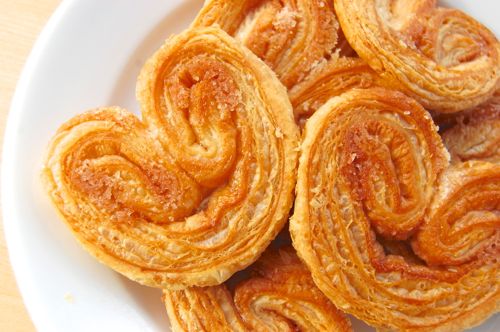
Making Palmiers

Under normal store-bought pastry circumstances palmiers are a very nice way to use up extra dough. When that dough is homemade, however, palmiers are poem-worthy. No other cookie is as light and lovely and delicious. Even “failed” puff pastry can find a welcome home in these delights. You can use whatever quantity of leftover dough you have. Roll it out into a rectangular sheet.

READ ON

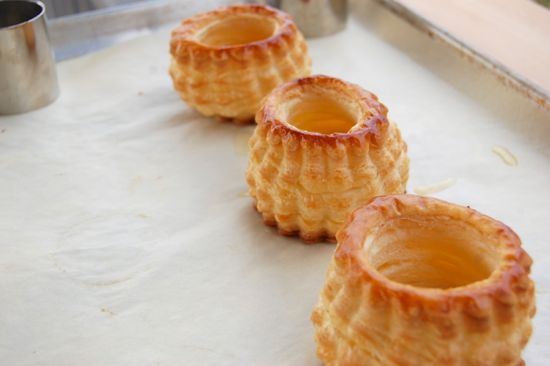
Making Vol-au-Vent

In the long list of reasons why you should consider making your own puff pastry, vol-au-vent may not be number one (that distinction goes to cheese straws), number two (tarte tatin) or even three (Gâteau St. Honoré), but it’s definitely in the top five. It makes a killer first course to a dinner: light, buttery, crunchy and lovely to look at. Made with your own pastry it almost is almost as light as “a waft of wind”…which is what the name means in French.

READ ON

Farewell to the Ding Dong

I haven’t eaten a Zinger, Ho-Ho or Twinkie in years, but I just returned from the grocery store where I bought a box of each, as archetypal American snack cake maker Hostess is shutting its doors as of this Tuesday. What a downer to end the week! Oh sure, some large packaged goods maker will probably come along and pick up the brands at some point. But then maybe they won’t. And riddle me this: can the kitsch bakers who’ve made good off of upscale Twinkie and Ding Dong knock-offs survive for long without the real thing? When no one will get the joke anymore? I think not. There will be a large ripple effect from today’s announcement, my friends. Very large indeed.

READ ON

It’s All About Steam

Reader Jayne wants to know how puff pastry can rise without any yeast, which is present in other laminated doughs like Danish and croissant. Jayne, I love your question and I thank you for asking it. The answer is: steam. Puff pastry needs no leavening agent because it’s comprised of hundreds and hundreds of individual layers of dough, all of them separated by layers of butter. When the pastry is inserted in the oven the butter melts, freeing and lubricating the dough sheets so they can separate from one another.

READ ON

Sneaky J

I stole away for a quick business trip while you weren’t looking. I’m back now with a renewed focus on the things that really matter. Like butter.

READ ON