
Whew!

What a weekend. What a month, actually. All the ladies in the house have birthdays around the same time, which means a steady regimen of shopping, decorating, cooking and baking. The little ones have two events each, one for family one for friends. Neither are big but both need to have their own vibe, so […]

READ ON

Cocoa + Hot Water = Flavor

Reader Ellen asks why both the chocolate cake layer recipes on the blog call for combining the cocoa with boiling water as a first step. Ellen, this is some of the most important secret learning on the site, so I can’t repeat it often enough: when you combine cocoa powder with hot water you get twice the chocolate flavor you’d get if you simply combined it with cold water or milk. This priceless information was told to me by none other than cake uber-expert Rose Levy Beranbaum, who I once had the pleasure of interviewing. Beranbaum told me she learned it from an in-house food scientist when she consulted to Duncan Hines. The curious

READ ON

Is lard strictly necessary?

I’m afraid it is, ready Sally. And leaf lard in particular. The question is: why? Why won’t butter work just as well? There are a few reasons. The first and most obvious is that butter won’t deliver the same porky flavor, which is all but necessary for a classic pork pie. However there are some functional reasons why you need lard for this particular pork pie.

READ ON

English Pork Pie Recipe

A classic pork pie has three components: crust, filling and “jelly” or a gelatin-thickened stock which is poured in through a hole in the top crust while the pie is still warm from the oven. Why the jelly? Because these pies bake for a good 90 minutes. In that time the fresh pork is going to lose some if its moisture. The jelly is a way of putting back some of that moisture, as well as adding extra flavor. Notice my recipe calls for powdered gelatin. If you prefer you can make the stock the traditional way by adding two fresh pork trotters (feet) to the stock. Me, I’d just as soon let the good folks at Knox smell up their kitchen with feet, that’s what I pay them for.

For the Stock

2 pounds pork bones
1 bay leaf
about 20 black peppercorns
1 carrot, diced
1 medium onion, diced
1 celery rib, diced
small bunch fresh parsley
several sprigs fresh thyme
powdered gelatin (one envelope [2 1/4 teaspoons] per 2 cups of stock)

READ ON

Speak to Me of Pork Pies

Well it’s not easy. There are a lot of different kinds of pork pies in England. However they fall into two broad categories: those that are made with cured pork products — ham, bacon, sausage, loin and the like — and those that are made with fresh, uncured meat. Of the latter the most famous come from a town called Melton Mowbray up in the Midlands of England in the County of Leicestershire (which is how the British spell “lester”). There

READ ON

Just Call Him “Mr. President”

Since we’ve been talking about the American and French Revolutions the last couple of weeks, it seems as though a brief stop to recognize George Washington is in order, since his birthday is this week (February 22nd). Here in the States we sort-of celebrate Washington’s birthday on “Presidents Day”, which was yesterday, though we’re also supposed to be celebrating Lincoln’s birthday as well, and maybe other presidents, and maybe the institution of the presidency in general…no one really knows what this silly day is about, except that the mail doesn’t come.

It’s my view that Washington, mensch that he was, deserves his own celebration. He was either the greatest or the second-greatest president of the United States. It’s a toss-up between him and Lincoln. What did Washington do that was so great? Well we all know

READ ON
Next Up: English Pork Pies

I always like to decompress a fancy pastry with something simple and work-a-day. This excellent reader suggestion fills the bill. I miss these from my university days in Devon. I can hardly wait to taste one again. I better start letting some beer warm up.

READ ON

What about the “dry cooking” method?

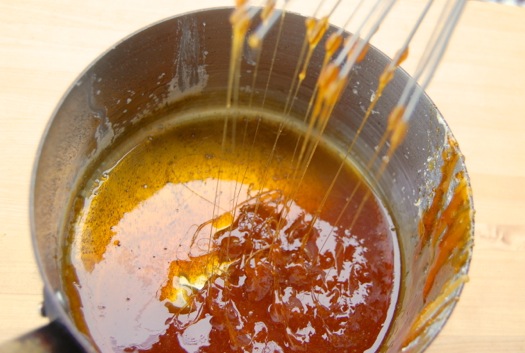
Excellent question, reader Antuanete. That method simply involves putting sugar in a saucepan and turning on the heat. The bottom of the pan shoots up to 340 degrees Fahrenheit quickly, melting the sucrose into dark caramel, and there you have it.

Some people swear by it, but I’m not a fan for a couple of reasons. First, you have far less control over the process. Dry cooking gives you either dark caramel or extremely dark caramel. If that’s what you want then it’s a decent method, though you’d better have a plan to stop the cooking fast (butter, cream or a water bath) before the whole mass burns.

READ ON