Why do egg white foams cause dryness?
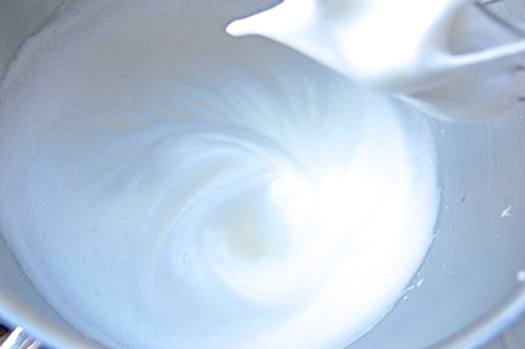
That’s a great question, reader Bobbi, for in fact they often do cause dryness when they’re incorporated into something baked: a cake, cookie or scone. I can think of a couple of reasons why that would be. As you may recall from past discussions of egg white foams, the act of whipping causes proteins in the mostly-water egg white to denature (“get wrecked” in science-speak). In their natural state these proteins — lots of globulin and ovotransferrin — are found gently curled in bunches. The force of whipping pulls those bunches apart, and once they’re apart the individual protein molecules start collecting on the surface of the air bubbles that have been created by all the agitation. They do that because those proteins have both water-loving parts and water-hating parts along their length. The surface of an air bubble is therefore a perfect place for them. The water-loving parts can stay in the water, the water-hating parts can protrude into the air, both sides of their split personality are happy. They’ll also bond side-to-side with each other just for good measure. The result is a protein mesh that reduces the bubble’s surface tension, reinforces its walls and keep the bubble from popping. In other words: foam.
READ ON