Where does puff pastry come from?
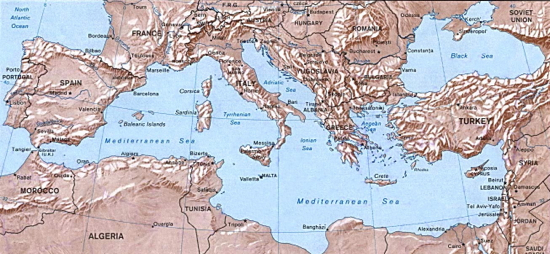
I’d love to know the answer to that myself, reader Finn. The French claim to have invented puff pastry, but then don’t they stake a claim to everything with that much butterfat? The Italians also claim to have invented — or at least perfected — puff pastry, and indeed there are mentions of laminated dough that date back to Renniassance-era Venice and Florence. But then Spaniards and the Turks also maintain they were the first to perfect laminated dough, and at about the same time. So who’s right?

READ ON
Actually…

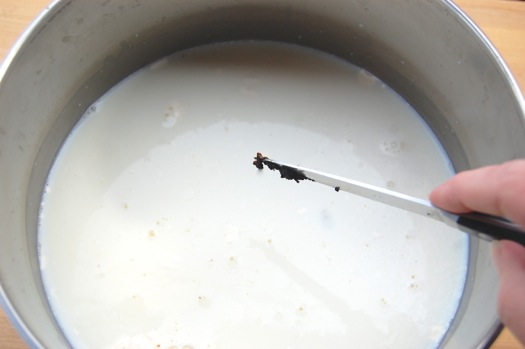
…now that I think about it, some gelatin may be exactly the thing I need to give me the stand-up cube shape for my vanilla slices. Thanks, Belinda! Did you intend to be a genius when you wrote me this morning?

READ ON

Starch vs. Gelatin

Reader Belinda wants to know why pastry cream and most other custards are thickened with starch while another similar cream, Bavarian cream, is thickened with gelatin. I didn’t see that one coming this morning, Belinda! That’s a great question. Let’s see if I can answer it. You make pastry cream by creating a thin custard, then adding starch and heating it to the boil — done! With Bavarian cream you again prepare a thin custard, melt gelatin into it while it’s still warm, allow it to cool somewhat, then fold in whipped cream.

Of the two, Bavarian cream tends to be both lighter and firmer. It’s frequently molded, which means it needs a strong gel under the hood. My feeling is that it would take an awful lot of flour to create a starch gel of an equivalent strength, and that would affect the Bavarian cream’s flavor as well its texture.

READ ON

Are starch-thickened mixtures gels?

Good question, reader Nils, the answer to that is yes, though it’s a different sort of gelling process relative to a protein gel. In a protein gel the molecules that make up the network are bonded to each other chemically. The individual molecules bond end-to-end and side-to-side with one another inside a watery medium. The result is restricted flow and thickening. Starch gelling is a bit different. As starch molecules separate from the flour granules from which they came they get tangled up with each other. That tangle also restricts the flow of the water molecules around them and creates thickening. The key difference is that the starch molecules aren’t bonded to one another, or if they are only very weakly, and will wash away if the heating process goes on too long. In that case the flour granules in the mixture dissolve completely and the whole network collapses. Great question!

READ ON

A General Theory of Deliciousness

Reader Penelope wants to know if I have any ideas about why herbs, spices, and flavorings — like vanilla — exist at all. Do they serve a purpose in nature? And if so, what is it?

Penelope they certainly do serve a purpose in nature: they are delicious. My personal belief is that God put them there so that we average schlubs might enjoy a decent pot de crème every so often, however I recognize that my theory lacks scientific rigor.

As it happens there is another theory, one which also lacks a certain amount of scientific rigor: the scientific explanation. The central idea here is that chemical compounds contained in a plant which are not essential to the plant’s survival (i.e. which aren’t related to the plant’s growth, metabolism or reproduction) are defensive in nature. Which is to say they are designed to protect the plant from predation by microbes, insects and larger animals, and also protect them from, say, too much exposure to the sun.

READ ON

Is there a flavor difference between types of vanilla beans?

Good question, reader Naomi. There definitely is, though unless you’ve got a truly stellar ingredient shop nearby, you pretty much have to take what you can get, bean-wise. Most larger grocery stores have stopped selling vanilla beans because so few people buy them. The small boutique shops here in Louisville generally stock only one type and that’s typically Bourbon — also known as “Madagascar” — vanilla from Nielsen-Massey. They’re the most common retail brand.

READ ON

Har-dee-har har!

Reader Richard wants to know if I plan on using real or imitation vanilla in my vanilla slices. Richard is referring to an incident that occurred a year or so when I extolled the virtues of imitation vanilla extract and shortly got dumped on — to put it mildly — by many (many) of my readers. On the list of all-time most unpopular Joe Pastry posts that one ranks right up near the top, outdone only by the post in which I criticized gourmet salts, the one where I argued trans fats were no big deal, and of course the one where I extolled my love of cheap coating chocolates. Of course I didn’t win many friends the time I implied that there might be holes in Darwinian theory, either. Nor did I that time I defended McDonald’s animal slaughtering practices, the time I published a list of my all-time favorite food additives, or the time I compared the search for authentic ethnic restaurants to an episode of A Cook’s Tour in which Anthony Bourdain was forced to eat raw warthog anus. None of those put me on the fast track to a People’s Choice Award, thanks for bringing all that up, Richard.

READ ON

Welcome to the Latest Pastry

I’m not really a cat kind of person. Also I’m not really a dog kind of person. I’m more of a I want my house kept free of hair, odors, dander, messes and while you’re at it keep your grubby paws off my nice clean couch kind of person. All that said one can only hold out against one’s own family for so long. If my younger daughter really really wants a dog, so much so that my older daughter really really wants a dog and such that finally my wife really really wants a dog, then I too want a dog. That’s the order of things.

READ ON

Can we talk buttermilk?

Reader Brian writes:

I really dislike buying a quart and throwing half away after baking biscuits, etc so I started using the dried buttermilk. I’ve had good luck with it. Have I just been lucky or is this a good substitution in most (all?) situations.

Hey Brian! That’s a great question because it’s a common problem. Many of us buy a quart of buttermilk, use a cup of it to make a batch of biscuits or some such thing, then watch helplessly as it (further) spoils over a period of several weeks. Finally, fearing to open the CO2-bloated jug for fear of what we might find in there, we just pitch the thing into the trash and hustle it to the curb before our spouse discovers we’ve failed, again, to properly recycle.

READ ON

Next Up: Vanilla Slices

Vanilla slices are to Australia what chocolate chip cookies are to America, or at least that’s what I read on a promotional website sponsored by Pepperidge Farm. They’re less appealingly called “snot blocks” down under, but to me they look a lot like Napoleons (mille feuille), just with a very, VERY thick layer of pastry […]

READ ON