Stupid Chocolate Tricks I: “Balloon” Cups
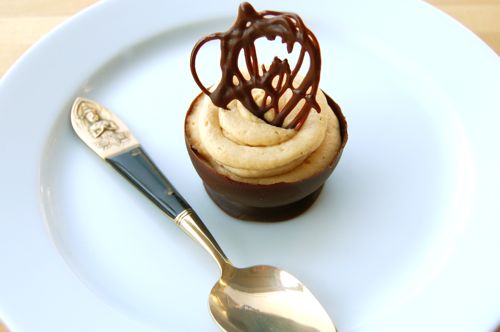
Here are a few things that don’t go together: impossibly delicate chocolate molds, outdoor photography and July. Fortunately I made a lot of cups and garnishes. Edible “balloon” cups are nothing new, but still a great way to wow guests at a dinner party. You can make them ahead and store them in the fridge until you’re ready to fill and present them.

READ ON
Is all tempered chocolate shiny?

Nope, sorry reader Jean. It’s glossier than chocolate that’s simply been melted and allowed to firm, but really shiny chocolate is a consequence of two things: good tempering and contact with a smooth surface. If you think about a chocolate bar, the shiny side is the top, the part that’s been in contact with the mold. The bottom is dull side, the part that was exposed to air as the bar cooled.

READ ON

How much chocolate is in milk chocolate?

Interesting question, reader Leeza. It depends on the manufacturer. A bar of Hershey’s milk chocolate (which I’ll confess is still my favorite milk chocolate to simply eat) is about 11% cocoa solids (their dark chocolate is 15% if you were wondering). More expensive milk chocolates can contain up to 38% cocoa solids.

READ ON

That was then, this is now.

I received lots of protests overnight from people saying, in effect: whaddya mean chocolate without milk in it is harsh? I eat dark chocolate all the time and I think it’s perfectly smooth and delicious!

I get that, for sure. But consider that back in Daniel Peter’s day chocolate was pretty rough stuff. To make a bar you pretty much just took some fermented and roasted cocoa nibs, ground them, pressed out the cocoa butter, ground them some more, added sugar, put back the cocoa butter and let the mixture set up in a mold. Bing, bang, boom, you’ve got your basic “eating” chocolate.

READ ON

What’s with putting milk in chocolate?

Reader Jacki wants to know:

If solid chocolate can be made with cocoa butter rather than milk solids, why would anyone use the milk? What is the advantage of adding dairy when the chocolate and the cocoa butter come from the same source?

Another question that I’d love to answer. Thanks Jacki! First I should point out that cocoa butter and milk solids are almost always employed together in a chocolate blend. One isn’t a substitute for the other, they’re complimentary ingredients.

READ ON

If you’ve ever wondered…

…what makes one chocolate more expensive than another, the proportion of of cocoa butter is a big reason. Cocoa butter has more commercial applications than cocoa solids have, which means different industries compete for the same commodity. Cosmetics and pharmaceutical companies buy cocoa butter by the boat load, driving the price up for food makers. […]

READ ON