Crêpe Recipe

Crêpes create irrational fear among many non-French cooks. It’s understandable…they’re thin and can tear if they aren’t handled with delicacy. It’s also common to have the first one or two stick or tear while they’re in pan. An under-heated pan is frequently the cause, but so is operator error. Just be patient and after a few tries you’ll be a pro.

Are there any tricks to crêpes? Just make sure to let batter rest as directed to let the bubbles rise out — for bubbles create rigid crêpes and rigid crêpes break when you try to flip or roll them. This recipe is adapted from The Bonne Femme Cookbook by Wini Moranville.

READ ON
But first, crêpes.

I’m not sure why I think of crêpes as a cold weather food, probably because The Magic Pan was a big place to take girls after dances when I was in high school. Going there was the way you demonstrated…how can I best put this…culture….when you lived in west suburban Chicago back in the early 80’s.

Funny thing about crêpes in America is that they’re constantly cycling in and out of fashion, whereas in France they’re a constant. I suppose this is because the French themselves are constantly cycling in and out of fashion in America, and when they’re out baby, they’re out. But whether the French are “in” or “out”, their really skinny pancakes always taste really, really good.

READ ON

Attention Panettone Fans

Next week I’ll be doing panettone, but the old-fashioned way: using a starter. It takes longer that way, but the richer flavor and denser texture are well worth it. So my message is: feed your starters, folks — or grow one if you don’t have one yet. There are complete instructions under the Bread menu […]

READ ON

Bakers & Reality

Reader Janey writes:

I’ve seen so many reality shows with chefs yelling orders at the cooks in restaurants etc., and [that show] the pressure in a kitchen…but they never show behind the scenes of pastry chefs/dessert cooks.

I noticed most of the time restaurants don’t have a pastry chef on board but that the cooks/main chef take those responsibilities on themselves. Do you have a good idea as to how different it is for pastry chefs in a kitchen [versus] a regular chef? Is it as fast-paced and hectic for pastry chefs? Is it the same rush as in a regular kitchen?

READ ON

Making Gâteau Battu

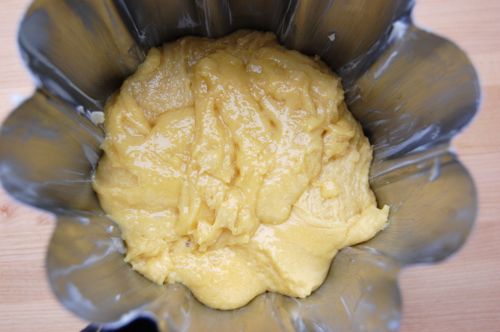
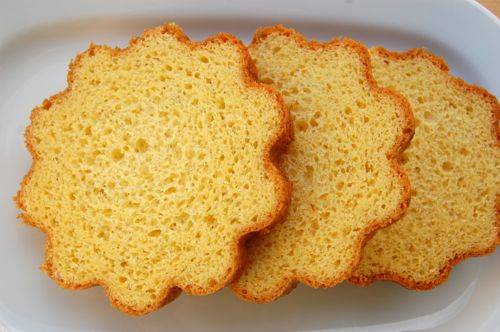
For sheer simple beauty, there’s no beating (no pun intended) a slice of gâteau battu. The brioche family of breads is like that. They’re golden in color and can be baked in all sorts of elegantly shaped molds. Gâteau battu differs from brioche mainly in its flavor — which is significantly sweeter — and its texture which is extremely tender and moist. Especially when topped with custard, jam or some other sweet spread, it truly lives up to it’s designation as a cake (versus a bread). Start by making the sponge. Combine the yeast, egg and flour…

READ ON

Simple Vanilla Custard (Pudding)

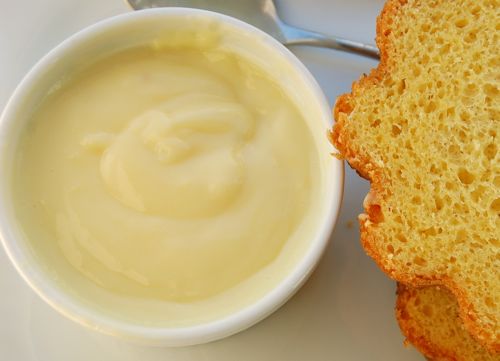
Everyone should have a simple stirred custard recipe handy. In America we call this sort of cornstarch-thickened mixture “pudding.” It’s terrific for eating just as it is, but it can also be used as a thick sauce for, well, whatever. This recipe is sort of a “pastry cream light.” It’s not as sweet as most pastry creams, nor as rich in cream or egg yolks, but it does have a dab of butter for sheen.

READ ON

Structure & Butter

Reader Robert writes:

I have a sciencey question for you regarding mixing in the butter for brioche. All the recipes I have seen say to mix the butter in after the dough is formed. I am wondering why.

By my reasoning, mixing the butter into the eggs before adding the flour would seem to be a whole lot less messy, and the emulsifiers in the eggs would help to keep the butter in place. I’ve not really had an opportunity to try this out, but I’m wondering if you know of some reason why this wouldn’t work?

Excellent question, and one that’s very pertinent to the current project, since gâteau battu is so similar to brioche. It employs many of the same methods…including the working-in of butter once the basic dough is formed.

READ ON

Osmo Intolerance

Lots of good thoughts from readers this week on the gâteau battu problem. I actually turned out a decent one yesterday, but the rising times were too long…double what the original recipe calls for (4 for rising, 2-3 for proofing) and that’s just too darn long. So I’m going to have another go at it today, employing a sponge this time to give the yeast a running start before the sugar goes in.

Several of you have asked why I don’t use fresh yeast, or better still a dry osmo-tolerant yeast of the kind you can buy from bakery supply houses. The reason is that I try — as much as possible — to use ingredients that most people can easily get their hands on. The way I see it, ordering a pound of yeast most people will likely never use again puts up a serious barrier to entry for folks who might simply want to attempt something new. Therefore, no osmo-tolerant yeast. Overall I try to use plain instant yeast, which is a widely available, very effective and super-convenient product (and no I don’t get free yeast for saying that).

READ ON

Harumph.

Four attempts so far and the best I can produce is sweet library paste. I cut the sugar down by a third, by half, by two thirds…but still the dough won’t rise one iota. Frustrating as this is, it’s an object lesson in the lethality of sugar, at least where microbial life is concerned.

We’re accustomed to thinking of sugar as food for microbes, but in truth they can only take it in very small doses. I remember getting into a debate with the wife of a friend over this subject. “If sugar is so deadly to microbes,” she argued, “then why do I see mold growing on old jam?”

READ ON

Joe Influences the Youth

I’ve started doing afternoon, once-a-week baking classes at my daughter’s grade school. They’re part of an “afternoon enrichment” program, and they take place after regular classes let out. I’ve got five students signed up out of a possible twelve, which is completely OK by me since real live teaching is a new thing for me. The problem is that we have one hour exactly for the entire class…explaining, mixing, shaping and baking. Which means I need six ideas for projects I can tackle in that amount of time.

READ ON