I’m OK. You…not so much.

Reader Emily writes:

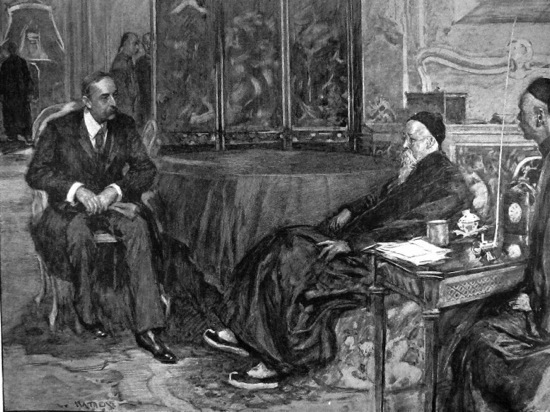
You mentioned that at the time of Li Hung Chang’s visit relations were strained between America and China. Why was that?

Emily, my grasp of Chinese history is shaky at best, but here goes. Speaking in the broadest possible terms, matters of race and immigration were behind the problems. In 1882 Congress passed a notorious bill known as the Chinese Exclusion Act, basically ending mass immigration from China. Why? As I wrote earlier the Gold Rush was long since over by then. Competition for jobs — especially mining jobs —increased and anti-Chinese sentiment was high. The Chinese Exclusion Act was designed to prevent Chinese mine workers from entering the US for a period of ten years, but was renewed again ten years later in 1892.

READ ON
A Chinese Cultural Revolution

Something I neglected to mention earlier in the week is that while Chinese nationals were pouring into America by the tens of thousands through the West, a small but steady stream was coming in via the port of New York. By the 1870’s a Chinese community had established itself on the Lower East Side of Manhattan in the vicinity of Mott street. There they set up a variety of import shops supplemented by — you saw it coming — restaurants.

READ ON

Mandarin Pancakes Recipe

Good Mandarin pancakes are very, very thin. Much more so than flour tortillas which are frequently substituted for them. Sigh. The rolling method is ingenious. You basically roll two at a time, back-to-back, then peel them apart. So simple it’s beautiful, no? You’ll need:

10 ounces (2 cups) all-purpose flour
6 ounces (3/4 cup) boiling water
Sesame oil for brushing

READ ON

On Food Taboos

So why is it that Westerners were so hesitant to try Chinese food for so long? It’s the same reason that some Westerners remain suspicious of Chinese food to this day: because of what they fear might be in it. Since the very earliest days of the Chinese-European relationship, it was well known that some animals that Europeans considered off-limits as foodstuffs were common sources of protein in parts of China.

READ ON

American as Chinese Apple Pie

By 1860 the gold had pretty much run out. However by then tens of thousands of Chinese workers had emigrated to the U.S., mostly from the Pearl River Delta in the southern Guangdong province. The Chinese quarter of San Francisco had dozens of general stores selling all manner of merchandise shipped in from China. Some one thousand Pearl River fishermen were working San Francisco Bay, and Chinese farmers were mastering the art of vegetable growing in dry California soil.

READ ON

The Year the Moo Shu Landed

So what first brought Chinese food to American shores? The answer: gold. It was the discovery of gold by one James W. Marshall of Sutter’s Mill in 1848 that caught the attention of merchants and tradesmen in Hong Kong, which was a cosmopolitan place in those days. Chinese entrepreneurs were well accustomed to dealing with European, English and American traders by then, and had little compunction about following the trade routes backward through Polynesia and up the American West Coast. The first dozen Asian 49er’s arrived by boat in San Francisco Bay in well, 1849.

READ ON

Next Up: Chinese Pancakes

There are two reasons I wanted to tackle something different this week. 1.) I’m a little bored with sweet stuff that moment, but more importantly, 2.) It’s hot. Truly it’s much too hot to keep an oven running for more than an hour or so here in Kentucky, even early in the morning. Since no one here in the pastry household much feels like eating anything very sweet, rich or heavy, my thought is: what about changing gears completely and doing something that’s both savory and light? Chinese food came to mind (really American Chinese food, which is the only Chinese food I have any real experience with).

READ ON

Making World Famous Kentucky Horse Race Whose Name Rhymes with “Herbie” Pie

There are three words I want you to remember when you set out to make either pecan pie or World Famous Kentucky Horse Race Whose Name Rhymes with “Herbie” pie. Those words are: Syrup. Holds. Heat. That concept is critical because just like pumpkin pie, pecan pie and World Famous Kentucky Horse Race Whose Name Rhymes with “Herbie” pie are custards. Overcook the filling and they will curdle. The result? Lumpy-textured slices that weep syrup on the plate.

READ ON

On Pie Crust “Additives”

Several readers have written in to inquire about texture-improving pie crust additives. I didn’t include any in the standard pie crust recipe below because, well, it’s just the standard. But I frequently do add things like a little baking powder or an acid of some sort to my crusts to enhance their flakiness.

Lemon juice, vinegar or cream of tartar are great for tenderizing a crust because acid undermines gluten development. As I recall it inhibits the ability of the molecules to bond end-to-end. Something about a change in polarity that I’d need to look up, but really wouldn’t completely understand once I did.

READ ON