Making Naan

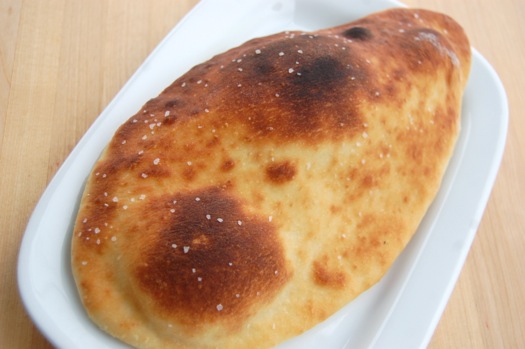
You know what I really love about flatbreads? They’re great low-investment laboratories for testing out dough formulations. A little more water here, a little more fat there, and suddenly you’re creating your dream…naan in this case. But the fun doesn’t stop with the formulae. You can bake flatbreads all sorts of ways: in the oven, on the stove, on the grill…you name it. So don’t take what I’ve done here as the definitive naan method. Try your own. I’ve just done what I happen to like. Use this tutorial as a starting point for further improvisations. Start by assembling your ingredients.

READ ON
What’s Naan?

It’s a bit of a loaded question. “Nan” is the generic term for “bread” in parts of the Middle East, notably Iran, where the word is thought to have originated. However in India “naan” denotes a particular kind of bread, which is to say flat bread that’s baked in a tandoor.

Which raises the question: what’s a tandoor? It’s a pot, basically. A tall, thick clay pot with a charcoal fire at the bottom. Like many types of masonry ovens, tandoors get extremely hot and are great for cooking all sorts of food. You can insert skewers full of meat and vegetables into them, for instance.

READ ON

Naan Recipe

Naan present some of the same challenges pizzas do: how to cook both the top and bottom to charred deliciousness in a home oven? It’s a bit of a dilemma given that both types of flat bread are traditionally baked in extremely hot wood or coal ovens (a tandoor in the case of naan, a wood oven in the case of pizza). This technique, that combines a hot oven with the broiler, is my preferred solution. Alternately you can grill naan or fry them in a cast iron skillet, both popular techniques. You’ll need:

11 ounces (2 cups plus two tablespoons) all-purpose flour
1 teaspoon instant yeast
a generous pinch of baking powder
1-2 teaspoons sugar
1 teaspoon salt
4 ounces (1/2 cup) milk (room temperature)
4 ounces (1/2 cup) yogurt (room temperature)
1 ounce (2 tablespoons) olive oil
More oil and coarse salt for a topping

READ ON

Next Up: Naan

Those of you who follow my bread posts know I tend to favor simple, same-day breads. Naan is one of those, and once you try it you’ll find it habit-forming. Mrs. Pastry is making Indian food tonight, so let’s do this thing!

READ ON

Black and Whites: Second Try

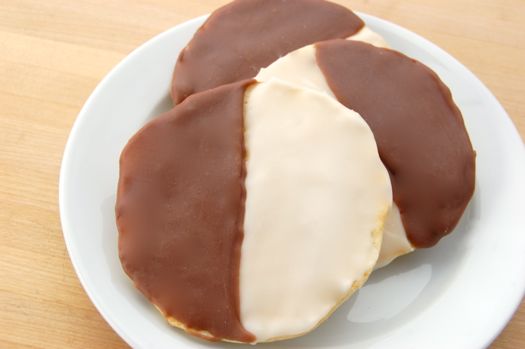
There we go. Now that looks more like something you’d see in a Manhattan pastry case, no? Forgive me but I couldn’t leave these alone until I’d gotten a little closer to the ideal. Actually this was my fourth try, as it took three attempts to get the cake where I wanted it. This last pass was all about finishing. What did I do differently? For starters I trimmed the cookies perfectly round with a round cutter after they cooled, like so (four inches worked perfectly for most of them).

READ ON

Making Black and Whites

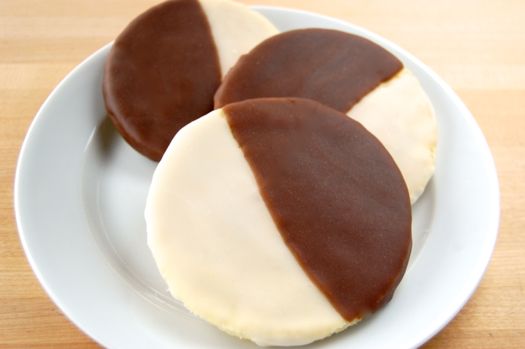
Repeat after me: black and whites are cakes, black and whites are cakes, black and whites are cakes. Got that? Whew! Now maybe the New Yorkers will get off my back and let me eat my cookies in peace!

These aren’t difficult once you have the fondant in hand, and I do recommend making actual poured fondant since the effect is much creamier than with simple sugar-and-water icing. Something about the way the smooth fondant melds together with the hint of lemon in the cake…it really makes these. Indeed the classic versions are much more interesting than the newfangled jobs made with real chocolate coatings or rich frostings. These, in my opinion, are the Cadillacs.

READ ON

Caramel: Crystal or No?

It is not, reader Bryan. Caramel has so many molecular whatsits in it that the sucrose molecules would need flashlights to find each other. First there’s all the fat from the butter or the cream. Next you have all the broken up pieces of sugars that the caramel-making process creates (the heat of caramelization literally destroys some of the sugar molecules, breaking them into pieces which recombine into all sorts of Franken-cules, most of which still have no names). Last you have some invert sugar, since the broken sugar pieces are acidic, and the slightly acid environment breaks some of the remaining sucrose into glucose and fructose.

READ ON

Syrup Good, Crystal Bad

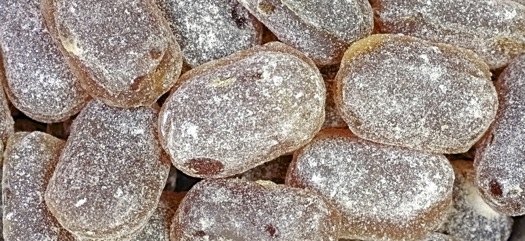
Reader Marta asks, since I mentioned “crystalline candy” below, if there’s such a thing as “non-crystalline” candy. Indeed there is, Marta. In fact most candy is non-crystalline. “Amorphous” is another term for this sort of candy, since it lacks a crystal structure (amorphous is Greek for “without shape”). Ultra-dense syrups are what they are. Sometimes they go by the name of “non-grained” candies. The family includes virtually every hard candy you’ve ever seen: butterscotch drops, sour balls and the like, also peanut brittles and gumdrops.

READ ON

Fondant haters of the world unite!

Lots of mail overnight. I seemed to have popped the cap on a deep well of fondant hatred out there. I can sympathize with it to some extent, since fondant of the rolled type can be annoying when it’s laid on too thick. I’ll also say that commercially made fondant can taste a little…synthetic, and that’s no fun on a wedding cake. Unfortunately much of the fondant that’s used on cakes these days is pre-made, shipped to bakeries in 50-pound plastic-covered blocks that are fun to practice judo kicks on late at night in the middle of the bread shift. Not that I’ve ever done that.

READ ON