On a Related Note…

Reader Brendan writes:

For…tart dough, is it possible to overcream the butter and sugar mix before you add the flour in? And if it is possible, what would the ramifications be?

Hey Brendan! Over-creaming isn’t generally a concern. I once saw a butter and sugar mixture creamed for so long that it eventually turned a slight grey. That tint wasn’t a result of anything that happened to the mixture, rather it was caused by metal dust (sugar granules can actually sand down the inside of your bowl after a while). Otherwise the only risk of extended creaming is that friction will lead to heat buildup and melting.

READ ON
On the Limits of European Butter

Reader Lars writes:

I do a lot of baking and I was wondering if you would be willing to impart some wisdom to me. I tend to prefer the higher fat European butters. What I was wondering is how much adjustment in my baking recipes need to be made for these extra fat butters?

Interesting question, Lars! Would you believe that on average American and European butters only differ in fat content by two or three percentage points? Given that, you don’t need to vary your formulas at all (moisture isn’t an issue). They are a little more acidic since the cream they contain is slightly fermented, but not enough to throw off chemical leavening reactions.

READ ON

Making Matzoh

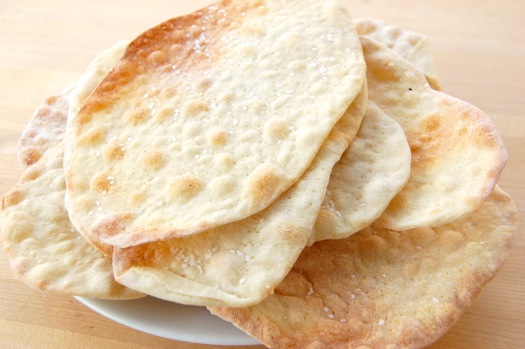
That, I don’t mind sayin’, is some handsome matzoh. I was stunned at how much it tastes like store-bought when I tried it, but it does. Still, there’s always a qualitative difference between what you buy and what you make, and it shows here. This may not be kosher, but it’s very light and fresh-tasting in the way that anything out of a box isn’t.

And if you’re wondering why a Scots-Irish Catholic buys matzoh in the grocery store, let’s just say that after spending a fair amount of time in New York City, I found that civilized life was next to impossible without matzoh ball soup. Start by preheating your oven to 500 or even 550 if it will go that high. Next get your ingredients together. Combine the water and the flour in a medium bowl.

READ ON

Matzoh Recipe

If I’ve learned anything this week it’s that “simple” flatbreads aren’t actually simple. I shouldn’t be surprised at that, since I’m constantly repeating the maxim that the most elementary recipes are the hardest to pull off well. As the number of ingredients in a recipe decreases, the importance of ingredient quality and technique increases. Further, many flatbreads are tied deeply to cultural norms I know little or nothing about. Clearly I have a long way to go if I really want to master this week’s subject matter.

Still, since I’m already tramping clumsily through the garden of tradition, I think I’ll take reader Elizabeth up on her challenge of making some matzoh. The proportions of matzoh are easy to remember: 2-1 flour to water by volume. Add salt if you wish. For me that will translate into two cups of flour and one cup of water.

READ ON

Making Chapati

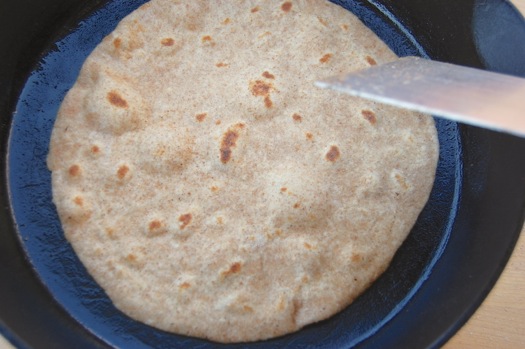
Some little old Indian ladies would have had a lot of fun watching me today, bobbling chapati while smoke poured out my kitchen windows. But I had fun! And I made some very good chapati. Not world class to be sure, but delicious. These tender breads are really fun to make and considering how fast they come together, they’re small miracles of economy: 45 minutes from start to finish! Start by assembling your ingredients.

READ ON

Flatbread Science

Many experienced chapati makers have observed that I’m fiddling with tradition here. It’s true. Indeed I am varying the flours and the liquids in order to get to a softer, more toothsome homemade product. Don’t infer from that statement that I don’t think traditional recipes give good results, but ingredients and…ehem…the manipulators of those ingredients, vary highly from place to place. I should be using atta, traditional Indian chapati flour, but I can get any. As a result the all-whole wheat flour and all-water recipes weren’t delivering bread anywhere near as good as I remember from the real Indian meals I’ve had.

READ ON

Is this the life or what?

God love this internet thingamajig. I set out to make potica, and Slovenian grandmothers offer me recipes. I announce I’m making naan, and bakers from India weigh in with tips and advice. Has a baker ever lived that’s as blessed and lucky as I am? I think not! Thanks to all the readers and contributors […]

READ ON

Where’s the History, Joe?

It’s not easy with flatbreads, reader Clay! They are humanity’s oldest form of bread. Indeed flatbreads pre-date wheat! Thirty thousand years ago, flatbreads were made from mixtures of foraged plant and grass seeds, pounded or ground, mixed with water and cooked on flat, hot stones. That basic technique endured for tens of thousands of years, up through the dawn of the age of agriculture, when hunter-gatherers started to settle down on farms and grow large quantities of single crops.

READ ON

Chapati Recipe

Even easier than naan, chapati — also know as roti or fulka — is another go-to South Asian flatbread type. It’s enjoyed in India, Pakistan and many places beyond. The main difference between chapati and naan is that chapati are unleavened, so they’re even quicker to make. They also call for whole wheat flour, which gives them a nuttier taste.

11.5 ounces(2 cups) atta (Indian whole wheat flour, OR
5.5 ounces [1 cup] whole wheat flour plus 5 ounces [1 cup] all-purpose flour)
1/2 teaspoon salt
4 ounces (1/2 cup) water
4 ounces (1/2 cup) whole milk (or yogurt-milk combo)

READ ON

Next?

This flatbread stuff is fun. Let’s do some more! Roti, I’m thinking. Or maybe I’ll switch cultures altogether and do some lavash. Hmm…

READ ON