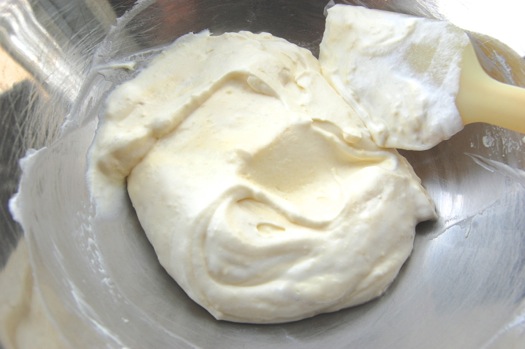
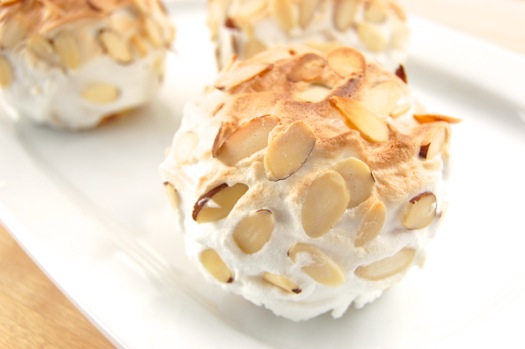
Next Up: Savarins

I was about to light out for China this week, but since we’re getting into berry season here in the Northern Hemisphere it seemed to make sense to remain in France a bit longer and do these seasonal classics. Reader Bronwyn, I promise to get to the fried dough next!

READ ON

Making Brioche Polonaise

I’ll admit it, fancy pastries can be scary. You see a lengthy list of make-ahead components and you wonder: when I finally get to the end of this road will it all be worth it? Will it really be different and special? Or only marginally better than something I can buy in a shop? Legitimate concerns, all. I can tell you that brioche polonaise is one of those sweet mother of God pastries. It does have several components, all of which you’re better off making yourself. Most will keep for many days ahead of time. Make one each day for three or four days and the final assembly and bake is pleasantly low-stress. You’ll love the process and feel proud when it’s done. Ready? Then let’s begin.

READ ON

Big News from The Continent

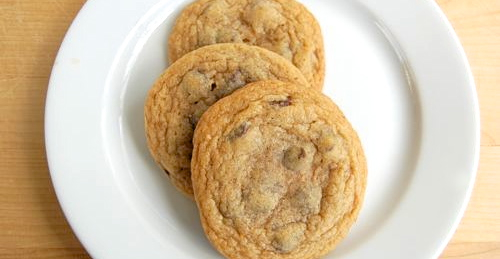
…where reader RS has taken a giant step forward in perfecting the Franco-American chocolate chip cookie. If you’ve ever seen an American baked goods section in, say a Parisian pastry shop, you may remember the very sad, flat looking chocolate chip cookies that typically appear in them. Recently in a post on European butters I suggested that that the sharper melt point of many higher-fat Euro butters (a tendency to go from solid to liquid faster when exposed to heat) probably causes them to spread more in the oven.

READ ON

Renaissance Bird

Alfred Bird was a man of many talents. Not only was he a pharmacist and chemist, inventor of instant pudding and baking powder, he was also a talented musician, wont to amuse his dinner guests by performing various popular melodies of the day on water glasses. Not in the style of the water harp or the glass armonica (Ben Franklin’s wondrous, forgotten contraption), but by tapping on them with forks and spoons like sets of chimes. He was quite good at it, and even had a custom 4-octave glass set made for himself so he could more fully express his musical ideas.

READ ON

Genius of the Bird Man

Reader David wants to know when people first started thickening pastry cream with corn starch. That’s a question I can answer: 1837.

Or so. 1837 was the year that Dr. Alfred Bird invented his famous “eggless custard.” Dr. Bird is a fascinating character from history, who might have labored in obscurity as a pharmacist in Birmingham, England had it not been for his wife’s delicate digestion. It was because of that that Bird invented corn starch (or corn flour as the British say). Well, he didn’t technically invent the flour, but he was the first person to use it as a thickener for liquids.

READ ON
Where does brioche REALLY come from?

That’s a tough question, reader Janey. You’re quite correct that the word “brioche” has existed in the French language since about the year 1400. It’s a variant of the Old Norman broyer which means “to knead” or “to break up.” However just because the word has existed for that long it doesn’t mean that anything like modern brioche was around back then.

READ ON

What about Marie Antoinette?

Some say she’s the one who brought much of the viennoiserie to Paris. It’s a convenient explanation since she was Austrian and something of a culture maven (as long as it was Austrian culture). I confess that while I’m familiar with the arguments in Jim Chevallier’s book on August Zang, I’m not familiar with much documentation on Marie Antoinette’s contributions to French baking, though it’s probable there were at least some. I invite anyone who’s familiar with the subject to weigh in.

On a related note, reader Paul wants to know if there’s any truth to the notion that when Marie Antoinette said “let them eat cake” what she really said was “let them eat brioche.” In fact I’ve written on that. You can find the post right here.

READ ON

What about baguettes?

Reader Claire writes:

Hi Joe! I’ve always heard that baguettes were originally called “Vienna bread.” Does that make them part of the viennoiserie?

Nice question, Claire. It would make a certain amount of sense. After all baguettes are the definitive light and fluffy bread, and more than that they absolutely require a steam oven. However they are not technically part of the viennoiserie. It’s true that once upon a time most oblong, fluffy white loaves were known as “Vienna bread.” However in some places — like Denmark — “Vienna bread” refers to laminated dough. It just goes to show the amazing reach and influence of the Viennese baking tradition.

READ ON

When did “the viennoiserie” arrive in Paris?

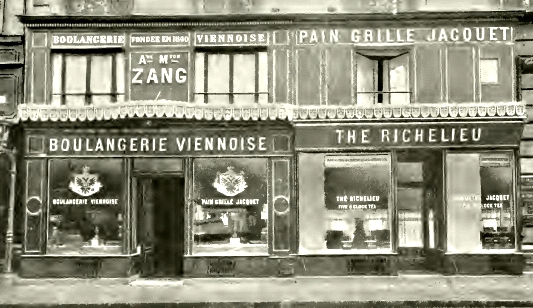
In fact much of it can be dated precisely: 1839 (or possibly ’38). That was the year that a rather odd and ambitious fellow by the name of August Zang opened the Boulangerie Viennoise in Paris. A former artillery officer in the Austrian army, Zang sought to spread the glories of Austrian baking among the philistines to the West. Though his business at 92 rue Richelieu started off rather slowly, it wasn’t long before his breads — and especially his crispy laminated crescent rolls which were known in Austria as “kipfels” — caught on in Paris and spread like ze proverbial wildfire.

READ ON