Call it “Neo-Classic” Génoise

Let’s face it, not everyone likes classic génoise. It can be challenging to make and not all that pleasant to eat (heavy on egg whites, it’s often dry). So here’s a variation on a classic génoise that on the one hand is a lot easier to make: there’s no heating step, it’s hard to over-whip it (a big reason why many génoise attempts fail) and the batter ends up thicker, more spreadable and more capable of holding on to the bubbles it contains. On the other hand, it also looks and tastes better: it’s taller, fluffier and retains more moisture, again due to the reduction of egg whites. It calls for:

2 ounces (1/4 cup) milk
1 1/2 ounces (3 tablespoons) butter
1 teaspoon vanilla extract
3 eggs, room temperature
3 egg yolks, room temperature
6 ounces (1 cup minus two tablespoons) sugar
3.75 ounces (3/4 cup) all-purpose flour
READ ON

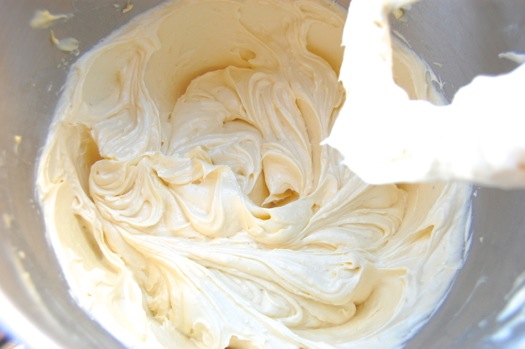
Making Crème Mousseline

Crème mousseline — also known as German buttercream — is a silky and decadent combination of pastry cream and butter. It’s often used as a filling, though it works just as well as a frosting, as the “buttercream” moniker implies. The proportions for crème mousseline are 2 cups pastry cream to one cup very soft butter. Yeah, I know. Wow.

READ ON

The Holiday Keep-It-Simple Strategy

This is the time of year when I start to receive emails from readers asking for ideas for fancy holiday meal pastries. My response is almost always the same: keep it simple. A well-executed simple sweet beats a hastily-prepared complex pastry any day of the week. That’s especially true during a holiday dinner where guests are already loading up on appetizers, main courses and fixin’s. An opulent dessert on top of a multi-course banquet generally puts diners over the edge.

So my advice is to think about the flow of your meal and come up with a nice, understated capper. True fancy pastries, it’s important to remember, weren’t created for dessert. Napoleons, Sacher torte and Marjolaine slices are supposed to be consumed in the afternoon, as a between meal treat…

READ ON

Is there an alternative to classic génoise?

So ask several readers who are interested in making a fraisier but have terrible luck with génoise. The answer is that indeed there are. The pastry world abounds with spongecakes of different kinds, many of them created for the express purpose of improving on the standard génoise, which many people find not only hard to […]

READ ON

On “Natural Butter Flavors”

Reader Jo writes:

Hey Joe! Is diacetyl one of the “natural butter flavors” that I so often see on butter packages?

Indeed it is, Jo. Many American mass-market butters, especially unsalted butters, contain “natural flavors.” The most common are diacetyl, acetic acid, acetoin, ethyl formate, ethyl acetate, 2-butanone and others. In other words, the typical brew of compounds that fermenting bacteria create as they digest sugars.

It all sounds like stuff that runs off a parking lot in a rain storm, but in fact these naturally-occurring chemicals are what give fermented foods – from beer to bread to yogurt and pickles – their flavor. Depending on the proportion in which they’re delivered, they can taste tangy, flowery, bitter, gamey or…buttery.

READ ON

On the Flavor of Butter

Several fierce objections to the idea that butter does’t have much flavor on its own. Being a lover of butter, I’m down with that. However I think it can be fairly said that a lot of factors influence the flavor of butter. In some circumstances butter has lots of flavor, in others it doesn’t.

For example, when it’s cold. A cold pat of butter, even the fiercest butter lover will concede, has less flavor than hot, melted butter. It still tastes like butter of course, and that’s due in large part to a specific compound, a ketone called diacetyl. Diacetyl is abundant in fermented foods, and ranks in the top five on my list of All-Time Yummiest Molecules. But diactyl isn’t the only ketone in cold butter. There are many others, but most of them are locked up inside larger organic acid molecules, and that prevents us from tasting them.

READ ON

Distractions, Distractions

A couple of work crises have kept me from baking much this week, so posting has been a little light. I have, however, been listening to some good music. If you’re in the market for some, check Jake Bugg, a nineteen-year-old Brit who somehow manages to wrap Greenwich Village folk together with the Everly Brothers and a jumpin’ Johnny Cash rhythm. I remain sucker for a guitar and a backbeat.

READ ON

On the Glories of Butter

Every time I put up a recipe that contains a whole lot of butter I always get a few comments along the lines of: fat has so little flavor all by itself, is it really necessary?. The short answer is yes. The long answer is also yes, just with more mumbo jumbo added to it.

It’s true that fat — even butter — doesn’t have all that much flavor in itself. However it’s real utility is as medium for flavor. Allow me to explain. A typical mouthful of food contains quite a wide variety of molecules: carbs, proteins, fats, etc.. Some of those molecules aren’t technically fats, but they fall into the general fat or “lipid” category because they share certain structural similarities to fats.

READ ON

Oh Fruit, Why Can’t You Be True?

Reader Edgar points out that the duplicity of fruit really knows no bounds. There are no “true” fruits among the things we commonly know as “fruit” (a true fruit being defined as an item comprised solely of the ovary of the plant with no other structures in it). Most berries aren’t true fruit. But then most berries aren’t true berries, which serves them right. Blueberries are false berries. Blackberries and raspberries are aggregate fruits, meaning they’re made up of many, many ovaries all pressed together. A pineapple is a multiple fruit.

READ ON