Hot Cross Bun Recipe

I’m normally a long-fermentation snob where it comes to bread, but frankly with all the spices in these little guys it’s mighty hard to pick up the subtleties that a long rise offers. A full tablespoon of instant yeast blows this dough up in no time — foom — which means from mixing to glazing, you can have these done in about four hours.

1 lb. 9 ounces (5 cups) bread flour
1 tablespoon instant yeast
3/4 teaspoon ground nutmeg
3/4 teaspoon ground cinnamon
3/4 teaspoon ground ginger
1 teaspoon salt
1 3/4 cups warm milk
1/4 cup honey
2 eggs, room temperature
4 tablespoons soft butter
1/2 cup dark raisins
1/2 cup golden raisins
egg wash
simple icing
READ ON

Whipping Egg Whites

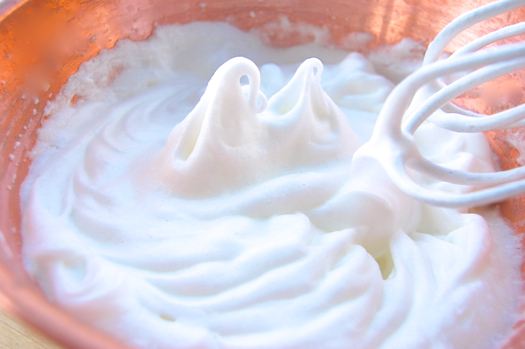
What do “soft peaks” look like? What about “stiff peaks”? How do you know when you’re over-whipping? These are some of the great mysteries of egg foam making. But I say: let them be mysteries no longer! Let’s have a picture tutorial that will clear the air on this once and for all! Because being anxious over the height of your egg foam is one sure way to suck all the fun out of a baking project. Read this and go forward with confidence, friends. Making a perfect whip is easy if you know what to look for.

READ ON

What does salt do to an egg white foam?

That’s what reader Daniel wants to know. Daniel, let’s just say that adding salt to egg whites before you whip them is never a good idea. Why not? Well you remember the below post on how egg foams form. Agitation causes the little bunches of proteins in the white to unfold, at which point the individual molecules start to collect around air bubbles and bond with each other. If there’s salt in the mix that bonding process is slowed as the salt dissolves into its component parts — sodium and chloride — and those ions start to adhere to the bonding sites on the protein molecules, preventing the proteins from using those sites to bond with each other. The result is that the foam takes longer to whip up and is less stable when it finally does form.

READ ON

Making White Cake Layers

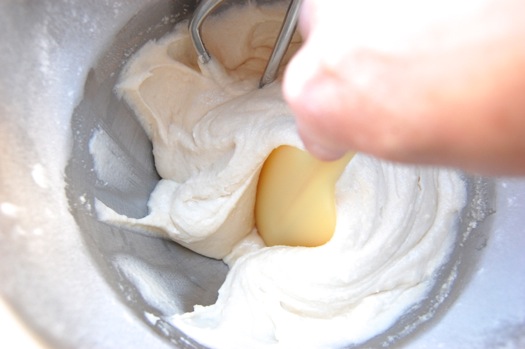
White layers are gorgeous — and very “spring-like” — especially when accompanied by a light-colored frosting and filling (I’m thinking especially of a citrus curd of some kind). Making them is no more difficult that making any other one-bowl-type cake layer. Start by preheating your oven to 350 degrees Fahrenheit and assembling your ingredients. Sift the cake flour into your mixer bowl:

READ ON

How much whipping is enough whipping?

So asks reader Melissa. She further writes:

At the cooking class I went to, we were taught to whip until u can upturn the aluminum bowl n the egg white doesn’t run.

I think that’s a pretty decent indicator for stiff peaks, Melissa. I generally do the old whip-lifting technique. What sorts of peaks does the whip leave when you take it straight out of the foam? Do the peaks stand up, flop over or just melt back in? That’s the most reliable for me. Tilting the bowl to one side would be a good indicator that you’ve whipped any miscellaneous white that might be left at the bottom of the bowl. The only risk there is that

READ ON

How important are fresh eggs for cake baking?

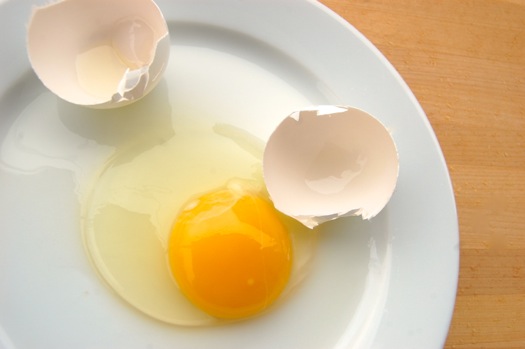
Good question, reader Debbie. I once thought that fresh eggs were important for good layer cakes. That was good ol’ farm wife wisdom. However I’ve since come to see that very fresh eggs are not important to a cake’s taste or texture and are indeed a little more of a hindrance than a help when it comes to mixing a batter. Pictured above is a fairly fresh egg. You can tell by the high-standing and gelatinous albumen (white). It’s lovely for a fried egg, where the runny white of an older egg makes a much less appetizing presentation, but when you’re trying to incorporate it evenly into a liquid batter, its firmness makes it rather difficult to blend in. Is it a big deal? No. You just have to be a little careful that you’re not whipping the eggs and milk (if you’re making a one-bowl or creaming method cake) so much that you’re creating lots of extra air bubbles.

READ ON

What’s so great about the one-bowl method?

First, reader Glenn, let me just say that I’m still baffled as to why it’s called the “one bowl” method since I’ve never succeeded in using less than two bowls for a one-bowl cake. So right there I’m a little down on it. But there’s no denying that one-bowl layer cakes are very moist and tender devices, I dare say more so than cakes made via any other method. But why is that?

It all has to do with the manner in which the fat is introduced to the batter. A cake mixed via the creaming method — which is the standard for most layer cakes — starts out as a well-beaten mixture of fat and sugar. Doses of dry and wet ingredients are added alternately until all is combined and ready to bake. With the one-bowl method all the dry ingredients including the sugar and mixed together first, then the fat is added before any liquid touches the mixture.

READ ON

Wanted: A Good Cuppa

This is a personal plea from a tea drinker. Many years a go I lived in Britain and was spoiled by their ordinary, garden-variety Twinings tea. It’s excellent and sadly much, much better than the Twinings we get on this side of the Big Drink. I’ve been to those British specialty goods stores and not […]

READ ON

Will acid help?

So asks reader LML, and it’s a fascinating question. As you may recall egg white whippers are frequently counseled to add acid to their whites as they first start to foam up. But why exactly is that? Well you’ll recall from the post below that whipping causes egg white proteins to unfold and begin collecting around air bubbles. The trouble is that this same action, if carried too far, will cause the proteins to clump back up again. It’s the excess agitation you see. It causes the protein molecules to bond excessively to their neighbors, and when that happens they coagulate in much the same way they do when they’re exposed to too much heat.

READ ON