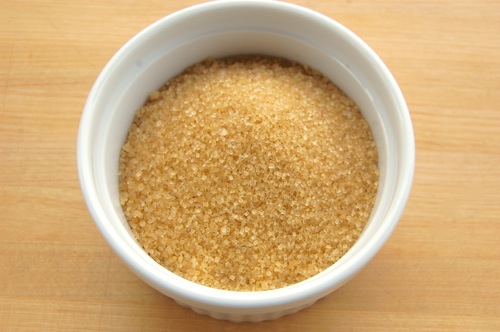
Demerara Sugar

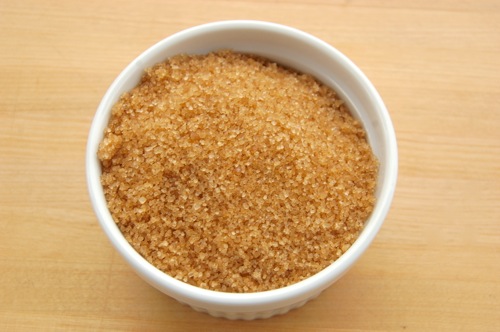
Demerara is named for the region of Guyana where it was originally manufactured. These days, however, it’s mostly made in Mauritius (a small island off Madagascar in the Indian Ocean). Demerara is similar to turbinado in that it is a light, large-crystal “raw” sugar, produced from the first crystallization of the cane juice. The main difference is that the cane juice it comes from is evaporated using old-style open pans instead of the more modern vacuum pans. The longer, higher-heat cooking dulls some of the brighter flavors but accentuates the deeper caramel-like ones. Like turbinado sugar it’s about 98% sucrose, which makes it great for a crème brûlée crust.

READ ON
Turbinado Sugar

Turbinado is a “raw” large-crystal sugar, which is to say it’s made and packed at a sugar mill close to the point of harvest, not at a refinery. It’s a product of the first crystallization that occurs at at mill. Like all crystal sugars it’s spun in a centrifuge to (mostly) rid it of molasses, but it’s the only sugar that I’m aware of that actually takes its name from the machinery (a centrifuge is also called a “turbine”). The processing removes nearly all of the original molasses (turbinado sugar is 98-99% sucrose) but it still has a more interesting flavor than white sugar since that original molasses often contains fresh grassy aromas and flavors from the cane plant. Because turbindo sugar has hints molasses flavor but is still mostly sucrose, it’s frequently used to top crème brûlée where it forms a flavorful — yet still quire hard — crust.

READ ON

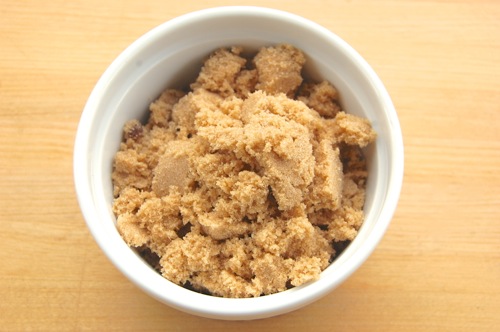
Brown Sugar (Dark)

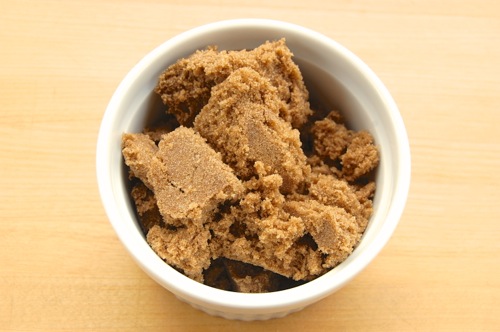
“Dark” brown sugars are similar to light brown sugars in that they are refinery sugars, almost always produced by “painting”, i.e. the application of a very dark molasses. Dark brown sugar can contain as little as 85% sucrose. Up to 5% of it can be plant matter and long-chain sugars, and up to 2% various minerals and salts (the rest being water, glucose and fructose). That being the case, it has a similar flavor profile as light brown sugar, except that those flavors are stronger and are supplemented by bitter and even licorice notes. Its higher acetic acid content can make is almost tangy and/or vinegar-y tasting.

READ ON

Brown Sugar (Light)

Mass-market American brown sugar is a refinery sugar, made by re-melting and re-crystallizing the sugar supplied by the original sugar miller. It may simply be a more uniform version of the raw sugar with its original molasses still on it. Alternately, it may be a white table sugar that has been “painted” with molasses. Either way, it’s a “wetter”, softer and denser sugar than most “raw” brown sugars. These brown sugars are about 90% sucrose, the remainder being glucose and fructose, minerals (including salts), water, begasse (browned bits of the sugarcane plant) and longer-chain sugars that don’t taste especially sweet on our tongues. All these combine to give brown sugar a variety of buttery, salty and caramel-like notes. Brown sugar is an acidic ingredient as the molasses it contains is high in acetic acid (which can give it some vinegar-like aromas as well).

READ ON

Powdered Sugar

Powdered sugar has the smallest crystal size of any of the white sugars, as small as 0.01 millimeters. It’s also known as “confectioner’s” or “icing” sugar depending on where you live. The tiny crystals make it good for dusting and of course making frostings and icings. The only major drawback to powdered sugar is its flavor and texture which can be chalky. The reason for that is because powdered sugar contains up to about 3% corn starch which is there to absorb moisture and keep the tiny crystals from clumping.

READ ON

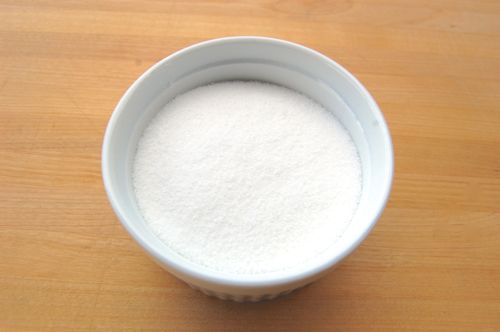
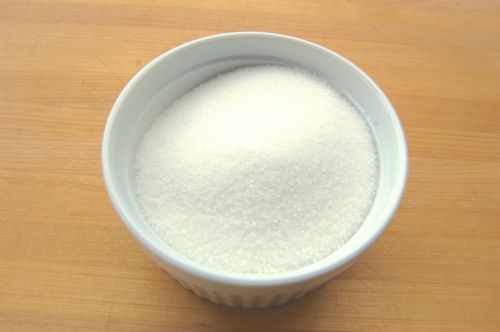
Superfine Sugar

Known as “caster” sugar in much of the rest of the English-speaking world, the only real difference between this and standard table sugar is the particle size (about 0.2 millimeters). The smaller size means it has more surface area, so many bakers prefer it for creaming applications, where sugar is beaten with butter to create lots and lots of tiny holes (which will go on to become gas- and steam-trapping bubbles). Since smaller crystals melt faster, it’s often preferred for mousses and meringues. Added to cake batters it disperses in smaller pockets and can create a lighter crumb.

READ ON

Table Sugar

What can I say? It’s the standard in much of the world. A medium-small crystal size (about 0.5 millimeters), this sugar is made from very pure (over 99%) sucrose so as to be free of non-sucrose flavors or colors. White table sugar can be made from sugarcane or beets, with cane sugar being preferred for baking and especially candy making. Vegan versions are made the same way as standard, save for the fact that they aren’t passed through charcoal filters, which contain bone meal. See below for more about how standard table sugar is made.

READ ON

What’s that smell?

Reader Jimma brought up a good point yesterday: beet sugar can — or once did — have a distinctive smell. Indeed once upon a time beet sugar makers had trouble refining their product to the same degree that cane makers did. This was for a couple of reasons. First, beets grow in soil, so residual soil, molds and bacteria can get into the batch if they’re not thoroughly washed off. Second, beets contain toxic compounds called saponins that they use for defense. As the name implies, these chemicals are related to soaps, which means that they not only have a funky flavor, they can create foam or scum in syrups.

READ ON

How Sugar is Made

How “Raw” Sugar is Made

I find “raw” to be a pretty weird term for sugar, since all table sugars are “cooked” in a sense — boiled or heated to evaporate moisture. After that it’s mostly a matter of removing the “non-sugar” substances. But as usual I’m ahead of myself.

Sugar processing, as I mentioned below, starts by harvesting, washing and pulping the sugarcane. At that point the cane is pressed to remove the sucrose-heavy juice. The next step is to heat the juice to remove the moisture. Traditionally this was done by boiling, but since long-term boiling is both fuel-intensive and can destroy some of the flavors in the by-products (i.e. the molasses), most cane juice these days is “cooked” in vacuum pans which get the job done at a lower temperature. After many hours the juice turns thick and brown as the residual plant bits brown and some of the non-sucrose sugars caramelize. The finished product is a thick, very low moisture liquid called “dark brown” syrup.

READ ON

Sugar from Beets

A big technological advance in sugar making came along in 1747, when German chemist Andreas Sigismund Marggraf discovered a method for extracting sucrose from beets. That was a good thing for several reasons, chief among them that beets grow in a temperate climate, so sugar could be made close to home. Also, the sugar in beets doesn’t ferment as quickly as sugar in cane, so harvested beets can be stored for long periods before processing. Even so it took a while for his innovation to catch on. A big reason, because agronomists needed to breed beets with enough sucrose in them to make the process economically viable. That finally happened around 1800.

READ ON