Tell Me About Eggs

Ever since the egg wash post, there’s been a surge in requests for a short section on eggs to complement the sections on fats, sugars and syrups in the Ingredient Basics section. Rest assured the potica project is proceeding, however since I’m not particularly flush with content for this particular pastry, I thought I’d put […]

READ ON
A Roll That Knows No Borders

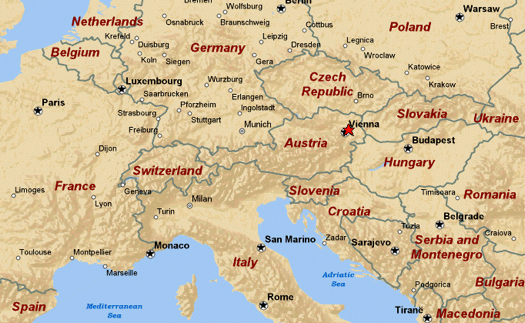
I’ve received a few really fun emails from readers saying things like: “I’m Irish but my grandmother made potica. I had no idea it was Slovenian!” Just another reminder that good ideas — especially when they’re based on butter and ground nuts — spread quickly from culture to culture. I mentioned below that you can find versions of potica all through Central Europe. The reason for this is because Slovenia was once part of Austria. What interest did Austria have in Slovenia? It’s fairly obvious if you look at a map. Landlocked Austria was the seat of an empire, one which needed access to the sea (it’s right there at the tip top of the Adriatic, next to Italy). Slovenia was that access. And since empires assimilate cultures as much as they do geographies and economies, potica became part of the imperial baking repertoire. So a lot of Central European immigrants to America knew how to make potica before the ever got here.

READ ON

What is Potica?

It’s a rolled-up cake made with a very thin yeast dough, and filled with a sweet walnut filling. Or at any rate that’s its most common form in and around Slovenia. But that’s not to say that nut paste is the beginning and end of potica. Potica’s name derives from a Slovenian word meaning “to wrap up” or “to roll up”, or so I understand, and in that region of the world they wrap and/or roll quite a few different things.

Poppyseed paste, for example. Also cooked apples, sweet farmer’s cheese, honey, raisin filling, cooked cherries, chocolate filling…and those are just the sweet varieties. Tarragon and egg potica is an old Slovenian classic. Chive and

READ ON

Potica Recipe

As with all the age old trans-cultural, trans-national classics I’ve attempted here on joepastry.com, there is no way a single recipe can encompass the totality of potica/povitica…gestalt, shall we say. Fillings vary, doughs vary, techniques vary. This one is more Slovenian (southeastern European) in its orientation, though I realize that even in this region interpretations vary (sorry to those who were hoping for a strudel-type povitica (though I do have strudel dough on the site should you want to venture out on your own!). I offer this will all due pleasure and apologias.

The Dough

1 lb. (3 cups) bread flour or all-purpose flour
2 1/4 teaspoons instant yeast
3/4 teaspoon salt
1.75 ounces (1/4 cup) sugar
8 ounces (1 cup) whole milk, room temperature
2 ounces (1/2 stick) very soft butter

READ ON

On Egg Wash

Several readers have asked that I go a bit in-depth on egg washes. I’m happy to oblige, though I have to confess up front that I’m not a big believer in the alchemy of egg washes. Unless you’re very much into the minute details of presentation — and I’m clearly not — a simple wash made of well-beaten whole egg will do you for most any job. Multi-ingredient washes made from egg, cream, water with a dash of sugar…homey don’t play dat.

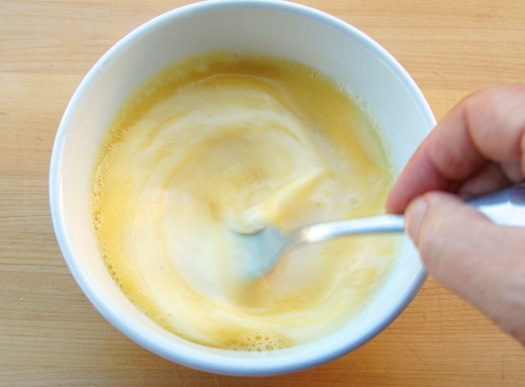
Making sure the egg really is well-beaten and not merely scrambled in the bowl is the real key to a good wash, i.e. one that gives you a smooth and even finish. Blobs of egg white on the brush will not only give you an uneven glaze, the pockets of albumen will actually prevent the wash from adhering to the pastry’s surface. I use a fork (sometimes a mini whisk) to mix up an egg wash. I whip briskly until I can’t force myself to do it any longer (about 2-3 minutes, which is a long time when you’re just standing there over a tiny bowl…whipping).

READ ON

Next Up: Potica/Povitica

Most people call it “potica” (poh-TEET-sa) but “povitica” (poh-VAH-teet-sah) is the name I know the best. That’s the way my high school girlfriend’s mother pronounced it. It’s sort of a nut strudel baked in a loaf pan. This should be fun!

READ ON

Egg Wash as Super Glue

Reader Flip writes to say that his kringle had some large cracks down the middle. He also mentions that cracks are a recurring problem with his laminated pastries, especially croissants, and wonders what he might be doing wrong.

Flip, my guess is it’s an egg wash problem. Though you might not think it, egg wash is a very strong glue, at least once it’s heated. If you paint your wash too low on the pastry, trying to increase the amount of glossy real estate, there’s a good chance you’ll get some egg wash on the pan or parchment. That can be disastrous from a presentation perspective.

READ ON

Making Kringle…Again

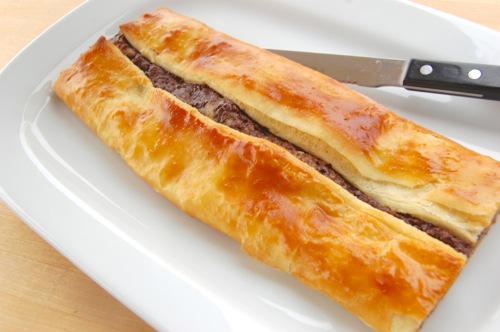
A strip-style kringle is more of an American (or at least a Racine, Wisconsinite) thing, though reader Jo recently sent me a link to a picture of a Danish chocolate kringle that was done this way (thanks, Jo!). As you can see it’s a whole different presentation, and kinda cool in its own way. You simply lay out your dough piece and spread your filling down the middle. You may need to roll it a little wider, just so everything fits.

READ ON

Yeast + Salt = ?

Reader Philip writes:

In the first picture [of the Making Kringle post] you seem to have put the sugar and salt on one side of the flour and the yeast on the other. Our British telly cooks tell us we must do it this way, as letting the salt come into contact with the yeast will kill the yeast. And yet once we switch the machine on the salt and the yeast are mixed together. Is this another kitchen myth?

Terrific question, Philip. Way to pick up on the details! It depends on the type of yeast. It’s true that concentrated sugar or salt will sap the moisture from live yeast and effectively kill it. Whether it has the same effect on dry, dormant yeast is open to question. Makers of instant yeast (the yeast I use almost exclusively) claim that you can pour their product on a heap of salt or sugar with no ill effects. That strikes me as

READ ON

The Baked Chocolate Double Bind

Reader Amy writes:

Joe — you said in your most recent post that chocolate goes grainy when you bake it, but that doesn’t seem to happen to chips in chocolate chip cookies. Maybe they’re an exception?

Nice, Amy! That’s correct to some extent. Different chocolates respond to heat differently. It all has to do with the amount of chocolate solids they contain. Chocolate chips are are loaded with non-chocolate, non-cocoa butter ingredients like sugar and powdered milk. As a result they don’t suffer as much from heat exposure. They lose their temper, as it were, and that’s pretty much it. Their shape and texture mostly hold.

READ ON