Making Atole

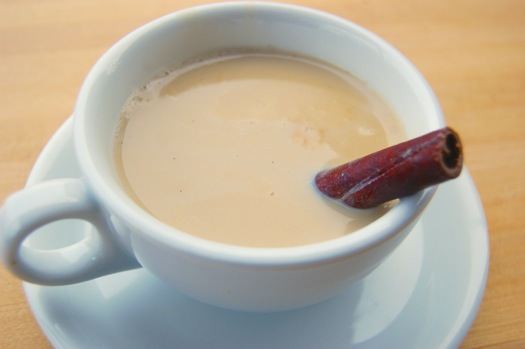
Vacation is no excuse not to put up at least the odd post, right? We made a little atole at Chez Pastry before we left, and a delightful refreshment it is too, especially on a cold winter day. It’s a simple Mexican concoction of sweetened, spiced milk thickened with corn starch. As with all things that call for only a few ingredients, the higher quality the ingredients, the better the end product.

READ ON

Making Baozi

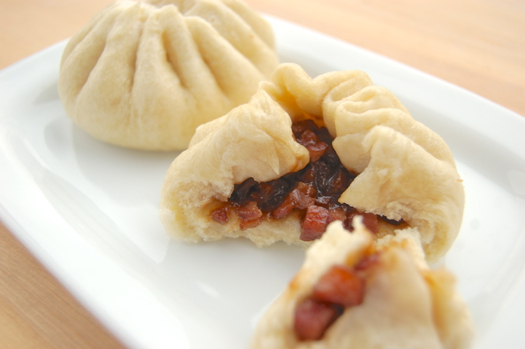
Two leaveners give baozi a cloud-like fluff that’s a perfect compliment to a sweet barbecue (or bean paste, or custard) interior. Sampling one straight from the steamer you could almost convince yourself that you’re eating some form of savory cotton candy. Such is the magic of steam baking. What you lose in color and crisp you gain in other-worldy lightness.

I confess that boazi intimidated me a little at first, I was worried about the shaping step. But a decent top crimp is well within the grasp of the average baker. And heck, if it fails you can just pinch it closed and steam the buns upside down instead. No shame there. They taste just as good. Start by preparing the filling of your choice and assembling your ingredients. Combine the dry ingredients in a bowl (or the bowl of a mixer fitted with the paddle). Stir them together.

READ ON

Better Cakes Through Chemistry

Not many questions on bao this week, but plenty on cake additives. So…why not? Reader Wale wants to know what the difference is between cake stabilizers, cake emulsifiers and cake improvers. These are products that are mostly used by commercial cake producers use in the U.S., but in some parts of the world are used by home bakers. Kitchen cabinets in Southeast Asia often contain so-called “cake gels” which produce very moist, very fluffy, very fine-crumbed cakes.

READ ON

(Un)Melted Chocolate

Reader Amanda writes:

I received a gift of some good quality, too-dark-for-me-to-want-to-eat chocolate and I decided to turn it into hot chocolate instead of eating it straight. I followed some recipes from the internet and the advice was to heat up a bit of milk, melt chocolate into it and then add more milk and heat the whole thing up. The taste was actually great but there were lots of tiny flecks of chocolate that wouldn’t melt into the milk with the rest of the chocolate and I was wondering what was up with that. I was hoping you might, as the only guy who answers questions about the science of ingredients that I’m familiar with, be able to answer my question.

READ ON

What is an Emulsifier?

So asks reader Wale, and it’s just the sort of question I like to answer on a Wednesday morning. The short answer is that an emulsifier is a substance that keeps an emulsion stable. But then what exactly is an emulsion again?

Emulsions are combinations of liquids that don’t normally like to be combined. In the kitchen those liquids are usually oil (or melted fat) and water. Like the members of Arcade Fire and the Flaming Lips, they don’t like to mix with each other very much, yet they can be made to with effort. Shake a jar containing water and olive oil vigorously and you’ll get an emulsion: millions of tiny oil droplets inside the water phase. The problem is that it won’t last very long. After about a minute or so the oil droplets start to recombine and the two phases separate again.

READ ON

The (Much Abbreviated) Life and Times of Zhuge Liang

Think of the Three Kingdoms period in China as roughly analogous to Arthurian legend in the West. Like King Arthur and his knights, the central actors in the Three Kingdoms lived in the first few centuries A.D.. In the same way Sir Thomas Mallory romanticized and popularized Arthur, Lancelot and Percival in Le Morte d’Arthur in 1485, Chinese novelist Luo Guanzhong glamorized Zhuge Liang and his contemporaries in Romance of the Three Kingdoms in the late 1300’s.

And while Romance of the Three Kingdoms is much more historically accurate than Le Morte d’Arthur (the third century Chinese kept far better records than the pre-Saxon Birts), it serves much the same purpose culturally. Over the centuries it’s spawned folk tales, books and operas. More recently it’s been the inspiration for comics, websites, video games, cartoons and full-length Lord of the Rings-style feature films. There are Three Kingdoms fan fiction books, role playing games and figurines, and heaps of miscellaneous merch. So while on the one hand it’s legitimate culture and history, on the other it’s nerd heaven.

READ ON
Who invented Baozi?

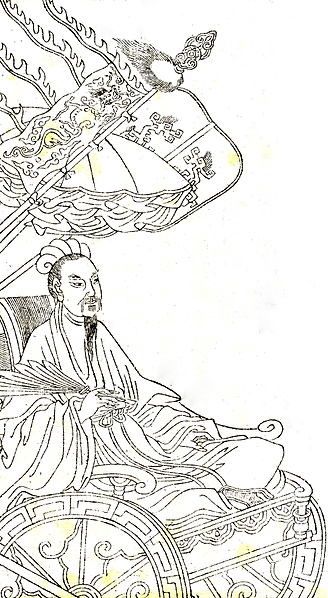
Legend has it that baozi (the earlier kind without baking powder) were invented way back in the 3rd century A.D. by a Chinese military strategist, inventor and writer by the name of Zhuge Liang who lived during China’s famous “Three Kingdoms” period. As the story goes, Liang was engaged in a military campaign in southern […]

READ ON

The Silk Road: A Two-Way Street

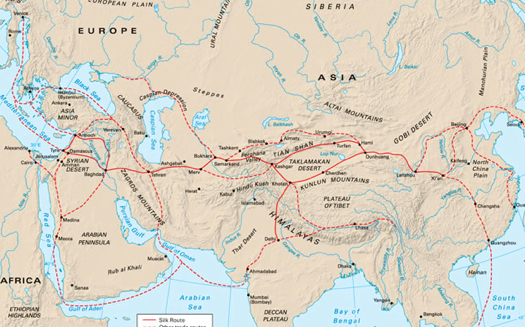
Most of us know what the Silk Road was. We learned about it in grade school history class: the overland trade route(s) that passed through the Middle East and Asia, connecting the West with the Far East. It’s a rich source of history for people interested in the spread of goods and technology around the Eurasian Continent in the centuries prior to the Age of Exploration. The trouble is schools generally present a pretty compressed view of what the Silk Road was all about.

READ ON