Making Lavash

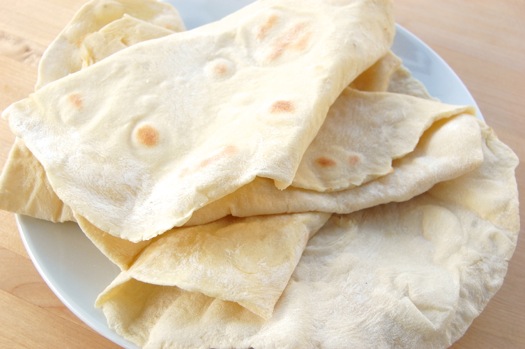
Now THIS is something I’m very excited about: homemade lavash. Wrap up some of your best sandwich fixin’s in some of this, straight from the oven, and get ready for the blank stares of wonder. In my universe lavash is the ultimate “wrap” bread, far preferable to tortillas, not only because it’s more flexible and tender, but because it’s larger and can more easily enclose…lots of stuff. Try this and you’ll probably never go back. Start by getting your ingredients together. Put the dry ingredients in the bowl of a stand mixer fitted with a paddle.

READ ON
The more I learn about flatbreads…

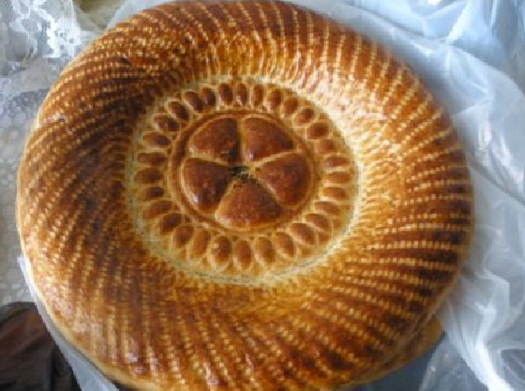
…the more I realize I’m woefully under-utilizing the baking space in my brick oven (it has a perfectly good ceiling!). These breads from Uzbekistan are truly amazing, both in the way they look and they way they’re baked, which is quite similar to naan and lavash. However whereas naan and lavash are adhered to vertical oven walls, these truly defy gravity stuck to the curving ceilings of barrel-style ovens. Check it out — and how about that groovy round-ended rolling pin? Those little decorative stamps they use in the center are pretty hip too. And if you’re wondering how they get that nifty scalloped edge on the sides, it’s a spoon! I tell you, breads don’t normally get me all that excited, but the world of flatbreads is truly amazing. Where can I get an oven mitt that reaches my neck? Thanks to reader Dani for putting me on the trail!

READ ON

Lavash Recipe

This is another very simple dough that you can have ready in less than two hours. It contains:

2 teaspoons instant yeast
16 ounces (about 3 1/4 cups) bread flour
2 teaspoons salt
12 ounces (1 1/2 cups) water
3 tablespoons olive oil

In the bowl of a stand mixer fitted with a paddle, stir together the dry ingredients. Combine the water and oil and add it to the mixer. Keep stirring until the dough comes together, then turn up the mixer to medium high and beat for about 5 minutes until the dough is smooth and elastic. It will be quite wet…that’s a good thing.

READ ON

OK, just ONE more flatbread.

Lavash is my favorite flatbread. It’s extremely thin and is traditionally made in large sheets. When it’s fresh it’s ideal for making wrap-type sandwiches, and is far superior to tortillas for that purpose. I’ve never tried making it at home since it’s tough to get the heat just right. Leave this ultra-thin bread in the oven too long and you get crackers. Too short and it’s pale and pasty.

How is lavash traditionally made? Like naan it’s slapped against the vertical wall of a large clay pot oven, though in the case of lavash a large pillow applicator makes the job easier. Here are some Armenian women doing that very thing. Cool, no? This bread is popular in Iran, Iraq, up into Armenia, Azerbaijan and the Eurasian steppes. I have no idea how I’ll pull it off.

READ ON

Brisée, Sucrée, Sablée

Reader Brendan also writes:

Also, a quick definition request. Sablée, brisée and sucrée. I understand the basic concept but they are so interchangeable between different sources i’m finding it hard to nail down the exact terms.

Sure thing, Brendan! Think of pâte brisée as your standard savory tart crust. It’s roughly analogous to American pie crust, though the French don’t worry about “rubbing in” butter in the same way we do. They usually make theirs with a mixer as they favor a much more even distribution of fat through the dough. Sometimes they’ll even go so far as to add egg yolk (at which point it’s known as pâte à foncer). Either way, the end result is a crust that is both finer of crumb and stronger than American pie crust, but that lacks a pie crust’s flakiness.

READ ON

On a Related Note…

Reader Brendan writes:

For…tart dough, is it possible to overcream the butter and sugar mix before you add the flour in? And if it is possible, what would the ramifications be?

Hey Brendan! Over-creaming isn’t generally a concern. I once saw a butter and sugar mixture creamed for so long that it eventually turned a slight grey. That tint wasn’t a result of anything that happened to the mixture, rather it was caused by metal dust (sugar granules can actually sand down the inside of your bowl after a while). Otherwise the only risk of extended creaming is that friction will lead to heat buildup and melting.

READ ON

On the Limits of European Butter

Reader Lars writes:

I do a lot of baking and I was wondering if you would be willing to impart some wisdom to me. I tend to prefer the higher fat European butters. What I was wondering is how much adjustment in my baking recipes need to be made for these extra fat butters?

Interesting question, Lars! Would you believe that on average American and European butters only differ in fat content by two or three percentage points? Given that, you don’t need to vary your formulas at all (moisture isn’t an issue). They are a little more acidic since the cream they contain is slightly fermented, but not enough to throw off chemical leavening reactions.

READ ON

Making Matzoh

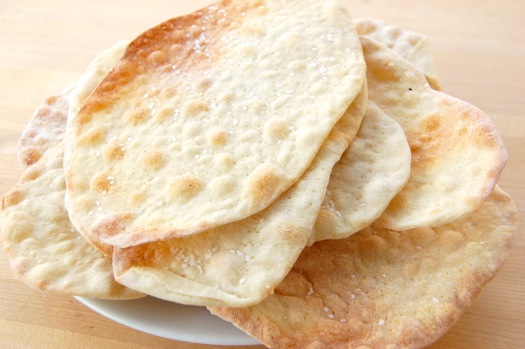
That, I don’t mind sayin’, is some handsome matzoh. I was stunned at how much it tastes like store-bought when I tried it, but it does. Still, there’s always a qualitative difference between what you buy and what you make, and it shows here. This may not be kosher, but it’s very light and fresh-tasting in the way that anything out of a box isn’t.

And if you’re wondering why a Scots-Irish Catholic buys matzoh in the grocery store, let’s just say that after spending a fair amount of time in New York City, I found that civilized life was next to impossible without matzoh ball soup. Start by preheating your oven to 500 or even 550 if it will go that high. Next get your ingredients together. Combine the water and the flour in a medium bowl.

READ ON

Matzoh Recipe

If I’ve learned anything this week it’s that “simple” flatbreads aren’t actually simple. I shouldn’t be surprised at that, since I’m constantly repeating the maxim that the most elementary recipes are the hardest to pull off well. As the number of ingredients in a recipe decreases, the importance of ingredient quality and technique increases. Further, many flatbreads are tied deeply to cultural norms I know little or nothing about. Clearly I have a long way to go if I really want to master this week’s subject matter.

Still, since I’m already tramping clumsily through the garden of tradition, I think I’ll take reader Elizabeth up on her challenge of making some matzoh. The proportions of matzoh are easy to remember: 2-1 flour to water by volume. Add salt if you wish. For me that will translate into two cups of flour and one cup of water.

READ ON

Making Chapati

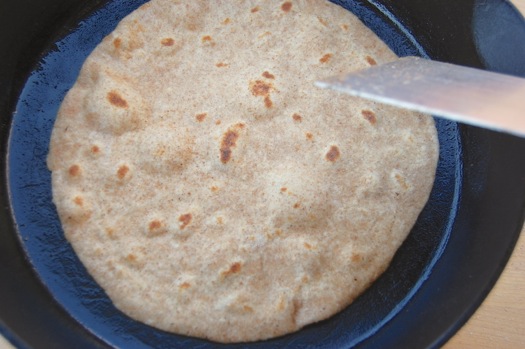
Some little old Indian ladies would have had a lot of fun watching me today, bobbling chapati while smoke poured out my kitchen windows. But I had fun! And I made some very good chapati. Not world class to be sure, but delicious. These tender breads are really fun to make and considering how fast they come together, they’re small miracles of economy: 45 minutes from start to finish! Start by assembling your ingredients.

READ ON