What’s the Difference Between Soda and Tonic Water?

Great question, reader Jay. A little something called quinine, an alkaloidal substance found in the bark of the South America cinchona tree. It’s been one of the most popular additions to carbonated water since about the mid-1800’s. How did a bitter-tasting tree extract come to be one of the world’s most sought-after beverage components? In a word: malaria. Quinine was for hundreds of years the most effective anti-malarial drug known to man. It’s been used by Europeans since the early 1600’s, when it was first brought back from the New World, and by native South Americans for goodness-knows-how-many millennia before that.

READ ON
H2CO3

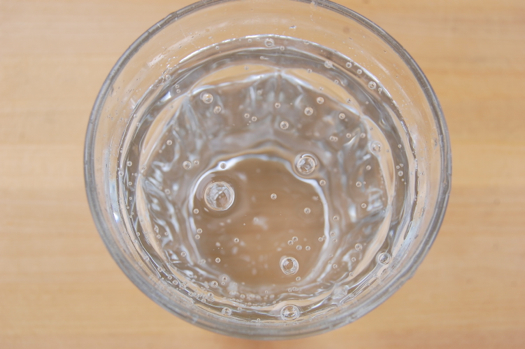
So carbon dioxide and water, that’s all there is in soda water is there? Er, well, no not entirely. For you see H2O and CO2 can get together inside a seltzer bottle (or can of pop) to form a little something that goes by the name of of H2CO3, that’s carbonic acid to you and me. Just how much carbonic acid occurs when you carbonate water? Not terribly much, though enough to give soda water and other carbonated beverages their signature sour tang. Oh, you mean you thought the bubbles did it? Nope, it’s the acid. Sorry to burst your uh…oh man, I just can’t bring myself to go there.

READ ON

What’s Carbonation?

If there’s one ingredient a soda fountain can’t do without it’s, well…soda. Carbonated water. Fizz. But what exactly is it? Soda is nothing more than carbon dioxide dissolved in water. A gas dissolved in water you say? How does that work? Pretty much the way it sounds. The very first man-made carbonated water was created by a fellow named Joseph Priestly in about 1770. He simply agitated a container of water that he’d suspended over a huge vat of fermenting beer. The atmosphere under that particular section of domed ceiling was nearly 100% carbon dioxide. Eventually enough of the gas dissolved into the water to create bubbles.

READ ON

Next Up: Soda Fountain Drinks

I’ve always thought that one of the great missed opportunities of the high-end dessert scene is the classic soda fountain. From where I sit sodas, phosphates and malts are wide open territory for enterprising pastry chefs. I can imagine a three-part dessert of say, key lime tart, a scoop of coconut ice cream and a […]

READ ON

Making Pavlova

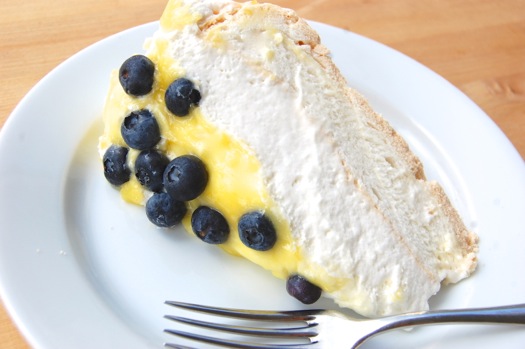
For a Kentucky baker making his first pavlova, I think this turned out pretty well. Did it come out looking like a tutu for a Russian dancer? Meh…if I stretched my imagination a bit, perhaps. I’m not winning any awards for authenticity here, since true south-of-the-equator pavlovas are made with passion fruit, kiwi and/or strawberries as far as I understand it. But since we happen to be at peak blueberry season here in Kentucky, it seemed to make sense. And what goes better with blueberries than lemon curd I ask you? I couldn’t help myself.

READ ON

Well that was interesting.

I went to prison last night and, to my great surprise, they let me back out again. It was quite an experience to watch a group of convicts — many of them serving extended sentences for very serious crimes — perform Shakespeare. Quite honestly I’m still trying to decide what I thought of it. It wasn’t the best Shakespeare I’ve ever seen, though many of the performances and several of the scenes were jaw-droppingly good.

Over the years the Shakespeare Behind Bars troupe has performed a variety of different Shakespeare plays, many tragedies (Titus Andronicus, Julius Caesar, Othello, Macbeth) but also comedies (The Comedy of Errors, Measure for Measure, The Tempest, Twelfth Night, The Merchant of Venice). This year’s show, Richard III, was I think the first of the history plays they’d performed. You won’t be surprised to discover that the histories are generally my favorites, especially the so-called “Henriad”: Richard II, Henry IV parts 1 and 2 and Henry V. So…no surprise that I was keen on seeing it.

READ ON

Attica! Attica!

I’m trying to contain my excitement this morning in anticipation of this evening’s entertainment: Richard III as performed by the inmates of Luther Luckett Correctional Complex over in LaGrange, Kentucky. I’ve been wanting to see these Shakespeare Behind Bars guys for years, but getting into one of the public performances isn’t easy. Seating is extremely limited because they basically perform in a small cafeteria. Plus with my checkered past it’s hard to pass the background checks.

READ ON

Spread or Pie Filling?

Reader Jack wants to know if lemon curd is the same thing as lemon meringue pie filling. The answer is yes, more or less. Spreadable curd recipes tend to be a bit sweeter and more lemony, since they’re used as condiments. Also they lack cornstarch, which is a common addition to lemon meringue pie filling […]

READ ON

Scales!

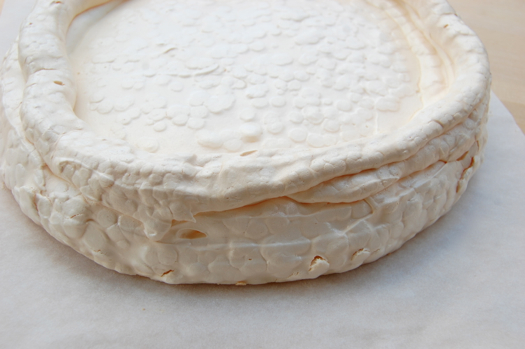
My first attempt at a pavlova base and it’s clear I have some work to do. I tried piping this because I liked the idea of adding a lip to the side to made a sort of bowl. I got a little sloppy with it as you can see, but the worst part is the texture, which is like alligator hide.

READ ON

A Couple of Pavlova Questions

Several readers have written in to ask if the thick meringue layer that forms the base of a pavlova can be made ahead of time. The answer as far as I’m aware is no, not really. Thin, crispy layers of meringue of the kind that go into marjolaine or vacherin can be kept for several days if need be, but in general thicker, softer layers don’t keep as well. Still I think we need an Aussie or a Kiwi to weigh in on this and give us a definitive answer. Little help anyone?

Reader Vicki wants to know if she can use stabilized whipped cream for the filling. She also wants to know what the heck whipped cream stabilization is and how it works. Vicki, the answer to your first question is yes (though some purists might complain). As far the second, I’ll need a little space to answer it. You may or may not know about how whipped cream works, a full explanation for that is here. Basically, whipping creates a layer of free fat molecules which coat air bubbles and keep them from popping.

READ ON