The Great Apple Crap Shoot

You know, it’s really unfair to characterize frontier apple orchards as being all about drinking. They weren’t. They were also about gambling. Sort of.

How so? Well, these days we Americans are fairly complacent about apples. We shop at big markets and select from the few tried-and-true varieties that we use for eating, pies, baking and whatnot. But there was a period around the turn of the last century when different apple varieties where everywhere, and America as a nation was on fire to discover the new hot “eating apple”.

READ ON
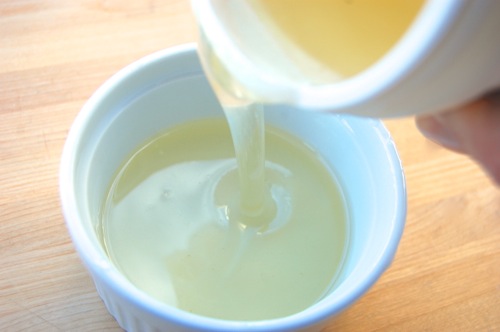
Can invert sugar syrup be used in place of corn syrup?

So ask readers Mari and Lisa. I live for this sort of stuff, so let’s get into it. First, let’s define a few terms. Corm syrup is something most of us are very familiar with. It’s a syrup made from corn endosperm (starch) that has been exposed to enzymes which break the long chain starch molecules down into short sugars that human tongues can taste. The result of all this molecule-breaking (hydrolysis) is a soup of roughly 15% glucose (one of the very simplest of sugars), 10% maltose (two glucose molecules bonded together) and 55% longer sugars. These longer sugars blunt the sweetness of corn syrup simply because we don’t have taste receptors for all of them. They also give it thickness. The last 20% is water.

READ ON

Fruit with a Checkered Past

The poor apple. It’s had a bad rap since just about forever. Sure, nowadays its image has been plastered over to create a wholesome veneer, but that can’t fully erase centuries of bad PR. For over a millennium the apple has been synonymous with sin in the Judeo-Christian tradition. No one knows exactly why. Genesis doesn’t specify what the “forbidden fruit” actually was, in fact there are those who to this day argue that the forbidden fruit was a fig. So why the bad rap, historically speaking? Perhaps because the Latin word for apple, malus, is strikingly similar to the Latin word for “evil”, malum.

Which is not to say that ancient peoples had any particular problem with the apple. Human beings from Khazakstan (where the apple is thought to have originated) to Europe, Japan and all other points along the Silk Road have enjoyed apples for thousands of years. I daresay it was when the apple reached North America that the bad press really started.

READ ON

The Myth of Perfectly Balanced pH

Reader Gail asks:

I have a question about altering recipes. I love buttermilk, I think it gives cakes a singular texture. So if I wanted to use buttermilk instead of regular milk in chemically-leavened layer cake batter, should I reduce the baking powder and add baking soda? Are there imbalances the buttermilk will cause? Or is it just not a good idea in general?

Interesting issues you raise here, Gail. One of the myths of baking is that recipes containing chemical leavening must be perfectly balanced from a pH standpoint. That’s not true much of the time. Sure, you don’t want heavy alkalinity in a batter that’s got a lot of fat or oil, since that gives you soap. But in general a little bit can be good since it gives you extra browning.

READ ON

The Cocoa Grind is Up

That ain’t a dance move, it’s an economic indicator — a measure of the total volume of cacao ground to powder to meet North American chocolate demand (other parts of the world issue their own quarterly “grindings” reports). The total grind was up 8.25 percent to 131,974 metric tons in the third quarter of this year, and that’s good news for chocolate sellers. The bad news is

READ ON

Choux Gnocchi

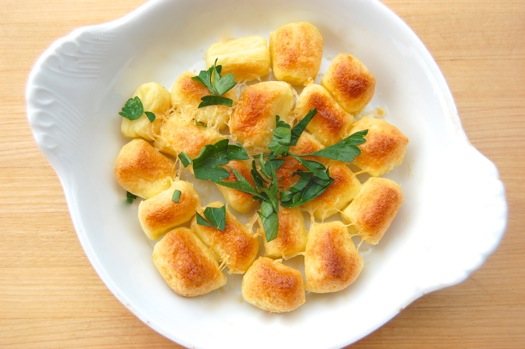
For all those who find potato gnocchi too heavy, and let’s face it they really can be, choux gnocchi are the perfect solution. These little pillows of flavor go great with roasted meats. They also make an excellent course on their own tossed together with split cherry tomatoes or roasted root vegetables. That of course is just the beginning of the utility of choux gnocchi, just use your imagination. Because they freeze so well, they make a great last-minute addition to virtually menu regardless of the season. If you can stir and simmer you can make them easily.

READ ON

Butter or Shortening?

Reader Paul writes in with a very interesting choux question:

Rather than the milk vs water thing, what about alternatives to butter? We make our choux paste with butter, but our pate brisee with shortening for a more neutral, puffier crust. Would it do the same thing for choux? As far as I’m concerned, choux paste, like brisee, is more of a filling delivery system than a confection in its own right. Making it neutral allows the filling to take center stage. Before I go off on a testing tangent what are your thoughts, Joe?

A fascinating idea, Paul. There’s no reason I can think of that shortening wouldn’t work in choux, though you’d want to scale it down by 15% since butter is about 15% water and you don’t want to weigh the batter down any more. On the functional impact, my feeling is that there won’t be too much in terms of texture. The finished puffs will probably be a bit more rigid since you’re losing some milk solids.

READ ON