Torta di Bietola Recipe

These sorts of greens-based pies are common in Italian cooking, and are very similar to Easter pies, which can contain either greens bound with cheese and eggs, or meats (and eggs and cheese or savory custard). Crust-wise, these pastries can be all over the board. Standard pie crusts can be used, sheets of puff pastry, phyllo dough, you name it.

I thought it would be fun to do something a little more rustic, something I’ve seen done with classic Easter pies. Specifically, sheets of yeast dough, stretched thin by hand, buttered and laid on top of one other. It’s a glimpse into the past of laminated doughs, before the French came along with their butter pats and fancy folding techniques. You’ll need:

READ ON
Kentucky Cast Iron

Reader Devin writes that I seem to be doing a lot of cooking/baking in cast iron all of a sudden. He asks, since I’m living in Kentucky now, if I’m learning all about how to take care of cast iron pans.

Devin, I am…sort of. Cast iron cookery is a “thing” now in a lot of cooking circles. Of course it’s always been a “thing” in Kentucky, especially in the eastern part of the state which is more hilly/mountainous. Appalachian folk there have obviously been cooking with cast iron pans since forever.

READ ON

Next Up: Torta di Bietola

The chard patch is nearing its end in the garden, and what better way to bid it farewell than with a savory Italian chard and egg tart? That’s not a rhetorical question — I really want to know! Thanks to reader Jud for the inspiration.

READ ON

Making Mieliepap

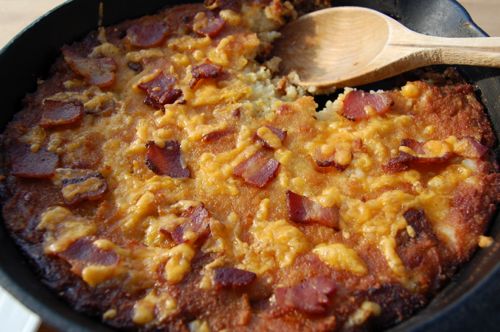
“Mielie” in Afrikaans means “corn.” As for “pap”, that’s not hard to figure out: “porridge”, “gruel” that sort of thing. This version is clearly not a gruel, souped up as it is with honey, but more than that bacon and cheese (which make everything taste better). My 4-year-old, who’s mad for all things corn — cornbread, tortillas, tamales, arepas, you name it — couldn’t get enough of this and had to be restrained lest she exploded. Begin by turning your oven on to 375 degrees Fahrenheit. Next combine the milk, buttermilk, honey, butter, salt and corn meal in a saucepan.

READ ON

Love for Sale

Just a quick note for those of you who may be considering paying huge bucks for ad space on an industry-leading pastry blog. My exclusive arrangement with Foodbuzz has expired, and I’m experimenting with some new potential sources of ad revenue. Next generation strategies for revenue stream enhancement and site monetization, in other words. Of course I’ll still be doing this with or without the extra thirty nine bucks a month. But…nothing ventured, nothing gained, knowadimean? Joe is open for business.

READ ON

Do gristmills ever explode?

And if they do, why? That from reader Afton, age 9. Boy is a question like that ever a great way to start a day, Afton! I thank you for it. The answer is…sometimes. However I’m not aware of many (or any) explosions having to do with corn mills. Wheat flour milling is another matter entirely. But then why should that be so? Both involve the grinding of grains. I believe the answer has to do with particle size. But first a little bit about what causes mill explosions.

READ ON

Gristmill Under the Hood

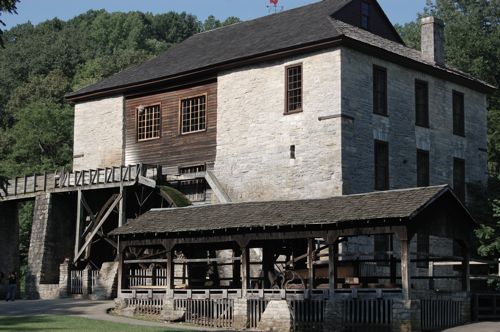
Regular reader, good friend and world traveler Warren helpfully submitted these pictures over the weekend of Aldi Mill in Virginia. Still working (over the summers, anyway) it’s a classic example of the gristmills that could once be found all over the Midwest and Eastern US.

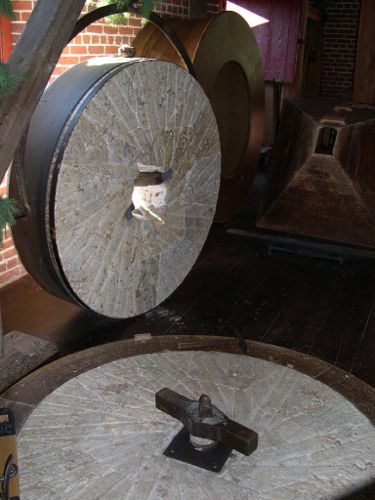
Here’s a terrific shot of the rocks…the runner above and the bed below with furrows cut into their faces. Based on the angles, you can how the stones cut the corn kernels with an almost scissor-like action.

READ ON

Milling Matters

I got a little riled up yesterday, I admit it. I get a touch of the southern preacher in me talking about corn meal, which is weird because I spent most of my life in Chicago. After reading yesterday’s post I received a few comments and emails from folks asking if I thought good corn meal was worth an investment in a small home mill. I’m not sure about that, though I know home milling was common in the US (and probably lots of other places) as recently as 100 years ago.

READ ON

Corn Meal is Corn Meal

Not! I may be blasé about the differences between cane sugar and beet sugar, between high-end grand cru chocolates and the chocolates you can buy at the supermarket, but when it comes to corn meal I get animated. Simply put, you need the best quality stuff you can find. And when I say “best quality” I mean stone ground, ideally from an old-school grist mill of the kind you find in national parks and those historic restoration villages.

Why am I so particular about corn meal? Because there’s no corn meal like fresh meal ground slowly between stones from whole kernels of dried corn. Though you may not realize it, the corn meal you find in supermarket packages is not only stale, it’s ground from only the endosperm of the kernel, the oily germ having been pinched off by steel rollers.

READ ON