It’s “another time”, so…

Let’s spend a minute on the “French women” topic, as I’ve already received several emails on it. As to why American women seem so fixated on French women, reader Dotty says “It’s because they seem to have everything American women want.” Reader Trisha says “It’s because they have a certain mystique, an allure.”

READ ON

Do I need a special crêpe pan?

Nope, you don’t. A standard 9″ nonstick sauté pan works perfectly. If you really get into crêpes you can consider getting a specialized crêpe pan. The nice thing about one of those, even though it’s a pan that only does one thing, is that you tend to baby it when you wash it, which is […]

READ ON

Do Les Bonnes Femmes Bake?

This week’s recipe comes from a new cookbook called The Bonne Femme Cookbook: Simple, Splendid Food that French Women Cook Every Day by Wini Moranville. It’s pretty darn nice stuff. Though I admit when Harvard Common Press’ PR agency contacted my about it, my first thought was oh no, not another “French women” book title! An Amazon search of those key words turns up an astounding 30,000+ results. (As an aside I must say I’m at al loss to explain why American women seem so fixated on their French counterparts, but that’s a subject for another time).

But The Bonne Femme Cookbook isn’t your average bit of book aisle French-envy. It’s a highly useful — and highly readable — manual for femmes and hommes who simply like cooking good food at home. Here is where I could go into an exhaustive (and exhausting) overview of the book’s recipes à la the New York Times book review section. I’ll spare you that and simply say that what I especially like about

READ ON
Where do crêpes come from?

A massive anthropological tome could be written on the subject of pancakes, as they were in all likelihood one of mankind’s first prepared foods. Hunter-gatherers have been cooking gruels of mashed grain on hot rocks for millennia. When they invented the first Stone Age IHOP is unknown, though remains of paleolithic policemen have been found huddled over platters of what look like Pick-A-Pancake double blueberry stacks. Experts are still debating the evidence, of course. They might be Rooty Tooty Fresh n’ Fruity combos.

READ ON

Crêpe Recipe

Crêpes create irrational fear among many non-French cooks. It’s understandable…they’re thin and can tear if they aren’t handled with delicacy. It’s also common to have the first one or two stick or tear while they’re in pan. An under-heated pan is frequently the cause, but so is operator error. Just be patient and after a few tries you’ll be a pro.

Are there any tricks to crêpes? Just make sure to let batter rest as directed to let the bubbles rise out — for bubbles create rigid crêpes and rigid crêpes break when you try to flip or roll them. This recipe is adapted from The Bonne Femme Cookbook by Wini Moranville.

READ ON

But first, crêpes.

I’m not sure why I think of crêpes as a cold weather food, probably because The Magic Pan was a big place to take girls after dances when I was in high school. Going there was the way you demonstrated…how can I best put this…culture….when you lived in west suburban Chicago back in the early 80’s.

Funny thing about crêpes in America is that they’re constantly cycling in and out of fashion, whereas in France they’re a constant. I suppose this is because the French themselves are constantly cycling in and out of fashion in America, and when they’re out baby, they’re out. But whether the French are “in” or “out”, their really skinny pancakes always taste really, really good.

READ ON

Attention Panettone Fans

Next week I’ll be doing panettone, but the old-fashioned way: using a starter. It takes longer that way, but the richer flavor and denser texture are well worth it. So my message is: feed your starters, folks — or grow one if you don’t have one yet. There are complete instructions under the Bread menu […]

READ ON

Bakers & Reality

Reader Janey writes:

I’ve seen so many reality shows with chefs yelling orders at the cooks in restaurants etc., and [that show] the pressure in a kitchen…but they never show behind the scenes of pastry chefs/dessert cooks.

I noticed most of the time restaurants don’t have a pastry chef on board but that the cooks/main chef take those responsibilities on themselves. Do you have a good idea as to how different it is for pastry chefs in a kitchen [versus] a regular chef? Is it as fast-paced and hectic for pastry chefs? Is it the same rush as in a regular kitchen?

READ ON

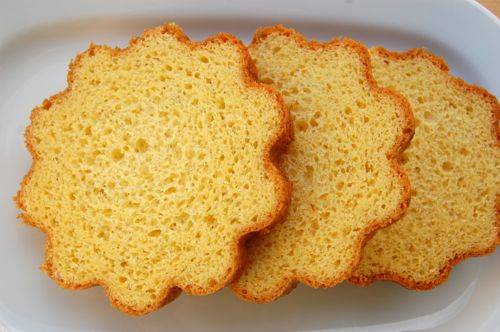
Making Gâteau Battu

For sheer simple beauty, there’s no beating (no pun intended) a slice of gâteau battu. The brioche family of breads is like that. They’re golden in color and can be baked in all sorts of elegantly shaped molds. Gâteau battu differs from brioche mainly in its flavor — which is significantly sweeter — and its texture which is extremely tender and moist. Especially when topped with custard, jam or some other sweet spread, it truly lives up to it’s designation as a cake (versus a bread). Start by making the sponge. Combine the yeast, egg and flour…

READ ON

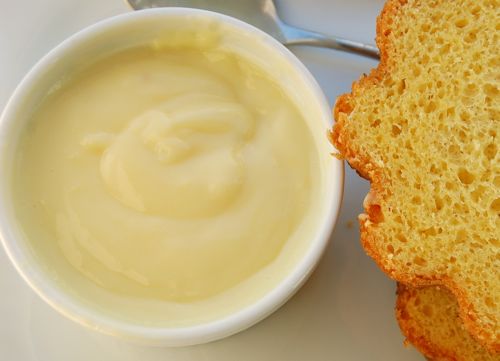
Simple Vanilla Custard (Pudding)

Everyone should have a simple stirred custard recipe handy. In America we call this sort of cornstarch-thickened mixture “pudding.” It’s terrific for eating just as it is, but it can also be used as a thick sauce for, well, whatever. This recipe is sort of a “pastry cream light.” It’s not as sweet as most pastry creams, nor as rich in cream or egg yolks, but it does have a dab of butter for sheen.

READ ON