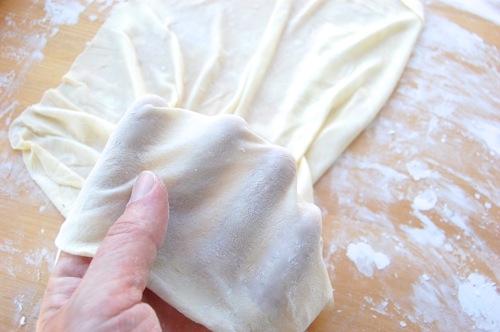
Making Filo Dough

Thin as this dough is, it’s about three times as thick as the store-bought stuff. But you know we’ve all been down the pre-made filo dough road before. We know where it leads: a quite good, if very expected, texture and taste. Make filo yourself and you won’t have the extreme flakiness, but you’ll still have plenty, plus a little extra crunch, chew and depth of flavor. I recommend the experience highly. The dough is stretchy and forgiving, really fun to work with. Just prepare yourself for a few failures at first. You’ll still get enough sheets out of a regular batch to build a very nice pastry.

READ ON
Come for the Drinks, Stay for the Galaktoboureko

Reader Sammi wants to know if I’ve ever eaten “real” galaktoboureko before. Well I’ve never eaten it in Greece, though I’ve been to Athens. But I have eaten it in my home town of Chicago, in Greektown, a place that holds a special place in my heart to this day. Greektown is your classic big city, immigrant-created, Americanized ethnicity ghetto. It’s not much populated by Greeks, at least not anymore. The originals have long since moved to the suburbs. Today Greektown is mostly full of restaurants and shops, some of them glitzy and catering to tourists, others more subdued, catering to immigrants and/or their descendants who still want a genuine taste of the Old Country.

READ ON

Greek Grannies: 1, Joe: 0

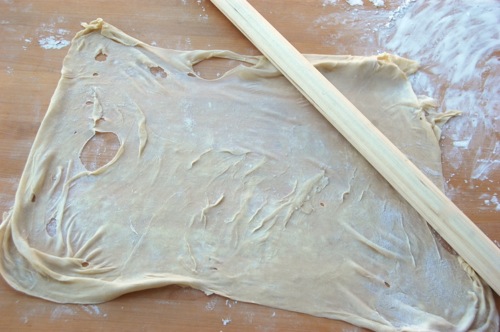
Filo fail! The wrapping-the-dough-around-the-pin method that I’ve seen demonstrated simply isn’t working for me. Next I’ll try the straight roll, which I believe will have better results. I also think I’m a little over-obsessed with getting my filo thin. It should be thin of course, but no normal human can get filo as thin as the store-bought stuff. I’ll tell you this though, that dowel rod has earned a place of permanence in my pin collection. It’s fantastic.

READ ON

Linda the Genius

Reader Linda comments that she uses Cream of Wheat in her galaktoboureko filling. That’s perfect. It’s made of durum wheat, but a fairly fine grind, a much closer approximation to medium-ground Greek semolina than durum flour. Plus it’s a lot easier to get. Why didn’t I think of that? Thanks a million, reader Linda! I’ll make the change right away.

READ ON

What makes filo flaky?

In a word, reader Jan: steam. Expanding steam is the force that pushes apart those delicate sheets, which then crisp up in the heat of the oven. But of course to make steam you need water, so the logical question then becomes: where does the water come from? In part from the dough itself, but also from the butter.

READ ON

Not Your Typical Custard

So this filling…it’s pretty much just like a pastry cream, then? Um, let’s say it’s in the same family, reader Hal. Like pastry cream it’s a stirred custard, not a still custard, even though it’s also baked. The process for making it is identical, however under the hood it’s both leaner and employs a more interesting combination of starches.

READ ON

Galaktoboureko Recipe

Reader Lisa, a pastry student in Greece, was kind enough to forward this recipe along to me. I’ve made a few modifications to make it easier for home cooks here in the English-speaking world, I trust that won’t offend. Here’s what you’ll need:

For the Syrup

1 1/2 recipes of heavy syrup, simmered with a fat strip of lemon zest, cooled, then 1 teaspoon of vanilla extract added. Make this the night before.

READ ON