The Year the Moo Shu Landed

So what first brought Chinese food to American shores? The answer: gold. It was the discovery of gold by one James W. Marshall of Sutter’s Mill in 1848 that caught the attention of merchants and tradesmen in Hong Kong, which was a cosmopolitan place in those days. Chinese entrepreneurs were well accustomed to dealing with European, English and American traders by then, and had little compunction about following the trade routes backward through Polynesia and up the American West Coast. The first dozen Asian 49er’s arrived by boat in San Francisco Bay in well, 1849.

READ ON
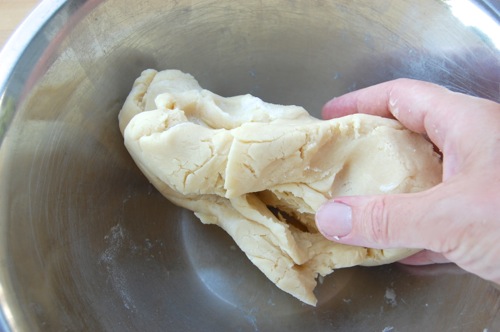
Next Up: Chinese Pancakes

There are two reasons I wanted to tackle something different this week. 1.) I’m a little bored with sweet stuff that moment, but more importantly, 2.) It’s hot. Truly it’s much too hot to keep an oven running for more than an hour or so here in Kentucky, even early in the morning. Since no one here in the pastry household much feels like eating anything very sweet, rich or heavy, my thought is: what about changing gears completely and doing something that’s both savory and light? Chinese food came to mind (really American Chinese food, which is the only Chinese food I have any real experience with).

READ ON

Making World Famous Kentucky Horse Race Whose Name Rhymes with “Herbie” Pie

There are three words I want you to remember when you set out to make either pecan pie or World Famous Kentucky Horse Race Whose Name Rhymes with “Herbie” pie. Those words are: Syrup. Holds. Heat. That concept is critical because just like pumpkin pie, pecan pie and World Famous Kentucky Horse Race Whose Name Rhymes with “Herbie” pie are custards. Overcook the filling and they will curdle. The result? Lumpy-textured slices that weep syrup on the plate.

READ ON

On Pie Crust “Additives”

Several readers have written in to inquire about texture-improving pie crust additives. I didn’t include any in the standard pie crust recipe below because, well, it’s just the standard. But I frequently do add things like a little baking powder or an acid of some sort to my crusts to enhance their flakiness.

Lemon juice, vinegar or cream of tartar are great for tenderizing a crust because acid undermines gluten development. As I recall it inhibits the ability of the molecules to bond end-to-end. Something about a change in polarity that I’d need to look up, but really wouldn’t completely understand once I did.

READ ON

What About Ghee?

You know, clarified butter. It’s been melted, had most of its water boiled away. Won’t that work in a pie crust instead of butter, lard or shortening? Unfortunately not. For it’s the structure of butter, not merely its composition, that determines the way it behaves in pie crust.

Milk fat occurs not as a mass of lipid molecules with a few water molecules mixed in, but in pure lipid blobs, each of which is surrounded by a protein coat. It’s those protein-enclosed blobs, plus water, that create the emulsion that is butter. Destroy those blobs and what you get is a greasy slurry.

READ ON

Sorry Gang!

I should probably have just declared a July hiatus with all I have going at the moment. Vacation, lotsa business, girls in summer camps…I can’t remember the last time I was so busy. Thanks for all your patience and I hope to be back at my normal posting level soon! – J

READ ON

So What Else Ya Got?

Reader Jillian asks if we have any other unique foods here in Louisville. Well Jillian, it’s taken me a while to learn them, but yes indeed we do. The odd thing is that so few are directly related to the Kentucky Derby. You’d think that as the home of one of the world’s best-known sporting events we’d have gone hog-wild with Kentucky Derby…everything…ages ago. But no. Derby Pie(®) is the only well-known edible thing we have with the world “derby” slapped on it.

Which is not to say that there isn’t a whole lot else here that’s unique and interesting. The first odd food I noticed on arrival nine years ago was the rolled oyster. Though you see fewer and fewer of them around these days, they’re a relic of the oyster craze that swept America in the 1880’s. Sure, most people don’t associate Kentucky with sea coasts and mollusk farms, but 125 years ago oysters were very easy to get here. Louisville was a straight shot

READ ON

Not Fully in the Saddle…

Still playing catch-up, also spent a good part of the afternoon seeing what little Jo built at her week-long summer robot camp. A nerd much nuture his nerdling, am I right? Boy, those things were cool. More from me Monday!

READ ON

Hang on…

Isn’t World Famous Kentucky Horse Race Whose Name Rhymes with “Herbie” Pie just a gussied up pecan pie with chocolate chips and whiskey added? You could say that. For some, panettone is just brioche with candied fruit added. It’s true that at its heart World Famous Kentucky Horse Race Whose Name Rhymes with “Herbie” Pie […]

READ ON