Polyglot Pie

Combine an Arab sensibility with a European recipe using locally available ingredients, and you pretty much have bisteeya. For indeed under the hood it is very “pie-like” in the old sense of the world: a mixed bag of ingredients inside an edible container, all bound together with egg. Granted it’s not something you see much in Europe these days, but once upon at time at the height of the Age of Pie (i.e. the MIddle Ages), these sorts of preparations were everywhere in Europe and the Mediterranean.

READ ON
Don’t panic!

Pigeon! I don’t know where to get pigeon! Whoa there readers Phil, Tina, Cindy and Kate! I hope you know me a bit better than that. Very very rarely do I pull a Saveur and call for an impossible-to-find ingredient. Mrs. Pastry and I used to love that magazine, by the way, but for as much as we loved it, we also loved to laugh at it. Their ingredients lists were hilarious.

1 cup flour
1 teaspoon salt
1/2 cup chicken stock
1 lb. ox clavicle, smoked

READ ON

A Big Day for Gluten-Free Bakers

I’m constantly fielding requests for gluten-free baking ideas, and constantly letting readers down when I fail to deliver. I don’t get into gluten-free baking much, not because I’m not sympathetic to those who can’t eat gluten, but because there are only so many hours in the day (and I’m under serious pressure to get through the entire classic pastry catalogue before I eventually grow old and die). However I wanted to note that tomorrow marks the release of C4C gluten-free flour. The brainchild of Thomas Keller and culinary researcher Lena Kwak, it’s available from Williams Sonoma starting today.

READ ON

This Week: Bisteeya

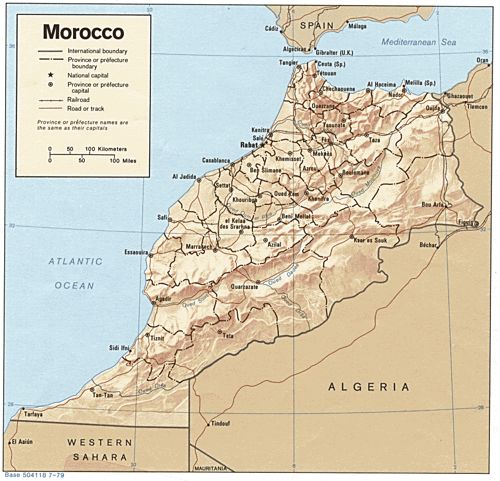
Savory baking, edible birds, pie…when I triangulated those three things on a map, my finger landed squarely on Morocco. Specifically on Morocco’s most famous dish: bisteeya, also spelled b’steeya, bistella, pastilla, pastella, the list goes on. Interestingly, the only time I’ve heard a real Moroccan pronounce the word it sounded like pas-TEL-ah. So I’m all kinds of confused on the name.

However a rose by any other name would still taste like Moroccan pigeon pie. Actually more of a pastry than a pie, it’s a delicate, spicy, savory-sweet combo that works great in either a conventional home or outdoor brick oven (and a lot of you have been bugging me for more brick oven recipes). Let’s make it!

READ ON

On Pie

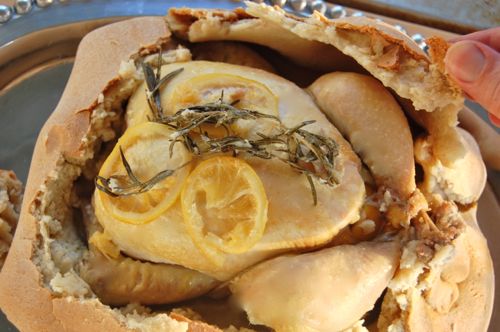
Reader Jonah points out that I failed to make the connection between chicken in a salt crust and Medieval pies, as I promised to do early in the week. Very true, Jonah, thanks for the reminder! My thought was simply this: that once upon time, pie wasn’t so much a “what” as it was a “how.” Which is to say, it was a method, a way to cook and to preserve food. I think of pie as the original Tupperware.

Food historians make the case that pie-eating dates to Greece and Rome. But here it really depends on what you mean by pie. Pies of the ancient world were more akin to modern tarts: open-faced, made for immediate consumption. The Arabs were the next in line to create pie-like baked goods, which is to say pastries with top and bottom crusts. Yet they were not — at least to my way of thinking — true pies. Those evolved in the Middle Ages in Europe.

READ ON

How does a brine work?

Quite a few readers out there have written in asking whether a salt crust gives a result similar to a brine when it comes to roast chicken. It’s a good question. Both methods surround the bird with a salty medium. Intuitively, they should produce a chicken that’s about the same in terms of taste and texture. But in fact that isn’t so.

The critical difference is water. A solution of just 3% salt will penetrate chicken muscle much more readily than the salt in a salt crust will, even though there’s a lot more salt in the crust. Which begs the question: why?

READ ON

Cockfighting, Academic Style

Want to see a really good fight? Get a few anthropologists together in a room and ask them when chickens first arrived in the New World. Then back away and start placing your bets.

How chickens came to the Americas is one of the great unresolved anthropological debates. On the one hand you have those who believe chickens arrived in the New World with the Spaniards and/or Portuguese. On the other you have those who contend that chickens arrived far earlier and from the other direction, via the Polynesians. A few outliers claim ancient Egyptian seafarers brought them, but most of those types also believe in the Loch Ness Monster.

READ ON

How to Truss a Chicken

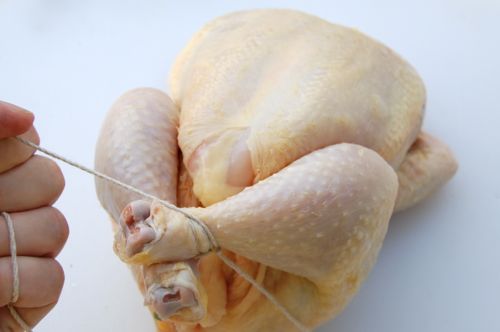
Trussing a chicken is an easy thing to do and it vastly improves the texture of your roast. Why? Because the more you can draw any large piece of meat — not just a chicken — into a compact, ball-like shape, the more evenly it will cook. Extremities like legs drastically overcook when they simply stick out there in the oven’s heat. A little twine around the meat prevents all this.

READ ON