Cake Syrup Q

Reader Christine writes:

I have been reading that invert sugar preserves moisture in cakes. Which brings me to my question: Do you make/use your own invert sugar in cakes? For most tortes that I make, I use a basic “sponge” I guess you would call it in English. I use only flour, sugar, salt, vanilla, a little lemon zest sometimes, and eggs—separated—no hot water bath mixing. I have a hard time keeping the sponge layer moist, so I’m curious about what you do to achieve satisfactory moisture in a such a layer cake.
READ ON

Next Up: Apfelkuchen

I made a pledge to several readers that I’d get into some German apple bakery this Fall. Apfelkuchen is one of the recipes I promised, so I figure, let’s get to it! Now that my Dog Days of Summer Savory Baking Festival is over, it seems like a fruitful direction (no pun intended). Recipe submissions […]

READ ON

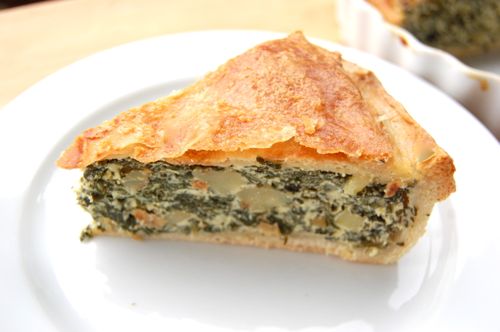
Making Torta di Bietola

Though this Italian pie is made with Swiss chard (“bietola”), I should point out that the general approach I’ve laid out here can be used with a wide variety of greens (spinach, broccoli rabe, etc.). Or you can banish the vegetables entirely, add more cheese, diced ham and/or Italian deli meats and you’ll have a torta di pasqua, an Italian Easter pie.

READ ON

More Cast Iron Q’s

Reader Stephanie writes:

Two questions for you. Is cast just cast, or is some cast really better than others? I’ve just always gone with the standard lower budget brand, both because I am wary of all things name-brand and over-priced, and because I don’t ‘get’ the enamel on the exterior since I do all of my cooking on the interior of the pan.

I remember a few years ago a friend of mine (a lawyer and I’m a teacher, so clearly different tax brackets) was worried about her young son being anemic. I kept telling her to cook with a cast iron skillet and she kept saying it wouldn’t be worth the expense. Obviously we were talking about different cast iron skillets, but it also made me wonder if there is some information available on how much iron actually leaches into the food.

READ ON

What’s Swiss chard, anyway?

Good question, reader Hillary. It isn’t Swiss, for starters. It’s not clear where it’s from originally, most likely somewhere in the Mediterranean. It’s often claimed to have been appreciated by the ancient Greeks, though it’s really hard to say. Chard has gone by so many names over the centuries. A kind of beet green is what chard actually is. You can see the linguistic connection in the name of this week’s project: bietole…beet greens, in Italian (the word is used interchangeably for both chard and beet greens). See what I mean?

READ ON

Torta di Bietola Recipe

These sorts of greens-based pies are common in Italian cooking, and are very similar to Easter pies, which can contain either greens bound with cheese and eggs, or meats (and eggs and cheese or savory custard). Crust-wise, these pastries can be all over the board. Standard pie crusts can be used, sheets of puff pastry, phyllo dough, you name it.

I thought it would be fun to do something a little more rustic, something I’ve seen done with classic Easter pies. Specifically, sheets of yeast dough, stretched thin by hand, buttered and laid on top of one other. It’s a glimpse into the past of laminated doughs, before the French came along with their butter pats and fancy folding techniques. You’ll need:

READ ON

Kentucky Cast Iron

Reader Devin writes that I seem to be doing a lot of cooking/baking in cast iron all of a sudden. He asks, since I’m living in Kentucky now, if I’m learning all about how to take care of cast iron pans.

Devin, I am…sort of. Cast iron cookery is a “thing” now in a lot of cooking circles. Of course it’s always been a “thing” in Kentucky, especially in the eastern part of the state which is more hilly/mountainous. Appalachian folk there have obviously been cooking with cast iron pans since forever.

READ ON

Next Up: Torta di Bietola

The chard patch is nearing its end in the garden, and what better way to bid it farewell than with a savory Italian chard and egg tart? That’s not a rhetorical question — I really want to know! Thanks to reader Jud for the inspiration.

READ ON

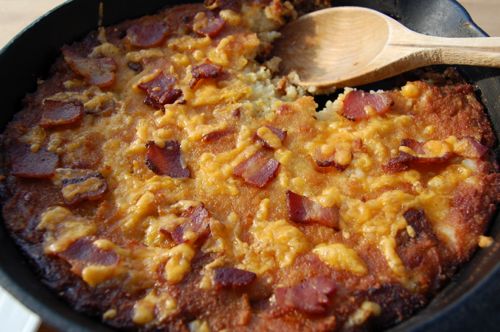
Making Mieliepap

“Mielie” in Afrikaans means “corn.” As for “pap”, that’s not hard to figure out: “porridge”, “gruel” that sort of thing. This version is clearly not a gruel, souped up as it is with honey, but more than that bacon and cheese (which make everything taste better). My 4-year-old, who’s mad for all things corn — cornbread, tortillas, tamales, arepas, you name it — couldn’t get enough of this and had to be restrained lest she exploded. Begin by turning your oven on to 375 degrees Fahrenheit. Next combine the milk, buttermilk, honey, butter, salt and corn meal in a saucepan.

READ ON