Making Mince Pies

There’s a lot of joy in a mince pie — especially if the mincemeat filling contains real meat. Sure, the anti-mince pie crusaders of a hundred years ago claimed they caused insanity. But you’re not going to let a little thing like a psychotic break get between you and a handsome snack, are you? I thought not.
For four of these bad boys you’ll need 1 recipe of pie dough, plus 4-5 cups of mincemeat. Start by preheating your oven to 350. Apply about half your dough to a lightly floured surface.
READ ONThe Great American Viand
Most Americans today have scarcely heard of mince pie. Those who have consider mince pie to be a British thing. Quite an irony when you consider that mince pie was once the quintessential American pie. Far, FAR more popular than apple or cherry, 19th Century Americans ate mince pies all through the year for breakfast, lunch and dinner.
So if mince pies were so darn popular…what happened? The answer is somewhat unclear. However it seems to be the case that in the early 20th Century mince pies came under a sort of popular attack, not unlike what we’ve been seeing with fruitcakes the last couple of decades. Starting in the 20’s or so, they became a sort of national joke. More earnest critics of mince pies claimed they were responsible for everything from indigestion and nightmares to psychosis and death.
READ ONMaking Mincemeat
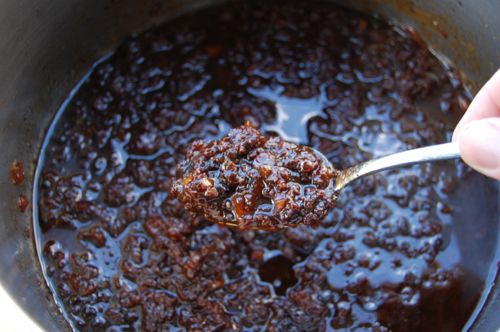
Not many people make real mincemeat anymore. I think it’s high time we turned that trend around! Meat gives mincemeat a superior texture and flavor, not to mention a satisfying historical frisson that really completes the experience. Start by cooking your ground beef.
READ ONShredding Suet
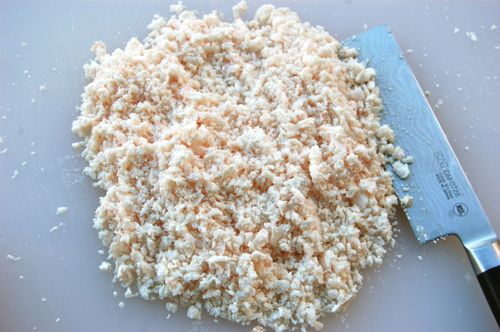
If you enjoy mincemeat and/or British puddings, you’ve no doubt seen suet on an ingredient list. An easy-melting, mild-tasting fat taken from the kidney region of a steer, suet is akin to leaf lard on a pig. Brits of yester-year employed it as an inexpensive fat for enriching sweet baking.
It’s actually still used quite a bit, especially during the holidays, which is why you can still find commercially-shredded and packaged suet in the British Isles. Here in States the only kind of suet we can get comes straight from the steer, so we have to do the shredding ourselves.
READ ONDead Guy Activism
A regular reader (who’s calling himself “Vlad” this weekend) writes:
On behalf of the life impaired community, I wish to thank you for so eloquently highlighting an important point: that people without a pulse can still make a positive contribution to society. Those of us who are currently dealing with what is widely considered to be life’s ultimate disability thank you.
My pleasure, er…Vlad. Don’t forget I come from Chicago, a city famous for championing the rights of the deceased. Dead people have been voting there for decades.
READ ONThe Operation Called Mincemeat

I’m always more than willing to take a detour into history. Happily for me there’s an indirect connection between this week’s subject and one of the weirdest, most macabre stories of World War II: Operation Mincemeat. Since we’re closing in on Halloween, the story — a tale of how a dead guy helped misdirect the Nazis during one of the most important Allied invasions of the war — seems appropriate.
READ ONWho was Fannie Farmer?
Ever since Julia Child’s death, food journalists, food celebrities, cookbook authors, bloggers and cultural historians have expended millions of keystrokes lionizing her. I’d say most if not all of that worshipful press is deserved. For Julia Child was a titan in the field of home cooking, having empowered millions of women — and more recently men — to attempt culinary feats once thought too difficult for the average Jane (or Joe).
Amid all these hagiographics, however, it’s important not to forget that Julia Child was but the latest in a line of innovators that have given us home cooking as we know it. That line — among English speakers anyway — stretches back to Hannah Glasse (author of The Art of Cookery Made Plain and Easy in 1747) and can be traced through Eliza Acton (Modern Cookery for Private Families, 1845) and Isabella Beeton (Beeton’s Book of Household Management, 1861) to Fannie Farmer, author of the Boston Cooking-School Cookbook.
READ ONMincemeat Recipe
This is close to the classic Fannie Farmer recipe from The Boston Cooking School Cookbook. The original has too high a proportion of apples in my opinion, but if you want the original recipe, double the apples. I’ve also changed the processes a little, since the original called for boiling the beef. Ground beef, cooked in a pan and drained, will work just fine for our purposes (and will retain more of the beef’s flavor). This is for a small quantity, but it can be scaled up to your heart’s content!
1 lb. lean ground beef
1/2 lb. suet
1 lb. apples (Macintosh or Granny Smith)
1 quince (omit if you can’t find any, make it up with more apple)
12 ounces sugar
1/2 cup molasses
1 pint cider
1 lb. raisins
12 ounces currants
2 ounces candied citron
1 cup brandy
1 teaspoon ground cinnamon
1/2 teaspoon ground cloves
1/2 nutmeg, grated
1/2 teaspoon pepper
salt to taste
When Mincemeat was King
October was a big month for me as a boy. It was birthday time for my twin sister and me. Halloween came a week later, and right in between was the annual Pumpkin Festival in Sycamore, Illinois. Sycamore was over an hour away from our house in Hinsdale, but an old fraternity brother of my father’s was the pastor of the Episcopal church there. Culinarily speaking, that church was the epicenter of the whole festival, since it was there that the mincemeat was made.
It was an elaborate, highly clandestine operation. Dozens of women participated, however like a team of World War II code-breakers, none but the most senior had any concept of what they were doing. The recipe, you see, was a big BIG secret. Only one or two of the octogenarians working the kitchen actually knew the proportions. The rest of the team — which was mostly dedicated to peeling and chopping — was arrayed outside the church kitchen and not allowed through the doors. You’d have thought mad science of some kind was going on in there.
READ ON