While we’re waiting…

Reader Tim asks if I know how and why trench warfare evolved. Tim, I’m not a military historian, but that won’t stop me from taking a stab at answering your question. From what I know, trench warfare simply “happened.” It was an outcome of the weaponry that was being used at the time. It’s often said of various wars that technical advances in weaponry were well ahead of the military tactics being used. As a rule that tends to be true, since senior officers are almost by definition old guys who tend to look to the past. If it worked then, it’ll work now. That way of looking at the world becomes less and less valid as the pace of technological advance increases.

READ ON
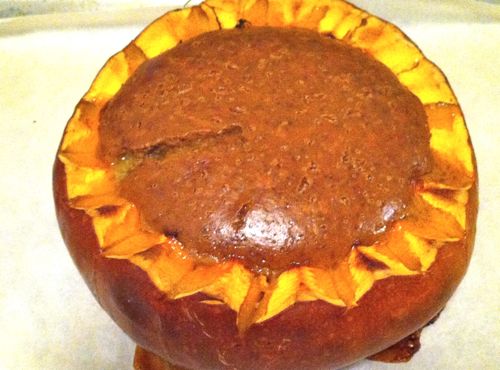
What’s French for “boondoggle”?

When I don’t post much it generally means I’m having trouble with a recipe. It seems the recipe I have for gâteau battu isn’t going to work. So much for reliable sources! The dough is just too sweet for the yeast to grow well. I’ll do some digging tonight and see what else I can […]

READ ON

Where does banana bread come from?

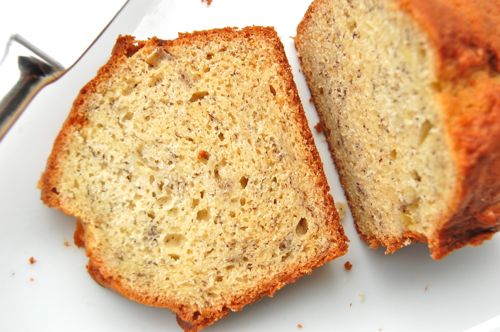
…asks reader Roz. Banana bread was a relative latecomer to the tea bread scene, not having arrived until the early 1930’s. The first written recipe is thought to have been published in a 1933 Pillsbury Company cookbook entitled Balanced Recipes. Still there’s little to suggest that banana bread was especially popular at the time.

READ ON

Banana Bread

Hang on there Joe, aren’t we doing gâteau whatchamacallit? Well, yes we are, but I had a bunch of overripe bananas that were crying out to be turned into something. And what with all the interest in tea breads the last week or so it seemed timely. Plus the weather here has been awful the last three days…my precious natural light has been at a bare minimum…terrible for photography. I promise I’ll get to gâteau battu as soon as the Thanksgiving break is over. And anyway, this is my mother’s famous banana bread. You can’t go wrong here. You’ll need:

READ ON

Gâteau Battu Recipe

This isn’t the standard French method for making gâteau battu (“beaten cake” in English). Traditionally it’s made with fresh yeast using what some people call the “blitz method”, i.e. just throwing everything into the mixer all at once and turning it on. I’ve converted this to a dry yeast procedure on the assumption fresh yeast isn’t easy for most people to find. To compensate for the lack of a fresh, live culture, I’m using instead the sponge method, which gives the yeast a running start since it’ll eventually be confronted with lots of sugar and/or alcohol. I also add the butter in late, as you do if you’re making standard brioche. This creates both a fluffier texture and a higher rise. Omit this step if you’re a stickler for authenticity.

READ ON

Remembering the Somme

Of course large, flat expanses of land are good for more than planting sugar beets. They’re great for fighting on. So it’s not surprising that the world’s deadliest-ever battle was waged in Picardy, on the banks of the River Somme. It was of course the Battle of the Somme, which occurred right in the middle of the First World War.

Those who aren’t familiar with WWI probably still know that it was famous for slow, bloody trench warfare. At the outset of the war in July 1914 the Germans wasted no time invading eastern France, where they promptly dug in. That long battle line barely moved for two years as troops from both sides shot at, gassed and bombed one another. The whole thing was very inefficient from a military perspective, costing lots of lives relative to the territory gained.

READ ON

Lingua Franca

Something else that’s interesting about Picardy is that they have their own language: Picard. Some consider it a distinct language, others just a dialect of French. But so I’m told, speakers of Picard and French can’t necessarily understand one another.

In our modern education environment where we take French, German and Spanish classes, it’s easy to forget that Europe — despite its best efforts to integrate itself into an economic, even cultural whole — remains a patchwork of cultures and languages, many that the average person has never heard of. The big, internationally accepted tongues are merely language of convenience which (supposedly) tie everyone together.

READ ON

Where does Gâteau Battu come from?

It’s from Picardy, a province in extreme northern France. Picardy is notable for several things including red brick houses, stunning Gothic cathedrals and excellent beer. I find it interesting first and foremost because it was the region where Napoleon first introduced the sugar beet.

Not many people think of Napoleon as a food (and food science) innovator, but he had to be — he had big armies to feed. Napoleon is mostly remembered as a brilliant military strategist and political leader, and he was certainly all that. What’s less well remembered is that he was the inventor of war on a societal level. Prior to Napoleon’s arrival on the European stage, war was mostly conducted by armies of professional soldiers whose loyalty was available to the highest bidder. Maybe they were from the country they were fighting for, maybe not. The cash was the main thing. Remember how the Hessians, German-speaking regiments that fought for the British crown, were one of the great terrors of the colonies during the American revolutionary war.

READ ON

Next Up: Gâteau Battu

Having spent the last ten days or so on the tried-and-true’s, it’s time for a curveball: gâteau battu. “Beaten cake” is the translation, I believe, though it’s not really a “cake” in the modern sense. Rather it’s a cake in the 18th Century sense: a bread enriched with lots of eggs and butter. Sounds quite […]

READ ON