So how does hydrogenation work?

I’ve blogged on this subject in the past, but will happily re-summarize in light of the recent posts on oil, fat and frying, reader Sally! As outlined below, frying fats that are solid at room temperature are desirable for a number of reasons. But if solid animal fats are either too expensive, too rare or off the table for dietary or health reasons (as they were twenty or so years ago) what is there to do? The answer of course: turn liquid oils into solid fats.

That’s what a German chemist by the name of Wilhelm Normann did in 1902. He found that if one were to bubble hydrogen through liquid oil in the presence of a catalyst metal, unsaturated fatty acid chains would pick up hydrogen atoms (remember those teachers and school children from the post below). The result would be a solid oil, also known as a “fat.”

READ ON
Making Sicilian Cannoli

Hey. Your regular guy Joey ain’t here right now. He had to go see a guy about a thing, knowadimean? I’m his cousin Paulie. I’m here to make sure he doesn’t get this whole cannoli thing fudged up, pardon the French. ‘Cause ya know there’s no bakery cannolo in the world that beats the kind you make at home, which are so friggin’ light and so friggin’ rich and so friggin’ crunchy it makes me about to wanna friggin’ die. Jeez there I go again with the French, sorry. I told Joey I’d watch my friggin’ mouth. Ah, shhhi—

READ ON

Will we ever go back to fat?

Reader Samantha asks:

Why is shortening used over lard as a solid fat in commercially made products? Is it the cost?

Goodness gracious, Samantha, is that ever a great question. If only I had some of my former clients from McDonald’s corporate headquarters here to help me answer it. For as you may know, up until 1990 McDonald’s fried its legendary French fries in beef tallow (fat). That was the year when they finally succumbed to public pressure, whipped up by groups like the Center for Science in the Public Interest, to change over to vegetable shortening, which was supposed to be better for us.

READ ON

Shortening Versus Oil

So why do some people use solid fats to fry and others use liquid oil? An excellent question, reader Jay. As many people know, just about all commercially made, oh, doughnuts for example, are fried in solid shortening. They could in theory be fried in liquid oil, but solid fats offer several important advantages, among them a greater resistance to breakdown and rancidity.

READ ON

How long have I got, doc?

How long does it take for good fry oil to turn bad you mean? That depends on a number of factors, chief among them the type of oil/fat you’re using. In general, you want a frying medium that’s fairly stable (i.e. resistant to breakdown) and neutral flavor-wise. For me that means either vegetable or canola oil. Solid fats like shortening or lard are even more resistant to breakdown, but are less convenient for the home fryer.

READ ON

Making Ricotta Cream

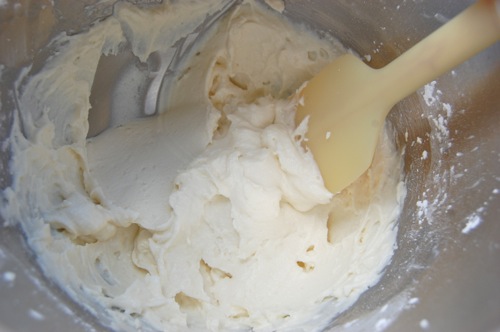
For those who aren’t big fans of cream cheese fillings or frostings (I’m one of those), ricotta cream is a terrific alternative. It’s lighter and fresher tasting, especially when you make it with homemade ricotta. Yet it’s utterly delicious. Served with some sort of crisp cookie garnish, it makes a dessert all by itself. And of course it’s the classic filling for cannoli. Start by placing the ricotta in the bowl of a mixer fitted with a paddle (you can do this by hand if you’d rather).

READ ON

Making Ricotta

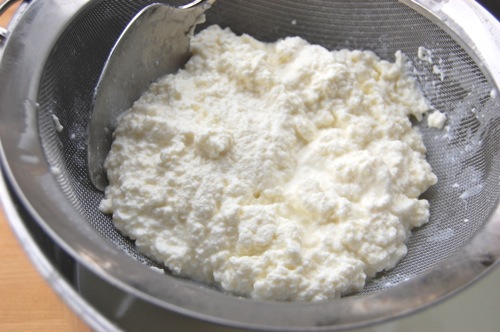
Purists may cry foul because this ricotta is made with whole milk (and a little cream), but I say let them. This is the internet. They’re miles away. Classically ricotta is made from the whey left behind after provolone is made. However few if any of us can just nip down to the corner market and pick up a gallon of provolone whey, now can we? And anyway

READ ON

Soap is Good Food

Reader Dorothy asks:

I get a lot of conflicting information about fry oil. Some recipes say you should only use fresh oil, others say old is better. Which is right?

Thanks for that question, Dorothy. The answer is that the perfect fry oil is fresh, but with a tablespoon or two of old oil added. The reason, because while fresh oil gives you a crispier product and less oil soak-in, you need a few old oil soaps to ensure decent browning. There’s plenty more on frying here. Scroll to the bottom and work your way up!

READ ON

Where do cannoli come from?

Sicily, as I’m sure you’ve been able to intuit from the recipe post below. If you’re not familiar with Italian geography, Sicily is an island off the tip of mainland Italy. If the mainland is the “boot”, Sicily is the “ball” the boot is kicking, as it were. It’s an evocative visual metaphor, though I confess I’ve never figured out which ball sport it is that’s played in thigh-length, spike-heeled boots. Whatever it is, I have no doubt I’d have a great time watching it. Especially if the players don’t kick ball around, but rather a honey-baked picnic ham as the map image suggests.

READ ON