Joe Flaunts His Geek Creds

Thanks to reader Kirsten who gave me the heads up about this month’s episode of The Flog, which features a recipe by yours truly. If you don’t know the show, it’s what you might call a “lifestyles” web series created by Robin Thorsen and Felicia Day of The Guild fame. And if you don’t know The Guild, well then odds are you aren’t a nerd. Many thanks to Robin and Felicia, who kindly requested permission to use the material all the way back in March or something. I’m delighted to be part of the show. Keep up the great work, ladies!

READ ON

Next Up: Napkin Dumplings

Reader Linda asked me to help her re-create the dumpling of her dreams, a sliced bread type that she first encountered at a Czech restaurant in Ohio. The good news there is that back home in Chicago I once had a Bohemian girlfriend (not the lifestyle choice, the actual ethnicity). I learned a lot from that girl, especially about starches. At her family dinners we ate starches beside other starches, on top of other starches, and stuffed inside of other starches.

It’s because of one particular New Year’s Eve I spent with the Polish side her family (also big-time starch buffs) that I can’t eat pierogis anymore. All my other high school friends were elsewhere downing beers and shots of vodka. But who needs alcohol when you’ve got mashed potatoes inside a boiled wheat flour dough? I don’t remember much about that night after about my twelfth. I have foggy recollections of slamming bowls of borscht with her grandfather, belly-laughing at jokes told in a language I couldn’t understand. Whatever happened, she didn’t find it appealing. We broke up not long after. My great regret is I never figured out her mother’s secret hemendex technique before we split. Sigh.

READ ON

Cookie Leavening Q’s

Reader Anna writes in with some interesting questions about chemical leaveners in cookies.

Baking hundreds of Christmas cookies every year, here are a few questions that are troubling me:

1) a lot of recipes mention adding the baking powder or the bicarbonate of soda and then keeping everything in the fridge for up to 24 hours. Wouldn’t that counteract the very action of the leavener?

2) some recipes (mainly handwritten, from Aunt X or Mrs.Y) specify in the procedure: mix this and that ingredient, add the flour, mix and in the end add the leavener mixed with a couple tablespoons of milk (or some other liquid).

3) when do you use baking ammonia as a leavener?

READ ON

Making Yorkshire Pudding

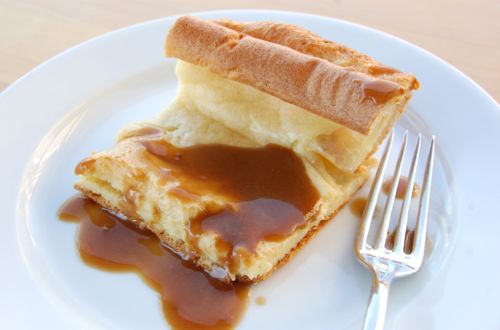
Now a true Yorkshire pudding (or so I have it on good authority) is made in one large pan, not in several small ones, and it’s served not as an accompaniment to a roast but as a first course, drizzled with gravy. Works for me. Still, once these shots were done I piled on some sliced turkey, a little cranberry and another piece o’ puddin’ and made a sandwich out of it. I can tell you that it made one heck of a Kentucky lunch! So do what you will. I know of no Yorkshireman (or woman) who’ll come ’round to check.

READ ON

Where does Yorkshire pudding come from?

If you guessed Yorkshire, you’re partly right. This sort of open-pan pudding made with meat drippings has been popular in Britain since at least 1737 when the first recipe was published by “a Lady” in her seminal book, The whole duty of a woman, or, An infallible guide to the fair sex: containing rules, directions, and observations, for their conduct and behavior through all ages and circumstances of life, as virgins, wives, or widows : with rules and receipts in every kind of cookery . I need to get a copy of that for the missus for Christmas. Think?

READ ON

Yorkshire Pudding Recipe

If it looks familiar it’s because it’s almost identical to popovers, though just a tad richer. The main difference with Yorkshire pudding is that — classically — it’s baked in one large pan instead of individual servings (like American popovers). That pan needs to be heated and have at least a few tablespoons of smoking-hot meat drippings in it.

Just as with popovers, a successful Yorkshire pudding depends on well developed gluten, which is why I suggest using a blender, food processor or lots and lots of whisking is you want a decent puff. Assemble:

1 ounce (2 tablespoons) melted, unsalted butter
5 ounces (1 cup) all-purpose flour
3/4 teaspoon salt
2 eggs, room temperature
8 ounces (1 cup) milk, room temperature
1 ounce (2 tablespoons) melted fat from a roast, or lard or butter

READ ON

Joe on Catholic Catechism

Reader Mikey has an amusing question:

Hi Joe! Loved your St. Lucy posts, and I hope you won’t be offended, but being a Catholic I wonder if you can answer something for me. Do Catholics really worship saints as, well, gods?

Ha! I love that. First let me say that the first commandment states that “You shall have no other gods before me.” The before me implies that the odd kitchen or tool shed god is permissible so long as you don’t forget who number one is!

READ ON

Making Popovers

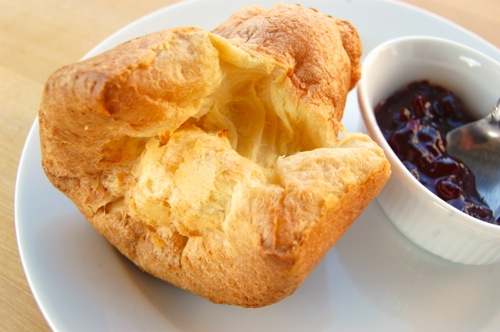
Now me, I’ll eat a popover all by itself with jam, pork roast be damned. However there’s no denying how good they are as an accompaniment to meat. Plus they’re so fast and easy to make you can turn out a batch while your roast is settling on the counter. There’s a myth that popovers are tricky things. But that isn’t so, provided you’re clued in to the importance of developed gluten in the batter and can wield a blender, food processor or whisk with authority.

READ ON

Popover Recipe

Popover recipes tend to be very consistent in their proportions since the science that underlies them is constant. Herbs and other flavorings are an exception to that rule, and are popular with American cooks (traditional Yorkshire pudding has no herbs). Popover recipes can, however, differ in technique. I’m stymied by recipes that tell the cook to whisk the batter gently or until “just combined.” That’s a rule for pancake or crêpe batter — which popover batter closely resembles — or for quick breads or cakes, where you don’t want much gluten development.

It’s the opposite with popovers. In this case you want lots of developed gluten to give the rising bread the elasticity it needs to stretch and hold steam. For that reason I recommend a blender or a food processor. If you have neither of those and rely on a whisk, use plenty of elbow grease, and consider using bread flour (or a mix of half bread and half all-purpose) to amp up the gluten content. By no means use pastry flour, cake flour or a fine Southern flour, which won’t do the job here. Either go Yankee or make dinner rolls instead. The ingredients are:

1/2 ounce (1 tablespoon) melted, unsalted butter
5 ounces (1 cup) all-purpose flour
3/4 teaspoon salt
2 eggs, room temperature
8 ounces (1 cup) milk, room temperature

READ ON