Color Me Blue

This color stuff is fun. So why not press on a little? I’m on the road so I can’t bake, and I have a fair amount of waiting around to do. Sounds like a recipe for jabber, no?

Blue No. 1, also known as Brilliant Blue FCF is one of the most popular colors in the world, but most people hear very little about it. Why? Because it doesn’t appear by itself very often. It’s mostly used in combination with others, especially Yellow No. 5, to make various shades of green. The reason for that, because blue is something of a turn-off when it comes to the human appetite. In fact studies have show that we’re instinctively averse to it.

READ ON
What is “Dutched” cocoa powder?

So asks reader Fleur, and it’s a great question. I’m not sure I’ve ever really blogged about “Dutching” before. The answer, Fleur, is that it’s cocoa made from cacao (fresh harvested chocolate) nibs that have been treated with an alkaline. More often than not that alkaline is good ol’ potassium carbonate, a once-common kitchen chemical known as “pearl ash” or “pearlash”…as sort of precursor to baking soda.

The process was invented, not surprisingly, by a Dutchman named Conrad van Houten in 1828 (he’s also the fellow who invented cocoa powder). At the time, van Houten was looking for a treatment that would help his new powder incorporate more readily into milk. Being fatty stuff, cocoa powder doesn’t mix with watery milk terribly well.

READ ON

Beetle Juice

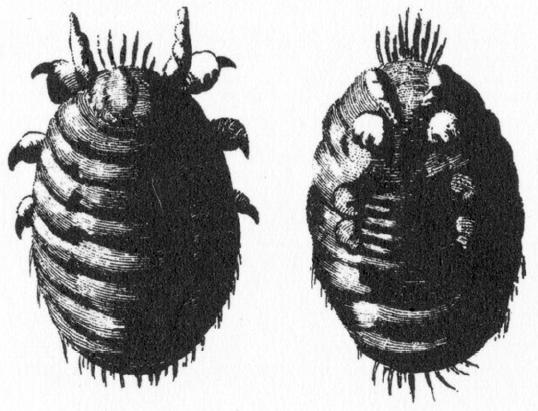
On the subject of red food coloring, for years grade school kids have been telling each other that the reddish hue in their lunch meat is made from ground beetles. As it happens, the story is true. Well, maybe not “ground beetles” exactly. “Ground beetle extract” is more like it. And it’s not just the odd lunch meat. More than a few products in present-day supermarkets owe their red, orange or pink tints to the Mexican cochineal beetle.

Cochineal is one of the oldest red pigments, used for centuries by native peoples in Central America, especially for clothing dye. The beetles were collected, boiled briefly, dried, ground and soaked to extract the color (the process is strikingly similar today). In fact cochineal dye was one of the earliest exports from the New World to the Old, as it was up to ten times more potent than dyes made from the Old World’s magic color bug, the kermes beetle (kermes having been used since ancient times to produce so-called “king’s red”). Cochineal was an important commodity up until the 1850’s when red Alizarin was isolated, causing Mexican bug futures to fall precipitously.

READ ON

Seeing Red

As I mentioned below, a lot of people get very worked up over artificial colors, especially red. There’s reason for this. The red food color many of us in America once knew, Red No. 2 (also known as Amaranth or E123), was banned in the US in 1976 after independent studies found it to be carcinogenic in large doses. It’s still used in many parts of the world, since researchers in other nations have come to the conclusion that it’s safe. This isn’t terribly surprising, since food colors are the most rigorously safety-tested food ingredients in the world, and every nation has its own set of standards.

In fact it’s interesting to note that our current replacement for Red No. 2, Red No. 40 (also know as Allura Red AC or E129) is currently banned in Denmark, Belgium, France, Germany, Switzerland, Sweden, Austria and Norway. But then most of those countries use Patent Blue V, which is banned here in the US, and in Australia and Norway. Most of them also use Yellow 7G which is banned here in the US and in Norway. We all use Yellow No. 5, except of course for Norway, where I’m beginning to think all food is served the same sickly shade of gray.

READ ON

On Color

Though bright artificial color is the key ingredient in red velvet cake, I almost hesitate to bring food colors up as a subject because I know there are more than a few folks out there who experience acute anxiety around them. This anxiety frequently arises from (mostly) outdated concerns about safety, though some people dislike […]

READ ON

The Myth of the “Red” Chocolate Cake

This is two tablespoons of cocoa powder combined with two tablespoons of water and a teaspoon of baking soda. If you look closely you can see that an interesting chemical reaction is taking place. See there? Right along the edge where the mixture meets the dish? A little reddish tint. Look close now…see it there?

READ ON

Red Velvet Cake Recipe

A lot of very creative balderdash surrounds the red velvet cake, from its origin myths to its chemistry to its odd little preparation rituals (making a paste of red food coloring and cocoa powder, etc.). There’ll be more on all that this week. For now all you need to know is that red velvet cake is little more than a buttermilk layer cake with a hint of chocolate and a whole lot of red food coloring. It goes like this:

6 large egg yolks
11 ounces (1 1/4 cups plus two tablespoons buttermilk)
2 teaspoons vanilla
2 ounces red food coloring
13 1/2 ounces (3 cups) cake flour, sifted
10 1/2 ounces (1 1/2 cups) sugar
1/4 cup cocoa powder
3/4 teaspoons baking powder
3/4 teaspoons baking soda
3/4 teaspoon salt
12 tablespoons unsalted butter, softened

READ ON

Making Potica

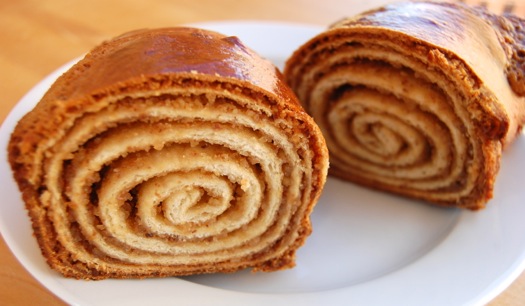
Po-TEET-sa, po-TEET-sa is how it’s pronounced, just in case there’s still a question on that. I’m told that back in Slovenia if you can make potica you’re entitled to call yourself a cook. Assuming that’s true, then I’ve earned the right to sling hash in any all-night greasy spoon in Ljubljana. Adam and Eve on a raft — wreck ’em!

This isn’t bad for a first try. I’ve got a few surface defects but the interior looks good, and that’s the part that really matters with potica. Notice that I’ve got quite a few layers going here. I was able to stretch the dough quite thin, though a yeast dough is never going to get as thin as a very elastic strudel dough. So if many, many thin layers are what you’re after, head over to the strudel recipe and employ the dough you find there. Otherwise assemble the ingredients for potica and proceed as follows. Place the flour, yeast, salt and sugar in the bowl of a mixer fitted with the paddle (beater). Stir that on low.

READ ON

Egg White

On the surface of it, an egg white isn’t a very interesting thing. It’s colorless with very little flavor and is made up of about 90% water. However there’s quite a lot of magic in that last 10%. How so? Because that’s where the proteins are. The white contains about half the total proteins of the egg, most of which are different from those of the yolk, and which do some pretty interesting biological jobs. Some of them bind up vitamins, others digest cell walls, still others bind to digestive enzymes rendering them useless. All combined they serve to make the white of an egg a very unfriendly place for invading microbes. They’re a big part of the reason an egg can be stored for so long.

READ ON