Mooncake Recipe

You’ll need access to a decent-sized Asian market in order to do these…apologies to readers in more rural areas. Of course if you’re extra motivated you can make your own sweet bean paste out of adzuki beans and pickle your own eggs (it takes about three weeks but is very worthwhile I hear…makes even better mooncakes). Recipes are out there on the web for the asking.

Oh, and you’ll need a mooncake mold. These can be traditional wooden molds or plastic extrusion-type presses. I tried for a month to get a plastic one shipped mail-order since it seemed less intimidating, but settled for a wooden one in the end. Say a prayer.

READ ON
What Are Mooncakes?

They’re Chinese pastries traditionally given as gifts during the Mid-Autumn Festival, which is coming up. This year it starts on the 19th of September. Mooncakes are roughly analogous to Christmas fruitcakes in the West inasmuch as they’re loved by many, detested by others, but are inarguably the signature sweetmeat of the season.

The Mid-Autmn Festival is one of the four big festivals of the Chinese year and is what one might call a “moveable feast” in that the dates changes from year to year according to a.) the Chinese lunar calendar and b.) which weekend is closest to the actual date of the autumn full moon. It’s sort of like our Thanksgiving but with a little astronomy thrown in. Like Thanksgiving, it’s the party that follows the harvest.

READ ON

Making Black Bread (Pumpernickel)

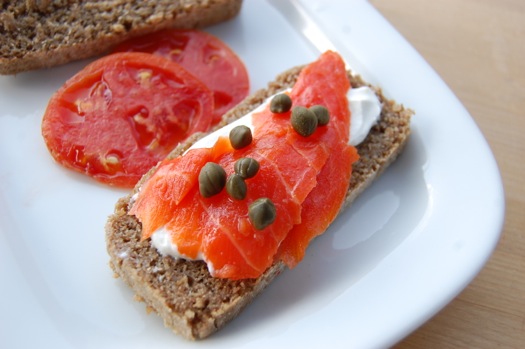
Here’s how I like to eat a real pumpernickel: with lox, cream cheese and capers. Why? Because this moist, ultra-dense bread calls out for accompaniment. Smoked fish and cheese. A nice slice of pork fat with onions and chili powder on top. Something — and something rich. Oh, and beer.

Not that this bread doesn’t taste great on its own of course. This is an all-rye bread. No white wheat flour, no caraway seeds, nothing to mask it’s pure, peasant the-wheat-crop-failed-this-year-and-we-have-nothing-else-to-eat rye-ness. You’ll get it when you taste it. It ain’t no sandwich bread but it’s great for canapés, toast, or just eating with butter.

READ ON

Consummate evil? Or teenagers.

As several readers have reminded me, ergot has caused plenty of trouble right here in the good ol’ US of A. European immigrants never traveled anywhere without the comforts of home, and rye was one of them. American colonists were fortunate that for whatever reason ergotism didn’t wipe people out on the scale it did in the Old Country. Perhaps the climate didn’t favor ergot quite so much, who knows? Still, a theory has been advanced that ergotism was responsible for the famous witch trials in Salem, Massachusettes in 1692.

READ ON

What about pastrami sandwiches?

Reader Alison asks if there’s much risk from ergot-infected rye today. The answer is not really. Though no ergot-resistant strain of rye has ever been developed, a variety of measures are taken these days to minimize the risk of ergot infection. Rye seeds are carefully screened for evidence of ergot, rye fields are plowed extra deep to keep ergot from germinating after harvest, and different crops are rotated in and out on alternating years. All combined, these various strategies do an excellent job of keeping ergot, and by extension the risk of ergotism, down.

READ ON

Holy Fire

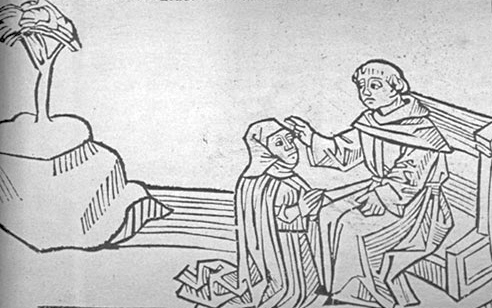
…is what gangrenous ergotism was called when it first appeared in Europe in the ninth century. “Fire” of course because of the burning sensation the disease caused and “holy” because it came to seen as a divine punishment. Yet within two hundred years or so the named changed. By about 1050 an order of monks became known for treating the disease, the Order of St. Anthony. The brothers were highly skilled at formulating and applying plant balms that healed wounds and relaxed blood vessels

READ ON

Maillard Reactions: How Low Can They Go?

Reader Choi asks:

Joe, I understand that the browning of pumpernickel in the oven is caused by the Maillard reaction. It is my understanding that Maillard reactions only happen over 300 degrees Fahrenheit. If you’re baking pumpernickel at 225, how is Maillard browning possible?

That’s a puzzler isn’t it, Choi? Maillard reactions are so little understood. What is known is that they can happen at surprisingly low temperatures. They happen fastest over 300 degrees, there’s no question about that, but they can happen at far lower

READ ON

Really, REALLY Bad Acid

Now I know there are certain types of readers out there — mostly musicians — who rather enjoy the thought of a dose of LSD with their morning toast. But let’s be clear here: ergot-derived lysergic acid is a far cry from the synthesized, purified LSD that Jimi Hendrix sprinkled on his corn flakes. What we’re talking about is an unrefined chemical, one that is mixed with a variety of other toxins, the cumulative effect of which is a disease known as ergotism.

Ergotism comes in two types. There’s convulsive ergotism, a nervous disorder in which sufferers can be subjected to anything from muscle spasms and hallucinations to violent contortions, trembling, shaking, vomiting, mania and psychosis. However ergot can also cause constriction of the blood vessels which leads to a second condition known as gangrenous ergotism. In this, blood flow is cut off to the extremities, causing infections, hideous burning sensations and gangrene (with all its associated losses of fingers, toes and limbs). Not the way even the most committed stoner would want to spend his weekend.

READ ON

Rye: Quite Possibly the World’s Most Dangerous Grain

Why? Because of its high susceptibility to infection by a fungus by the name of Claviceps purpurea, otherwise known as ergot. It might not sound terribly dangerous, but trust me, ergot is no ordinary fungus. It does a whole lot more than cause unsightly yellow toenails. Ergot is thought to be have caused the deaths of thousands — maybe hundreds of thousands — of people over the course of Western history, laid waste to entire societies and caused the fall of kingdoms. No small feat for a spore.

READ ON