Spam Spam Spam Spam

A savage band of spammers evidently found the new site late last week. Friday I woke up to well over 1,000 messages waiting for approval. Fully half of them read “Thanks for the awesome posting, it saved MUCH time!”, and were accompanied by links to various porn sites (which I’ll investigate later in order to verify that they are, in fact, the sort of filth that would never be allowed on a blog of this quality). If anyone has any ideas about how I can put a stop to the deluge, please get in touch.

READ ON
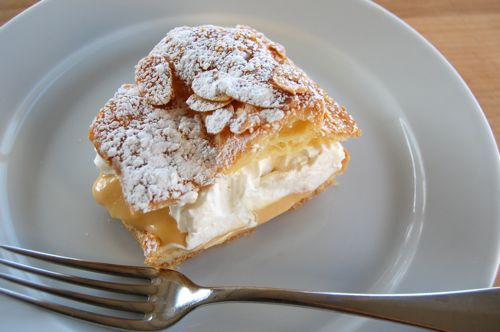
Why are king cakes made of brioche?

…asks reader Kendra. That’s a good question, since many other types of kings’ cakes made outside New Orleans (notably galette des rois) are made with flaky dough. To that I’d say that while the brioche ring is the most famous of the New Orleans king cakes, some bakeries do make the French-style flaky galette. In fact I was steered in that direction by more than one local who believed that the French style was both better-tasting and truer to the king cake aesthetic. I’ve already done that one, of course, so my thought was to press on with something new.

READ ON

King Cake History Redux

There’s no question that structurally New Orleans-style king cake is a very different animal than continental kings’ cakes, however the history behind it is nearly identical. I’ve written on the topic here, here and here. What seems true is that the king (or kings’) cake is less about Christianity than it is about parties. Have a look-see if you need a refresher or missed that series of posts entirely.

READ ON

On the Texture of Whipped Cream

Reader Kylie asks:

Why does homemade whipped cream seem to taste lighter or “thinner” than whipped that’s inside pastries that I get from a pastry counter? What are those bakers adding that I’m not?

They might not be adding anything at all, Kylie. Other than a little sugar and vanilla, that is. Oftentimes we home bakers serve whipped cream as soon as we prepare it, which means it’s a little warmer than whipped cream that’s been whipped and then thoroughly refrigerated. Whipped cream that’s chilled has a thicker mouthfeel because the fats have firmed up in the cold.

READ ON

New Orleans-Style Kings Cake

I think they just call it “King Cake” in New Orleans, actually, but why get hung up on semantics? I’ve spent weeks casting about looking for a recipe that’s representative of what’s served in New Orleans at Mardi Gras. I didn’t find much that spoke to me, and was considering making up my own recipe […]

READ ON

Making Paris-Brest

There are an awful lot of flavors and textures at work in this simple pastry. Crunchy toasted almonds, spongy/chewy choux, rich but light chantilly cream and beneath it all a luxurious almond-praline pastry cream. Put it together and you’ve got something even one of today’s hyper-fit long-distance cyclists would find hard to resist. You want to have most of the components ready before you begin: pâte à choux batter loaded into a large pastry bag, praline paste and pastry cream. With all that at-the-ready, you can get down to baking and building. Preheat your oven to 425.

READ ON

How does pâte à choux work?

…and when was it invented? asks reader Pat. The answer is that choux almost certainly wasn’t “invented” in the classic sense of the word. It evolved, probably through decades, maybe even centuries, of trial and error. The secret of choux is that it’s “double cooked”, a process that imbues it with some very special properties.

READ ON

Making Praline Paste

Perfectly smooth, commercially-made praline paste is ubiquitous in many parts of Europe. Here in the States it’s virtually unknown. However once you taste it I have no doubt it will quickly attain a place of prominence in your spread pantheon — alongside nutella, peanut butter, jam and, for you Aussies and Brits, vegemite and marmite. It’s also very handy as a pastry ingredient, obviously. Begin by assembling your ingredients. The praline comes first. Lay the nuts out on a lightly oiled sheet of parchment paper.

READ ON

Pharmacies on Wheels

Reader Cal asks:

I’d always heard that Paris-Brest is what the early cyclists ate to give them energy for the long ride. Do you know if that’s true? Because it seems to me like an unhealthy thing for an athlete to eat!

I can’t say I know, Cal, but if it’s true that riders ate Paris-Brest to keep them going, it would have been by far the healthiest thing that most of them were putting in their bodies. For the sad truth about early cycling competitions is that they were rife with drugs of all kinds.

READ ON