Making Melon Pan

For a first attempt at melon pan, I was pretty pleased with these. Little 4-year-old Joan Pastry certainly was. Judging by her level of enthusiasm I’ll be making these quite a bit in future. But a very interesting item melon pan is. It’s not terribly sweet, nor does it have an especially pronounced flavor. However the textures are extremely interesting, and that jibes with what I know of Japan. Food lovers there are every bit as excited by texture as they are by flavor, perhaps even more so. Begin your melon by preparing the cookie dough. Put the butter and sugar in the bowl of a mixer fitted with a paddle (beater):

READ ON
Melon Pan vs. Concha Bread

There’s been a little debate brewing in the comment fields as to the difference between Japanese melon pan and Mexican concha (“seashell”) bread. The Pastry family happened to be out dining on Mexican food this past Saturday and we passed a Mexican bakery. I went in and snapped this close-up photo:

READ ON

Bakers are a resilient bunch.

Reader Aaron, who until recently was in Japan and working at the bakery that was featured in this post a few months back, has this to say about the situation there:

I emailed the bakery and some other friends over there, they are all safe and sound. Anpans (red bean) are being made by the dozen with propane ovens and distributed around town! Many are without electricity, transport and normal food/water supplies. Thank goodness for building codes and modern emergency response. It could have been much worse.

READ ON

If it’s a sweet cookie-bread, why is it called “melon pan”?

That’s a very interesting question. The “melon” part of the name arises from the fact that one of these looks very much like one of these. And in fact contrary to my original impression, the name has little if anything to do with the flavor. It seems that flavoring melon pan with real melon or melon extract, while it does happen, is a fairly recent development in the history of melon pan. Originally the cookie layer was simply flavored with vanilla.

READ ON

And now for something completely different.

We spend an awful lot of time in Europe on this blog. Given that, it seems well past time that we took at trip to the other side of the other pond and did something a little different. This week we’ll be making a Japanese delicacy by the name of melon pan. Sure, I scarcely know what it is and have no experience making it. But since when has that ever stopped me? Should be fun!

READ ON

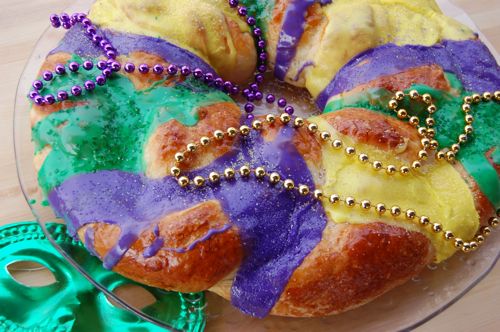
Making New Orleans King Cake

Though certainly not as refined as their continental cousins, king cakes are sweet, garish pleasures. I confess I was surprised at how good this recipe was. Having eaten nothing but dried out mail-order king cakes for years, this one was tender and delicious. The liquid butter yields a slightly denser crumb than a traditional brioche dough would, though I’d still be interested to try this using my standard brioche dough, since I think that would amp up both the color and the flavor (of the interior). Still there’s no beating this recipe for maximum return on a minimum investment of time and effort. Begin by assembling your ingredients. Sift your flour into the bowl of your mixer:

READ ON

Kings of Pastry

I finally caught the movie Kings of Pastry over the weekend, and I can’t say there’s much there to recommend. Which is to say, it’s a movie that teaches you virtually nothing about pastry, the profession of baking or even the ostensible subject of the film, the Meilleurs Ouvriers de France competition. I’m still marveling at how an 80-minute film on pastry managed to miss all that, but it did.

READ ON

On the Purpose of Dry Milk

Reader Vanesa (yes with only one “s”) asks:

Can you tell us more about what the powdered milk is doing in this recipe? Is it for flavor, structure, something else?

Vanesa, I’d be delighted. Flavor is part of the reason for the powdered milk, however it’s mostly there as a tenderizer. Powdered (dry) milk is composed of carbs (lactose), fat and protein. What all those things have in common is that none of them are gluten. Which means that once they’re introduced to the dough, they’ll interfere with the wheat protein networks and keep the crumb from getting too chewy. So I guess you’d say that it’s there to undermine structure more than anything else. Thanks for the question!

READ ON