About That “Golden” Syrup…

So OK, I’ve been working on a recipe for golden syrup for my mooncakes since I’m told it can be made at home. So far I’ve been meeting with limited success.

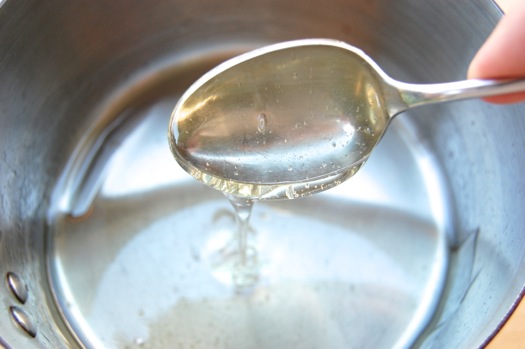
But first, what is golden syrup? In Chinese cooking it is an a.) invert sugar syrup that is b.) cooked to the soft ball stage, about 235 degrees Fahrenheit, and is c.) golden.

READ ON

A Few Things You’ll Need

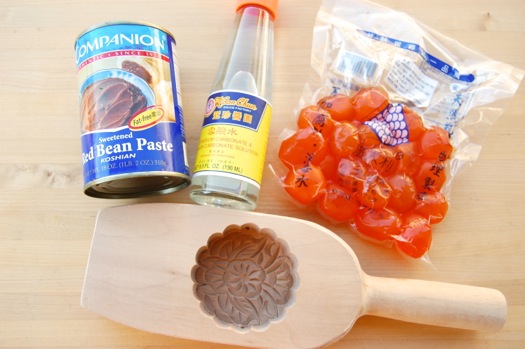
Several readers wrote in over the weekend to ask for a picture of some of the specialty equipment and/or ingredients. I understand that completely since Asian markets can be bewildering places to those of us who aren’t accustomed to shopping in them regularly. Here’s the stuff you’ll need. Clockwise from the upper left we have sweet bean paste in a can which you can find in the canned vegetable aisle (UPDATE: Homemade is far superior and not difficult, I recommend that instead!). Next we have lye water (alkaline water) which is typically kept in the sauce section near the soy sauce. Salted egg yolks are of course what’s next, they’re also in the refrigerated section near, you guessed it, the eggs.

READ ON

What’s With All the Alkalinity?

Reader T wants to know why the mooncake crust recipe below calls for baking soda AND Chinese lye water. It’s an excellent question and I believe the answer is twofold. First, an extremely alkaline dough will brown up more readily. I mentioned Maillard reactions in a post a few days ago. One aspect of these mysterious browning reactions that I failed to mention is that they happen faster in an alkaline environment. It’s one of the reasons breads like pretzels and bagels are dipped in a lye solution before they’re baked. Chinese mooncakes don’t spend much time in the oven, so to get even a mildly browned appearance the pH needs to be fairly high. I don’t know what the pH of Chinese lye water is, but it’s must be higher than that of baking soda (9). Otherwise, why use it?

READ ON

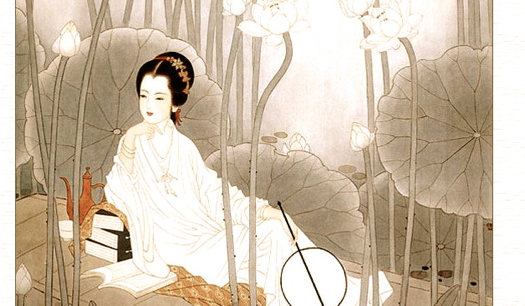
The Legend of Chang E

…is a story that’s central to the Mid-Autumn Festival. It has many versions, but generally goes like this. Chang E was a beautiful young woman who dwelt in heaven as a servant of the Jade Emperor, a Zeus-like character of Chinese mythology. She was married to another immortal, an archer by the name of Hou yi.

One day the Jade Emperor’s ten sons decide to have a little fun. They transform themselves into ten suns and begin to march across the sky together, burning the land to cinders. The Emperor is not amused and begs Hou Yi for help. His response is to shoot nine of the suns down and kill them, which wasn’t the solution the Emperor had in mind. So he punishes Hou Yi and Chang E by sending them to Earth to live out their lives as mortals.

READ ON
In China, a Government Mooncake Crackdown

Mooncakes have been causing trouble in China for a while now. Once treasured as luxuries, in the late 20th century they evolved into somewhat common, perfunctory gifts (remember the comparison to fruitcakes). Still the real troubles have only come lately as mooncakes have become vehicles for government corruption. Gourmet versions have become increasingly outlandish and expensive, and enterprising bureaucrats have used them to curry favors from certain high-placed persons. The most enterprising have dispensed with the edible cakes altogether in favor of facsimiles made of solid gold. Oops, how did those get in the box?

READ ON

Common Mooncake Problems

Most have to do with crusts. In fact I took this project on after a pair of readers told me they were having problems with the outer skins. Mooncakes have decorative patterns pressed into their tops, which is the primary purpose of the molds, to impress a design on the skin and give the outside edges their classic fluted appearance.

READ ON

Mooncake Recipe

You’ll need access to a decent-sized Asian market in order to do these…apologies to readers in more rural areas. Of course if you’re extra motivated you can make your own sweet bean paste out of adzuki beans and pickle your own eggs (it takes about three weeks but is very worthwhile I hear…makes even better mooncakes). Recipes are out there on the web for the asking.

Oh, and you’ll need a mooncake mold. These can be traditional wooden molds or plastic extrusion-type presses. I tried for a month to get a plastic one shipped mail-order since it seemed less intimidating, but settled for a wooden one in the end. Say a prayer.

READ ON

What Are Mooncakes?

They’re Chinese pastries traditionally given as gifts during the Mid-Autumn Festival, which is coming up. This year it starts on the 19th of September. Mooncakes are roughly analogous to Christmas fruitcakes in the West inasmuch as they’re loved by many, detested by others, but are inarguably the signature sweetmeat of the season.

The Mid-Autmn Festival is one of the four big festivals of the Chinese year and is what one might call a “moveable feast” in that the dates changes from year to year according to a.) the Chinese lunar calendar and b.) which weekend is closest to the actual date of the autumn full moon. It’s sort of like our Thanksgiving but with a little astronomy thrown in. Like Thanksgiving, it’s the party that follows the harvest.

READ ON