Back to Bananas

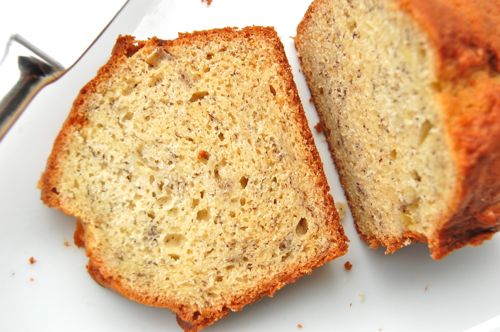
I’ve been mulling over reader Gerhard’s question about bananas this week, wondering if the problems with his banana bread could in fact be the result of a change in bananas themselves. It’s occurred to me that, while I always look to process or ingredient changes when a reader reports a problem, Gerhardt could be on to something.

Every year or so a story pops up in the food press about the imminent “extinction” of the banana. When media types say that, what they really mean is that the world’s most popular banana, the Cavendish, is under threat. The Cavendish has been the number one banana cultivar ever since a fungus known as Panama Disease knocked out the previous global favorite title holder, the Gros Michael, back in the early 1960?s. That banana is still grown here and there in the tropics, but it’s the Cavendish that really dominates the American and European markets these days. Some 100 billion Cavendish bananas are consumed around the word each year.

READ ON
Scaling Mont Blanc

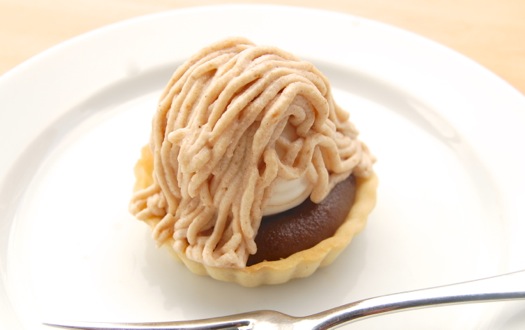
Mont blanc is a classic squiggle-covered pastry, designed to be evocative of a mountain (that is, Mont Blanc). It makes a blockbuster closer to an elegant meal. In fact it’s almost tailor made for these sorts of occasions since nearly all the components need to be made ahead of time, sequentially. Make one every day or so for a few days and you’ll find you can whip together a dozen servings in the time it takes your spouse to clear the table.

READ ON

The Love Bean

Much is made today of chocolate’s ardor-inducing properties. But did you know that back in the 1700’s it was vanilla — not chocolate — that was thought to inflame the passions of men and women alike? No less a person than Cassanova fortified himself with mulled wine spiked heavily with vanilla. The Marquis de Sade also regarded vanilla as, shall we say, a male stimulant. Perhaps he was inspired by the German physician Bezaar Zimmermann who claimed in 1762 that “no fewer than 342 impotent men, by drinking vanilla decoctions, have changed into astonishing lovers of at least as many women.”

READ ON

The (Virtually) Fat-Free Nut

Reader Jo wants to know if chestnuts are as fatty as, say, almonds or walnuts. I can’t believe I didn’t mention it before, but no — definitely no. Chestnuts are unique among popular nuts in that they have almost no fat in them. They are about 88% starch. Which is pretty amazing and why a […]

READ ON

Of Royal Blood

Reader Leeza asks if the earliest users of vanilla (the Totonac) put it in anything other than chocolate. Actually, Leeza, it seems that the Totonac didn’t eat vanilla, they used it solely as a perfume, which is, you know, also a pretty darn good idea.

READ ON

Here’s something I’ve always wondered…

Vanilla arrived from the New World at the same time chocolate did in 1520. Its arrival coincided for a reason, namely that vanilla was considered an essential element in the liquid chocolate cocktail that Cortez was first served by the Aztecs (along with corn meal and honey). It wasn’t until some 80 years later that anyone thought to use vanilla on its own as a flavoring. That anyone was a fellow by the name of Hugh Morgan, royal pharmacist to Queen Elizabeth the First. He used it to flavor his medical concoctions and started something of a fad in the process.

READ ON

Unknown Heroes of Horticulture: Edmund Albius

Reader Neko writes to say she’d like a little more information on where vanilla originally came from and how it came to be cultivated in places like Madagascar. Neko, I’d be delighted to write a little on that subject. In short, the history of vanilla is one of expropriation. It was originally cultivated by a coastal Mesoamerican people called the Totonac. They were conquered by the Aztecs who were in turn conquered by the Spaniards, from whom vanilla was stolen by the French and taken to the island of Réunion in the Indian Ocean.

READ ON

Troubleshooting Banana Bread

Reader Gerhard, one of the world’s all-time great banana bread enthusiasts, reports that his bread has been getting steadily paler over the years. At least compared to the deep golden brown that he used to get and prefers. He wonders: why that might be? Could banana cultivars have changed any over the years? Maybe his flour? Or could it be some other factor?

READ ON

Mont Blanc: A Revised Ascent Plan

I had a chance encounter with a Swiss pastry chef over the weekend. Being both highly educated and from a mountainous European country, he of course knew quite a lot about mont blanc. He described what he considered to be the “new conventional” approach to the pastry: a tartlet crust filled with frangipane, chocolate mousse or whipped ganache; a meringue center, and; a “chestnut cream” vermicelli on top made from chestnut paste folded together with buttercream.

READ ON

Cheap Ingredients, Of Thee I Sing

I’m back and road-weary, but not too weary to enjoy the comments and emails from the last few days. Some of the most enjoyable have read, in essence: Joe, in the last week you’ve dumped on both gourmet salts and real vanilla, are you on some sort of project to tick your readers off? That’s a fair line of inquiry since I wondered the same thing myself!

To answer the question, I’m not on some sort of temperamental bender, rather just expressing a core Joe Pastry belief: that ingredients are only part of what a baker needs to make superior pastry. Technique and understanding matter as much, even more. So I endorse cheap ingredients, especially chocolates, salts, flavors and whatnot. Not necessarily the cheapest mind you, since the very cheapest flours, sugars and butters can actually ruin a project. But you know, just the normal, middle-of-the-road stuff. In the right hands the so-so can be elevated to the miraculous. Just ask anyone with a grandma who bakes!

READ ON