Monday is Memorial Day
Which means, among other things, that camping season is officially here. If you’re heading to the bush this weekend make sure to stop by the camping pastry section of the site for ideas on fireside sweets!
READ ONWhich means, among other things, that camping season is officially here. If you’re heading to the bush this weekend make sure to stop by the camping pastry section of the site for ideas on fireside sweets!
READ ON
Mud cake is an easy-to-make gooey-rich chocolate experience. Oh sure I dressed it up a little here, but you don’t have to get fancy if you’re time pressed or bashful about meringue. You can serve yours with ice cream, marshmallow, anything you like. Just leave plenty of room after supper. In fact maybe just skip supper altogether, since one piece of this 2-inch-tall brownie-like cake and you’ll be set for the night.
READ ON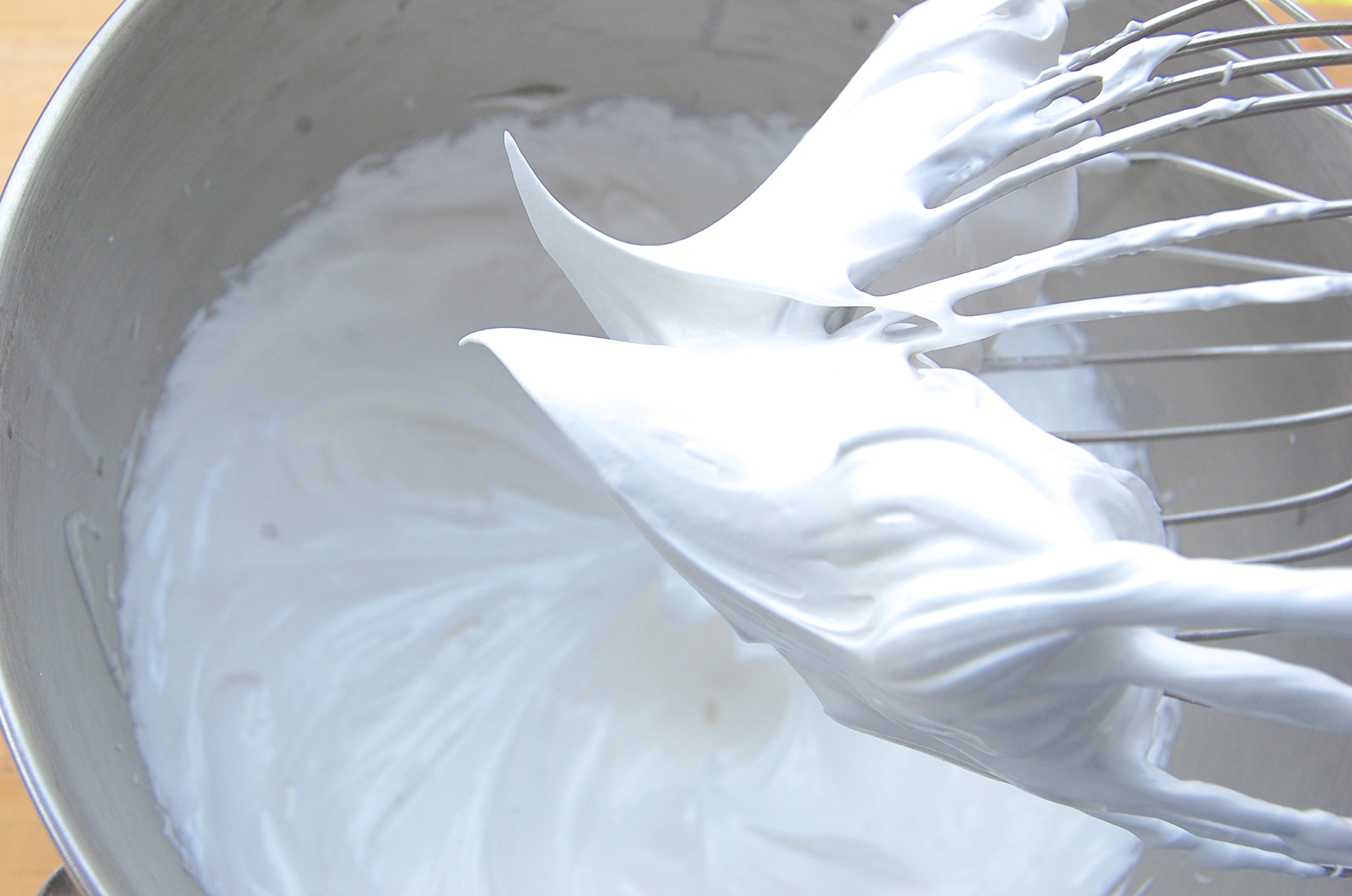
Swiss meringue is a thick, marshmallow-like confection that can be baked in shapes, used as a base for buttercream, it even makes a handy dessert topping. It holds well, pipes beautifully and since it’s pre-heated before it’s even whipped, carries little (if any) risk of food borne illness. Did I mention it’s really, really easy to make too?
One of the basic rules of meringues is that the earlier you add the sugar, the denser and more stable the meringue will be. With Swiss meringue the sugar is combined with the egg whites in the very first step, so you can draw your own conclusions. A basic recipe is:
READ ON
Huh. I thought I would be able to get away with an 8-inch springform pan instead of a 9-inch. Apparently not. This isn’t salvageable accept maybe as pudding, since there’s no way I’ll get the center set before the edges burn…and anyway with sides this tall it’d probably never stand up. Well, next time I’ll follow my own directions a bit more closely, eh? But dang, today is the best photography weather I’ll see all week!
READ ONIt’s slowly dawning on me why mud cake is such a popular “American” recipe in Northern Europe. It’s so rich, gooey and indulgent, my guess is that few people there are willing to claim it as their own. Oh you know those Americans, they’ll eat just about anything. Of course we do the same thing in the States as we slather Hollandaise all over our spring asparagus. Oh you know those French and their dairy products. The French probably rationalize Hollandaise the same way. You know what goes on up in Holland of course, those people and their butterfat! There’s always a convenient “other” out there to blame your own excesses on, isn’t there?
READ ONThat’s a very good question, reader Erika. To tell the truth I can’t think of many, other than that it allows the baker to hijack some exotic cacao flavors that are normally reserved for professional bakers or candy makers. Your typical supermarket might stock two or three types of unsweetened cocoa powder. Here in the States it’s usually Hershey and Droste, possibly Valrhona or Scharffen Berger if the store has an upscale clientele. These of course represent only the tiniest fraction of the powders that are available in the wider cocoa universe. Most of these never see the light of day in the retail world, and are only sold in large quantities to commercial bakers and confectioners. Baking with bar chocolate — expensive as it can be — equals the playing field a bit — at least for the true chocolate epicure.
READ ONThere are a lot of mud cake recipes out there. What they all have in common is the addition of melted bar chocolate to the batter. This one fits nicely into the tradition. In the world of mud cakes I’ll say that it leans European, being a bit richer and denser than most of its New World and Australia-New Zealand cousins. I doubt there will be many complaints!
8 ounces (2 sticks) butter
8 ounces semisweet or dark chocolate
5 1/2 ounces (1 cup) all-purpose flour
2 teaspoons instant espresso powder
2 ounces (1/2 cup) cocoa powder
1/2 teaspoons baking soda
14 ounces (2 1/2 cups) sugar
1/4 teaspoon salt
4 eggs
4 ounces (1/2 cup) buttermilk
Brother, what a mouthful (no wonder they just call it PEA). But this is the so-called “love chemical” that chocolate has become famous for since 1983. How can I be so precise about that? Because that was the year a researcher by the name of Michael Liebowitz published his book, The Chemistry of Love. In the course of his promotional tour he claimed that chocolate is “loaded” with PEA, a statement that became the basis for a now-famous New York Times article on the subject.
READ ONThis is another chemical compound found in chocolate, and it’s one we all hear about every year at Thanksgiving, since it’s said to be the stuff that causes those post pig-out sleepies among your relatives. But what is it really? Tryptophan is an amino acid that’s critical to human health, but one that our bodies can’t make on their own. Good thing there’s plenty of it around: in virtually every dairy product, every meat (especially poultry), as well as in oats, bananas and chickpeas. Our bodies use tryptophan for a variety of functions, among them the manufacture of serotonin, an important neurotransmitter which (again, among other things) regulates mood. This it does by relieving anxiety.
READ ONLast night was a blast. I’d never seen an Iron Chef-style competition up close before, and I have to say I have nothing but admiration for anyone willing to cook under that sort of pressure. Last night was especially intense for the two competing teams as they had to prepare a meal using only lab equipment: beakers, bunsen burners, hot plates and such. A very funny idea, but frustrating in the extreme for the chefs. Just getting water to boil was a project. Yet somehow both teams pulled it off, delivering handsome plates of food in 45 minutes.
READ ON