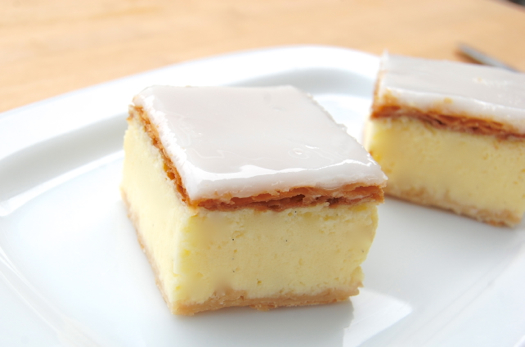
Cornstarch (Corn Flour)
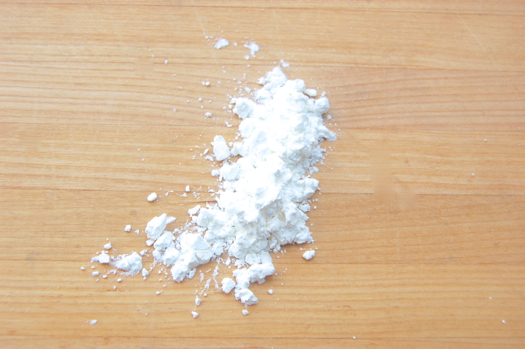
Cornstarch is, obviously, a starch thickener which means it thickens much the same way wheat flour does: with tangles of long-chain sugars that slow down the flow of the water around them. However there are several important differences between wheat flour and corn starch. One of those is particle size. Cornstarch is milled much finer than wheat flour, which means when those particles come in contact with hot water, they begin to shed starch molecules much faster. So cornstarch thickening happens faster than wheat flour thickening, but then also “un-thickens” that much faster.

READ ON
Little Help: Whipped Cream Substitute

Reader Elizabeth has an interesting challenge. Her husband has a severe milk protein allergy, yet he loves baked goods. She’s in search of a non-dairy substitute for whipped cream, but here’s the kicker: it can’t have coconut milk in it either. Anyone out there have any ideas?

READ ON

Wheat Flour

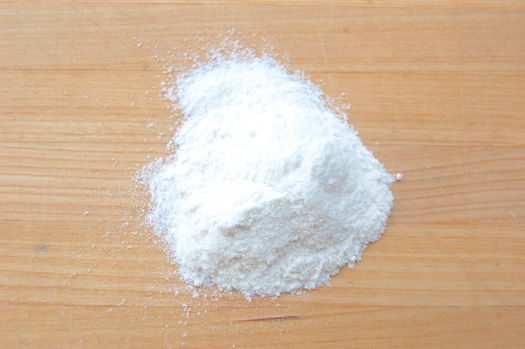
Plain wheat flour is a go-to thickener in the kitchen, especially where sauces care concerned. In combination with butter or oil it becomes a roux, which is the basis of classic béchamel. White flour, most bakers know, is the ground endosperm of a wheat berry, the endosperm being the energy storehouse of the seed. Moisten the seed and enzymes in the endosperm go about breaking down the long chain starches that are stored there into simple sugars. These sugars fuel the sprout (contained in the germ) as it grows.

READ ON

Gelatin

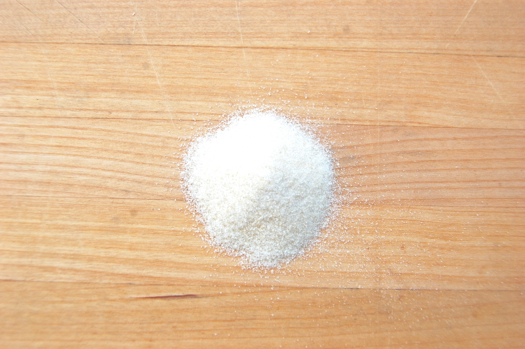
Gelatin is a protein, one that’s derived from a very interesting material called collagen. If you were to think of an animal’s body like a machine, where the bones and joints are the moving parts and the muscles are the motors, collagen is the rope and cabling that connects it all together. In fact collagen molecules are constructed very much like rope: three long protein molecules (individually known as gelatins) woven around each other to form a tight triple-helix. They’re very strong, the perfect material for making things like tendons and other so-called “connective” tissues.

READ ON

A Thickener Primer

Most of the time, when we’re talking about thickening in the kitchen, we mean the thickening of watery substances: broth, juice, milk, thin syrups, that sort of thing. Thickening is necessary if we want those substances to have much texture other than…watery. The obvious question here is: why can’t water itself have a more interesting texture? Does it have to be so, well, watery? And what makes it that way? The answer is that water flows because its molecules are so incredibly small. They’re made up of just three atoms: two hydrogens and one oxygen if I recall correctly. Dihydrogen monoxide.

READ ON

Let’s Talk Thickeners

While I’m re-thinking my approach to vanilla slices/custard squares, it strikes me that this is a good time to do a rundown of thickeners for the Baking Ingredients section. I’ve been asked several times to create one, but have never gotten around to it. Thickening is really the heart of my issue with vanilla squares, […]

READ ON

Actually…

…let’s try that again. I promise it won’t take me two weeks this time. I have all the stuff on-hand now. I’d rather do this right before I move on. I can always start another project in the meantime, no?

READ ON

Vanilla Slice Update

Would you believe a woman from just outside Auckland happened to walk into my house this morning? She’s a horse trainer (which is why she’s in Kentucky) but she also happened to have some professional pastry experience. What are the odds? Her verdict on the vanilla slices: not authentic but delicious. Her idea in absence […]

READ ON

Vanilla Slices (Uptown Version)

Is the vanilla slice really the chocolate chip cookie of Australia? If so, those Aussies are more sophisticated than we give them credit for. Granted most home versions are made with powdered custard and either store bought puff pastry or mildly sweet biscuits, then topped with simple powdered sugar icing. Still pretty cool though, no?

Objectively speaking, vanilla slices resemble both Napoleons and galaktoboureko, but in truth they really are their own thing. The commercial versions are, at least from what I understand, so heavily gelatin-thickened that they practically bounce, hence their nickname which I won’t repeat here for fear of getting more irate comments. While I originally thought I’d try to replicate that density, in the end I decided that just getting a custard layer this thick to stand and slice neatly was enough. But feel free to add more gelatin, those of you who prefer yours with a stouter texture.

READ ON

Today’s Non Sequitur: Tomatoes and Aluminum

Reader Glynis has early tomatoes and says she destroyed a few trying to oven roast them on an aluminum sheet pan. Her question: why does contact with aluminum ruin the taste of tomatoes? Love that one, Glynis! Aluminum is interesting stuff in that on the one hand it’s the most abundant metal in the Earth’s crust, but on the other it is found nowhere in nature in its pure, elemental state. The reason: because aluminum is extremely reactive.

Its reactivity is easily witnessed in the kitchen, say, when aluminum foil is used as a cover for a dish of leftovers. If the contents of the dish are wet enough to cause condensation on the foil, the result is a dark layer of aluminum oxide. However that’s child’s play compared to what happens to aluminum foil when it comes into contact with other metals like stainless steel, silver or iron in the presence of moisture. In those cases you get an electrolytic reaction that creates actual pits or even holes in the foil.

READ ON