Rennet

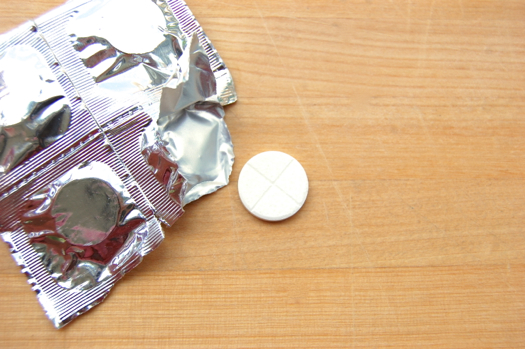
What would a tour of thickeners be without a quick look at humanity’s first functional food ingredient/hydrocolloid? Rennet is of course the stuff responsible for thickening milk into the gels we call curds, the basis of cheese. A protein-digesting enzyme is what it is, found in the stomach of calves less than 30 days old. Why less than 30 days? Because that’s the point at which the biology of the calf changes and the critical enzyme, chymosin, fades from the animal’s system and is replaced by others. Today chymosin can be made artificially, by genetically engineering vegetables to produce it, and indeed most cheese in the U.S. is made with vegetable rennet these days. Most European cheese is still made with the traditional calf-derived enzyme. Some people don’t like that, but then some people don’t like GMO products either, which is why cheese is problematic for food ethicists of a certain stripe.

READ ON
Carrageenan

Is it just me or does that sound like the name of a town in Ireland? Oh right, it actually is the name of a town in Ireland, a little spot on the northeastern coast where this red seaweed-derived thickener was originally harvested and put to use. It’s been used to thicken puddings and custards in that region since at least 1810. Oh, and in Scotland as well. Locals would boil the local weed to extract the long-chain sugars, add borax to the hot solution to make them clump, then strain the whole mess out and dry it to a powder. The process was steadily improved to the point that in 1930 carrageenan became a mass-market product. It’s been a staple thickener for food makers (and some home cooks) ever since.

READ ON

Why are hydrocolloids “hot”?

Reader Erin, responding to a remark I made about the packaged food industry being hot for hydrocolloids, wonders why exactly that is, particularly when so many food makers are under pressure to take the science-y sounding ingredients off their product labels. Pretty cool question. The answer is that thickeners and texture-enhancers, which are what hydrocolloids are, are eternally in demand among food makers, especially in an age when “special diet” products rule. It is, ironically, the demand for healthier foods that is driving the market in hydrocolloids. Not that I believe hydrocolloids are unhealthy mind you, but they are certainly perceived that way by a lot of people.

READ ON

Guar Gum

Guar gum is a seed gum (a so-called “galactomannan”) found in the endosperm of the guar seed, also known as the “cluster bean” which grows in India and Pakistan. Though it’s a very different thing than xanthan gum, which is produced by fermentation, guar gum is used in much the same way and has many of the same benefits. Like xanthan gum it’s about six times as potent as cornstarch for the same job and it doesn’t need heat to activate. You sprinkle it over whatever it is you’re trying to thicken, hot or cold (don’t pour, as guar gum can clump) and apply the whisk. Thickening happens more or less instantly and the texture is smooth and shiny, though not terribly clear. For that reason guar gum is generally recommended for dairy-based gels. Combined with xanthan gum it makes gels of unusual elasticity.

READ ON

Instant Flour

Instant flour is the go-to of meat gravy makers everywhere, at least here in the States. Instant flour is pre-gelatinized, which means it’s been steamed to initiate the breakup of the starch granules into individual starch molecules. The process isn’t completed because at least some of the bigger granules are needed for starch thickening to work. The great thing about instant flour is that you can just pour it into a hot liquid without making a slurry first. Clumps don’t form, the thickening happens virtually, well…instantly, and delivers a result much like a traditional roux but without the added fat. Handy stuff if you have a hot sauce that needs to be thickened just before serving. Of course like other starch thickeners you don’t want to boil it too long, knowadimean?

READ ON

Arrowroot

Arrowroot has been gaining popularity as a general-purpose thickener for at least a decade, and indeed many cooks prefer it over cornstarch. The reason: because it does just about everything cornstarch does only better. Sauces thickened with arrowroot are clearer than those thickened with cornstarch. They also have less of an aftertaste which is nice if your sauce has very delicate flavor notes. Arrowroot also thickens at a lower temperature (about 180 F) and is a good deal more tolerant of acid and long boiling. Arrowroot gels can also be frozen and thawed, making them great for baked frozen fruit pies.

READ ON

Regarding Hydrocolloids

With the rise of molecular gastronomy the term hydrocolloid has become, shall we say, hot. But what exactly is a hydrocolloid? “Colloid” is a science-y sounding term that simply means one thing dispersed in another. They’re all around us, colloids. There are solid-in-liquid colloids like, say, paint. There are gas-in-liquid colloids (whipped cream), gas-in-solid colloids (styrofoam), liquid-in-liquid colloids (salad dressing), liquid-in-gas colloids (hair spray), the list goes on. A kitchen hydrocolloid, as the name implies, is a colloid that’s based on water or some other mostly-water liquid like juice or broth. Which is to say it’s a colloid where water is the medium that something else is being dispersed in — the “continuous phase” as it’s technically called — and the something else that’s being dispersed (the “dispersed phase”) is a gum or starch or a protein.

READ ON

Is Gluten-Free Healthy?

That’s the question posed by a very interesting article in today’s Wall Street Journal.The article is behind the Journal’s rather pesky pay wall, however its thesis is a fairly simple one, summarized in this paragraph here:

Many health experts say there is no proven benefit to going gluten-free except for a small sliver of the population whose bodies can’t process the protein. Indeed, according to nutritional food labels, many gluten-free foods contain fewer vitamins, less fiber and more sugar. It is a point some food makers don’t dispute, saying they are simply responding to consumer demand without making health claims.

READ ON

Eggs

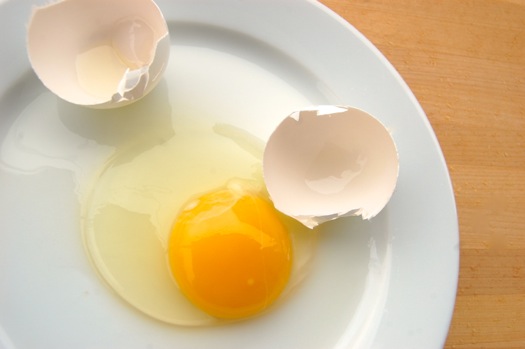
Eggs are without a doubt the most common thickener used in the pastry kitchen. Long, tangly proteins are the source of their thickening power, which can bring the water flow around them to pretty much a complete stop. Though egg proteins naturally occur in small clumps, they can be convinced to un-clump with the application of a little heat or with some agitation. Once they’re unfolded they can be further convinced to bond at which point all manner of textures are possible depending on the degree of protein coagulation: a thick liquid crème Anglaise, a semi-flowing pastry cream, a fully gelled crème brûlée or a crisp baked meringue. All the cook must guard against is over-heating or over-agitating those egg proteins which causes them to completely coagulate, squeeze out the moisture that’s between them and form tough curds.

READ ON

Pectin

Pectins are long-chain sugars that are found in the cell walls of plants, most especially in the walls of fruit cells. There they create a sort of elastic, moisture-retaining barrier and also function as a glue that holds the cells together. Pectins are especially abundant just before fruits are at peak ripeness. When fruit is cut up and/or mashed and then immersed in hot water the pectins come loose, dissolve and disperse. Under the right conditions those sugars can be brought back together into a flow-preventing network, but it takes a little coaxing since pectins repel each other in pure water. Acid generally does the trick as it changes the molecules’ polarity and encourages them to bond.

READ ON