Whipped Cream & Protein

Reader Mari asks:

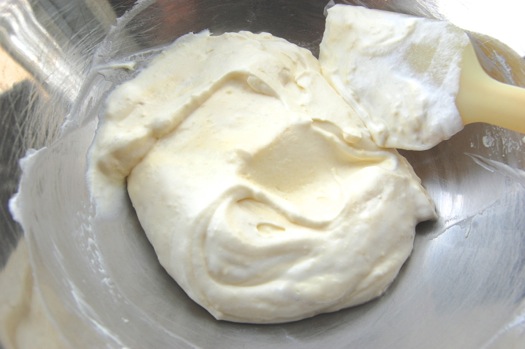
Does the process for whipped cream involve casein too? I’ve always thought it was ironic that so many non-dairy cheeses and non-dairy whipped creams contain casein in them, which is what causes an allergic reaction to dairy products for a lot of people. I concluded that casein must have something to do with the structure of cheese and whipped cream. After all, there aren’t any other 38% fat/ 60% water mixtures that can whip up like cream does, right?

Interesting question, Mari! Casein is indeed fascinating stuff, and it abounds in milk (about 5% of milk is casein). You’re absolutely right that it’s critical for things like cheese and yogurt, since it clumps up together when it’s exposed to acid. Those clumps trap fat and water creating the large curds that make cheese, and the tiny curds that make yogurt and sour cream.

READ ON
Brillat-Savarin Honoraria

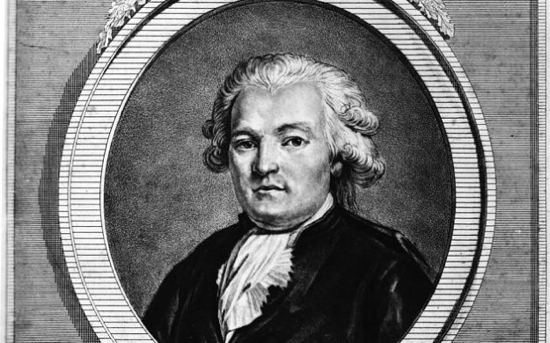
Given Brillat-Savarin’s influence in the world of gastronomy, I’m surprised there aren’t more foods and food accoutrements named for him. One is the savarin (this week’s pastry) the other is Brillat-Savarin, a soft, white, triple-cream cow’s milk cheese. It’s 75% fat. Which indicates that when it came to food, the man clearly knew what he […]

READ ON

Jean Brillat-Savarin

Everyone who knew Jean Brillat-Savarin knew he was an epicure. No one, however, had the slightest inkling that he was the burgeoning author of a ground-breaking book on gastronomy. Anyway not until just before he died, in 1826. For Brillat-Savarin worked on it in secret, spending some 25 years creating the semi-scientific, semi-philosophical, semi-humorous 8-volume opus that would become known as The Physiology of Taste, or Meditations on Transcendental Gastronomy. The book came out late in 1825, and then anonymously. Still, by February of ’26 Brillat-Savarin was dead, having caught pneumonia at a memorial mass for King Louis XVI at St. Denis Cathedral in Paris. As word of his achievement spread among his friends and acquaintances — very probably at his funeral — the result was mild shock.

READ ON

Where Do Savarins Come From?

As I mentioned below a savarin is really a baba, just in a ring shape. So depending on how far you want to trace the lineage, you could go all the way back to not-so-good-King Stanislas Leszczynski. However the true date of the savarin’s invention came over 100 years later in Paris. The year was 1844 and two brother pâtissiers by the name of Julien decided to try a variation of the rum baba, baking it in a ring-shaped mold and soaking it with (secret) citrus-infused syrup. It succeeded, and the pair shortly named their creation “savarin” after Jean Brillat-Savarin, whose collection of gastronomical essays, The Physiology of Taste was much in vogue at the time. More on him later!

READ ON

Savarin Recipe

Savarins are basically ring-shaped babas, though the hole in the middle provides more opportunity to fill and top them. Combine filling and/or topping with a creative soaking syrup and you can see where the simple savarin can quickly start to take on some rather complex and/or sophisticated flavors. Here’s the basic early summer fruit version, but feel free to improvise as you see fit. I probably will!

For the dough:

2 1/2 teaspoons (1 envelope) instant yeast
9 ounces (1 3/4 cups) all-purpose flour
1 teaspoon sugar
1 teaspoon salt
3 ounces (1/2 cup minus two tablespoons) whole milk
3 eggs
2 1/2 ounces (5 tablespoons) softened butter

READ ON

Next Up: Savarins

I was about to light out for China this week, but since we’re getting into berry season here in the Northern Hemisphere it seemed to make sense to remain in France a bit longer and do these seasonal classics. Reader Bronwyn, I promise to get to the fried dough next!

READ ON

Making Brioche Polonaise

I’ll admit it, fancy pastries can be scary. You see a lengthy list of make-ahead components and you wonder: when I finally get to the end of this road will it all be worth it? Will it really be different and special? Or only marginally better than something I can buy in a shop? Legitimate concerns, all. I can tell you that brioche polonaise is one of those sweet mother of God pastries. It does have several components, all of which you’re better off making yourself. Most will keep for many days ahead of time. Make one each day for three or four days and the final assembly and bake is pleasantly low-stress. You’ll love the process and feel proud when it’s done. Ready? Then let’s begin.

READ ON

Big News from The Continent

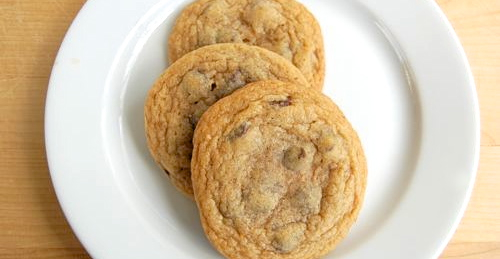
…where reader RS has taken a giant step forward in perfecting the Franco-American chocolate chip cookie. If you’ve ever seen an American baked goods section in, say a Parisian pastry shop, you may remember the very sad, flat looking chocolate chip cookies that typically appear in them. Recently in a post on European butters I suggested that that the sharper melt point of many higher-fat Euro butters (a tendency to go from solid to liquid faster when exposed to heat) probably causes them to spread more in the oven.

READ ON

Renaissance Bird

Alfred Bird was a man of many talents. Not only was he a pharmacist and chemist, inventor of instant pudding and baking powder, he was also a talented musician, wont to amuse his dinner guests by performing various popular melodies of the day on water glasses. Not in the style of the water harp or the glass armonica (Ben Franklin’s wondrous, forgotten contraption), but by tapping on them with forks and spoons like sets of chimes. He was quite good at it, and even had a custom 4-octave glass set made for himself so he could more fully express his musical ideas.

READ ON