Operating a Seltzer Bottle Improperly…

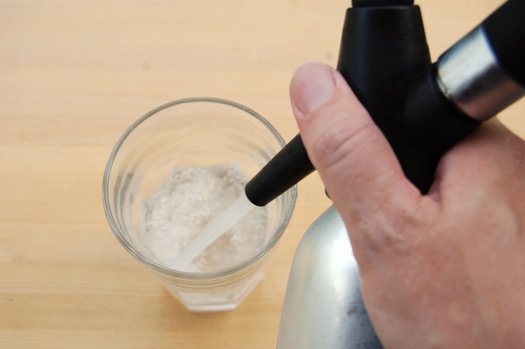
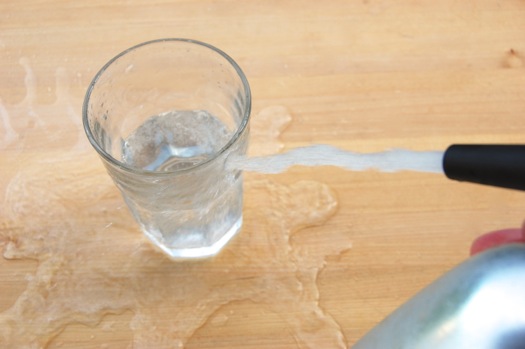
…is a heck of a lot more fun. It’s like having your own private super soaker on-hand 24 hours a day. All you do is fill it up, charge it, and you’re loaded for bear. But wait! Don’t you have to wait around for the CO2 to dissolve? Not at all. In fact it’s the un-dissolved gas that’s responsible for pushing the water out of the nozzle. So the longer you wait, the less distance you’ll have when you finally go after your children or spouse with it. And they’ve been asking for it this week. Oh yes…have they ever…

READ ON

Operating a Seltzer Bottle Properly

Getting the most out of a seltzer bottle (i.e. getting the most fizz) means being attentive to both time and temperature. Seltzer bottles work by releasing pressurized CO2 into a volume of water where, over a period of a few hours, it dissolves. You simple fill the bottle with water (filtered is best)…

READ ON

Could it Happen to You?

Despite repeated boyhood attempts to produce a Simpson-scale explosion by shaking a can of pop until my arm was numb, shaking a can full of carbonated anything does not actually cause an increase in pressure inside the can. What it does is simply create lots and lots of teeny tiny bubbles which, should the container be opened just then, rapidly inflate with escaping CO2. The result is, well…a mess. But without all those bubbles you get no ka-boom, so even the most violently shaken can of soda pop will calm down again after about twenty minutes (with no ill effects to the beverage whatsoever).

READ ON

Make Your Own Tonic Water

This recipe comes from The New York Times by way of the ever-resourceful reader Naomi. It’s fascinating stuff…if only I can figure out where to get cinchona tree bark!

4 cups water
1/4 cup (1 ounce/20 grams) cinchona bark, powdered (use a coffee grinder)
1/4 cup citric acid, also known as lemon salt
3 limes, only the peeled zests
3 lemons, only the peeled zests
1 grapefruit, only the peeled zests
1 cup chopped lemongrass (3-4 stalks)
9 whole allspice berries
6 whole cardamom pods
1/4 teaspoon kosher salt
1 tablespoon lavender
3-4 cups rich simple syrup (by volume, two parts sugar to one of boiling water, stirred to dissolve)

READ ON

A Short History of the Soda Fountain

Healthful spring waters were the inspiration for the very first soda fountains. Not every person in the 1800’s could afford a trip to Nimes, Efca or Lake Balaton to treat their various ills. The next best thing, so the entrepreneurs of the day reasoned, was to bring a little of the healing waters to them. And so the bottled water industry was born, the noble intentions of which probably lasted a full five and a half seconds…about as long as it took those same entrepreneurs to realize that nobody living in Peoria would be able to tell Lourdes water from bath water by the time the stuff arrived at the local pharmacy.

So quite a lot of imitation spring and mineral waters began popping up, many of them carbonated. Some of course masqueraded as the real thing, others pretended to be nothing more than they were: man-made, but presumably still possessing the magical healing powers of the genuine article.

READ ON

The Egg Cream

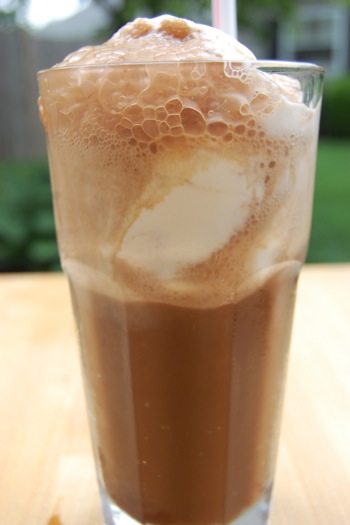
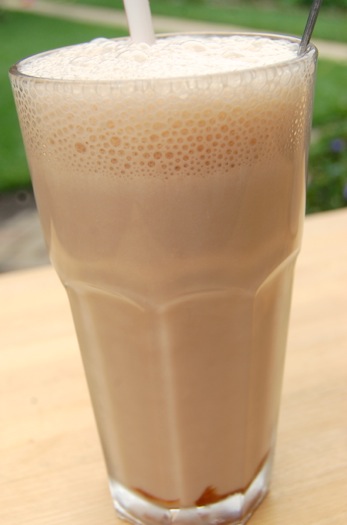
Of course it has no eggs nor any cream, which you know, are expensive. This drink is sometimes known as a “phosphate” since once upon a time soda jerks put dabs of diluted phosphoric acid in them to give a little extra kick. Sound scary? Actually it’s not, though when I went to look for phosphoric acid in the pantry I found I was fresh out. So I made do with the usuals: chocolate syrup, whole milk and soda. You start by adding about two tablespoons of chocolate syrup to a glass of your choice (Fox’s U?Bet syrup is the classic).

READ ON

The Other Carbonator

So where else in the world do we find natural carbonation? If you said “inside a beer bong” you get partial credit, frat boy, for beer is indeed naturally carbonated (points will also be given to all those who said “champagne” and “new wines”). Though I suppose I should say it can be naturally carbonated, for most commercial beers, especially lighter lager-type beers, are artificially carbonated nowadays. It’s what gives them “zing”. So-called “real ales”, many micro-brews, and of course the homemade stuff contains only natural carbonation.

READ ON

So Then What’s Mineral Water?

Another nice question. Thanks reader Joanie! Carbonation doesn’t just happen in seltzer bottles or in bottling plants, it happens in nature too. Wherever water and CO2 have the opportunity to mingle, you’ll get both dissolved carbon dioxide and carbonic acid. Most commonly that opportunity comes when underground pockets of volcanically-produced carbon dioxide gas come in contact with underground springs. Provided there’s enough sustained pressure to keep the CO2 from escaping into cracks in the earth, naturally-fizzy water will sometimes bubble up to the surface.

Carbonation can happen in other ways too. If you ever took advanced high school and/or college-level chemistry, you may recall an experiment whereby your instructor dribbled sulfuric acid onto a piece of limestone. The result is a prodigious amount of CO2. Something very similar (if not that very thing) can happen in nature, whereby atmospheric water vapor can come into contact with CO2 to form carbonic acid. When that water falls to earth as weak acid rain, it can enter the water table, come into contact with limestone and bingo: a carbonated spring.

READ ON
Blueberry Picking!

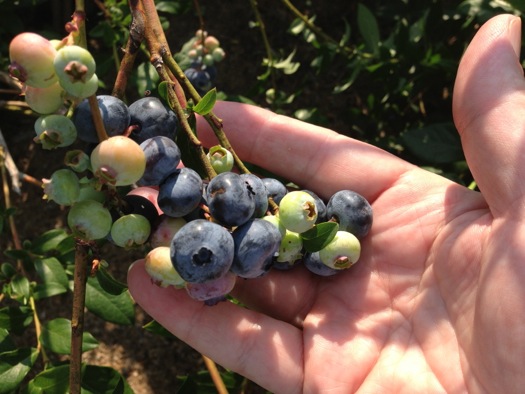
The Pastry clan took the early morning off to go pick blueberries, and what condition that orchard was in! Seemed like every time I turned over a few leaves a sight like the one above greeted me. The berries were so thick on the branches that the bushes were literally falling over from the weight:

READ ON