What is an “Extraction Rate”?

And how does that impact the “whiteness” of the flour? That’s what reader Leslie is curious about today. Leslie, it’s a good question. Indeed I’ve received quite a few technical questions about flour since Friday’s post on white bread. My thinking is that I’ll put together a few posts on flour and make a “flour primer” out of them for the ingredients section, since I don’t really have one of those yet.

So then, to answer. The “extraction rate” of a flour is a good indicator of its softness and whiteness, as it measures how much of the total wheat berry the flour contains. The higher the extraction rate, the more of the bran, germ and tougher outer layers of endosperm the flour has in it. A whole wheat flour is by definition 100% extraction, since it contains all the parts of the wheat berry.

READ ON
On Wheat

The majority of the flour we consume is made from a single species of wheat: Triticum aestivum, also called “bread wheat” or “common wheat”. It’s a species that’s been cultivated for hundreds of years, and like all crops that have been widely grown over long periods, different forms of it have evolved and/or been created over time. Nowadays we grow many different types of T. aestivum, all with different properties.

In America our most common wheats are Hard Red Spring Wheat, Hard Red Winter Wheat, Soft Red Wheat, Hard White Wheat and Soft White Wheat. All are used, sometimes alone but usually in combination, to make the flours we find on grocery store shelves. Of the varieties, the hard wheats make up about three quarters of the annual harvest in the US, soft wheats about 20%, and oddballs like club wheat and durum (both of which are different species of wheat, and are used for cake flour and pasta respectively) make up the rest.

READ ON

Let’s Talk Flour

What is an extraction rate? And how does that impact the “whiteness” of a flour? That’s what reader Leslie is curious about today. Leslie, it’s a good question. Indeed I’ve received quite a few technical questions about flour since Friday’s post on white bread. My thinking is that I’ll answer that questions but also put together a few posts on flour and make a “flour primer” out of them for the ingredients section, since I don’t really have one of those yet. So then…let’s go!

READ ON

In Praise of White Bread

Joe, I don’t like white bread. Yes you do. If you like bread, you like white bread. You might not like it when it’s pre-sliced and sold in plastic bags at the supermarket, but you like it in other shapes and circumstances, I’ll bet you money. If you like baguettes, focaccia, pita bread, fougasse, bagels, brioche, flour tortillas, naan, bialys, pretzels, pizza, pancakes, matzoh, ciabatta, sourdough bread, English muffins, olive bread, chapati, challah, lavash, breadsticks or dinners rolls, you like white bread. In fact if you prefer wheat or rye I’d still argue that you like white bread, because if that loaf is at all light and fluffy, it’s probably made with a least 50% white flour.

READ ON

Making Pain de Mie

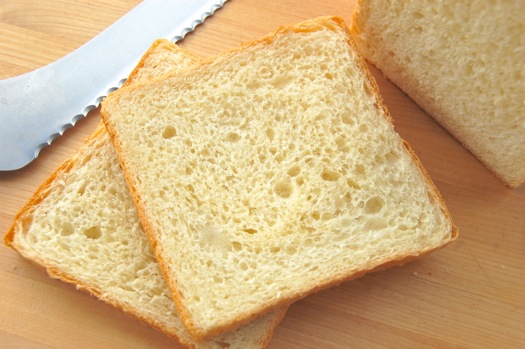
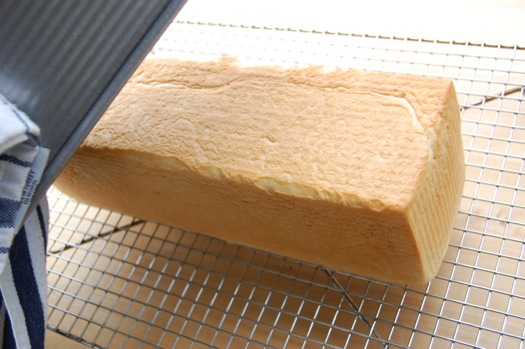
White sandwich bread, also called a “Pullman loaf” or pain de mie, is about as simple and easy as homemade bread gets, especially if you have a Pullman pan, since it eliminates the need to shape and top your loaf. The Pullman pan delivers exactly what it’s designed to deliver: a loaf that is crustless, tight-crumbed, semi-bland and perfectly square. In other words a specialty bread that’s superior for sandwiches, toast, canapés, bread pudding, French toast, the list goes on.

READ ON

Slice of History

Making one’s own sandwich bread really puts a person in touch with early 20th century living. What I mean by that is that one must cut one’s own bread, an act that we Americans haven’t had to perform since 1930. That was the year that Wonder Bread debuted sliced bread on a national scale. White bread officially became a “convenience food” and established itself as a staple of the American diet.

Which is not to say that Americans didn’t eat bread before the automatic bread slicer was invented, they just ate less of it, partly because they had to go to the trouble of slicing it by hand. Who knew that slicing was such an ordeal? Actually I know who: Otto Rohwedder. He was the inventor who understood that by eliminating the step of hand slicing he could bring bread — and commercial baking in general — to an entirely new level.

READ ON

Making Cannelés

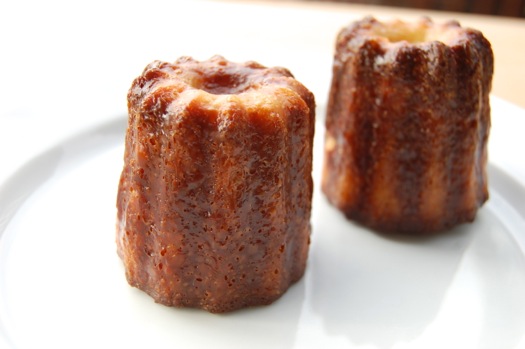
You often hear it said that cannelés are small, eggy “cakes”. Don’t you believe it. Cannelés are custards (with candy-like crusts) and need to be treated as such. I know what you’re thinking: Joe, what kind of custard gets baked at 525 degrees Fahrenheit? That answer is a HIGH HEAT custard, wise guy, and just like a low-heat custard, precautions must be taken to prevent a cannelé from absorbing too much heat too quickly, lest it form lots of bubbles, expand and ultimately break into a grainy, syrupy blob. I’ll explain on the way. Let’s get moving!

READ ON