Really, REALLY Bad Acid

Now I know there are certain types of readers out there — mostly musicians — who rather enjoy the thought of a dose of LSD with their morning toast. But let’s be clear here: ergot-derived lysergic acid is a far cry from the synthesized, purified LSD that Jimi Hendrix sprinkled on his corn flakes. What we’re talking about is an unrefined chemical, one that is mixed with a variety of other toxins, the cumulative effect of which is a disease known as ergotism.

Ergotism comes in two types. There’s convulsive ergotism, a nervous disorder in which sufferers can be subjected to anything from muscle spasms and hallucinations to violent contortions, trembling, shaking, vomiting, mania and psychosis. However ergot can also cause constriction of the blood vessels which leads to a second condition known as gangrenous ergotism. In this, blood flow is cut off to the extremities, causing infections, hideous burning sensations and gangrene (with all its associated losses of fingers, toes and limbs). Not the way even the most committed stoner would want to spend his weekend.

READ ON
Rye: Quite Possibly the World’s Most Dangerous Grain

Why? Because of its high susceptibility to infection by a fungus by the name of Claviceps purpurea, otherwise known as ergot. It might not sound terribly dangerous, but trust me, ergot is no ordinary fungus. It does a whole lot more than cause unsightly yellow toenails. Ergot is thought to be have caused the deaths of thousands — maybe hundreds of thousands — of people over the course of Western history, laid waste to entire societies and caused the fall of kingdoms. No small feat for a spore.

READ ON

Wet Starters, Dry Starters

Reader Kevin had a fascinating question. He writes:

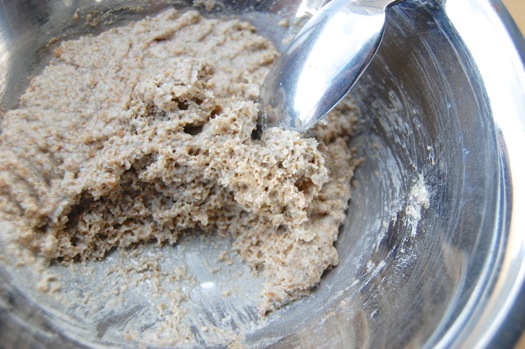
Your rye starter is a little drier that some I’ve seen. Is there are reason why some starter formulas have more or less water? Does it change the flavor?

Indeed Kevin there are some bread bakers who believe that the wetness of a starter changes its flavor. There’s at least a theoretical reason to believe that might be true: some types of flavor-giving bacteria and/or yeasts thrive in wetter environments, some in drier ones. Changing the moisture level in a starter could indeed tip the balance of power in the starter bowl, causing one population to thrive and another to diminish.

READ ON

Embrace The Goo

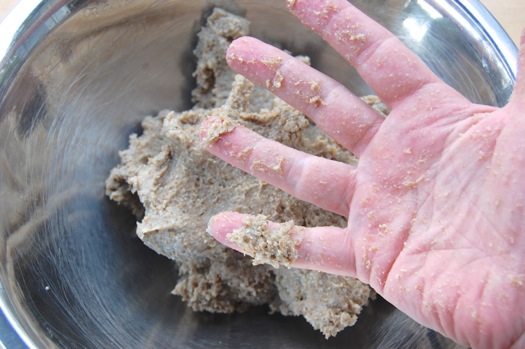
A couple of astute readers out there noticed something about the black bread (pumpernickel) recipe. Specifically that after the initial “soaking” step, no more liquid is added. Can that be right? Indeed it is, and for that you can thank the goo. The pentosan gums, in other words.

READ ON

Dark Matter

Pumpernickel is deep, dense stuff. Over 300% as dense as a sturdy white loaf. This is due to certain botanical differences between rye and wheat. The gluten in wheat is composed of two types of proteins: gliaden and glutenin. Rye gluten is made up of gliaden and glutelin. Unlike glutenin molecules which readily form strong end-to-end bonds, glutelin molecules form only very weak bonds. The upshot of that is that rye proteins have a hard time forming the nice bubble-holding networks that we take for granted with wheat . All the active enzymes don’t help either (see below), since they pre-digest the bread’s starch structure as it rises.

READ ON

What makes rye flour so great for bread starters?

It’s because it comes pre-contaminated, reader Glen. Rye is odd stuff as cereal grains go. So odd in fact that it wasn’t widely cultivated until about 400 A.D., many thousands of years after wheat was first domesticated. The reason, probably, was because rye didn’t (doesn’t) make especially good bread, even though it’s a very close cousin of wheat.

Rye has other virtues, however. It grows well in poor soil. It has big thick roots which help it resist drought. It can withstand temperatures that would kill most other cereal grains, it’ll even stay alive when it’s covered with snow. That’s a handy thing, and indeed many North American farmers like to plant rye in the fall after other crops have been harvested, because a covering of rye helps prevent soil erosion and compaction in the off-season.

READ ON

How to Make Rye Starter

A rye starter is basically the same thing as a white or whole wheat starter: a fermented mass of wet flour, only with rye flour as a base instead of some other type. Rye flours are quick to ferment for reasons that will be discussed later this week, meaning you can make one in a bout half the time of a white wheat starter: about three days. All you need to do is mix maybe an ounce of rye flour with an ounce of water, stir it and let it sit out overnight. The next day add two ounces of rye flour and two ounces of water and again let it sit out overnight. The next day add four ounces of rye flour and four ounces of water…and you should have a ready starter about four hours later. Bingo.

READ ON

Farting Nick

Sure, it’s fun to eat pumpernickel, but it’s even more fun to say it: pumpernickel. It sounds almost crass. And in fact it is. The word “pumpernickel”, most linguists agree, is derived from the Westphalian word for the state of flatulence, “pumpen”, and a pseudonymous term for the Devil: “Old Nick” or “Nickel”. Put the two together and the result is a word that pretty much describes the aftereffects of a bread made from poorly milled, whole grain rye: devil’s farts. What causes that? Well rye is chockablock with sugars that are indigestible to us, however not to the flora that live in our guts. As these microbes consume the bran and other seed parts when they hit our digestive systems, the result is gas.

READ ON

Two days????

Yes, all you legions who’ve written in in shock, this black bread does indeed need to rest for a full two days before you slice and eat it. Why? It’s because a black pumpernickel like I’m making this week has no white flour in it, just rye flour, and rye creates a very different structure that’s not based on gluten so much as jelly-like pentosan gum. I’ll be talking all about it as the week progresses. But let’s just say for now that if you try to slice all-rye black bread right from the oven it crumbles. On the upside, this type of bread takes a very long time to stale, so the wait has no averse consequences from a texture standpoint. More on this soon.

READ ON

What does it mean to “build” a loaf in “stages”?

Reader Richard, I’d be happy to tell you. Imagine yourself as a peasant living somewhere in Europe anytime before, let’s say, World War II. Bread is a staple of your family’s meager diet, but being a laborer you live in a one-room hut somewhere on or near the land you work. You have no oven, no kitchen to speak of either. You bake your bread off-site somewhere in some sort of communal oven apparatus run by the owners of the estate that employs you.

READ ON