All In the Name of Flavor
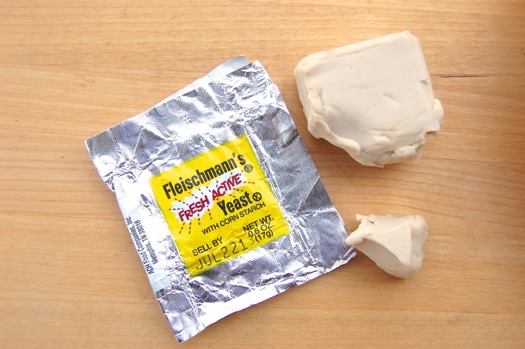
Reader Lou asks, since he lives on the East Coast and has never had any luck making a strong-tasting starter, if I have any suggestions for getting more yeasty and/or bacterial flavor into home-baked bread. The first thing I’d suggest, Lou, is investigating some of those sourdough bread flavorings that you can buy over at King Arthur Flour. They contain various acids in powdered form, plus other natural x, y’s and z’s that give bread a more robust taste.

READ ON
What About San Francisco Sourdough?

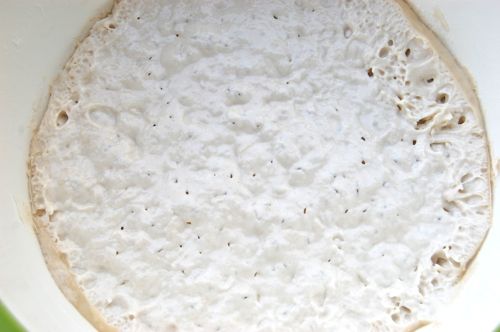
So asks reader Rainey, who points out very rightly that San Francisco sourdoughs use flour from Kansas and other places, yet they have very distinctive flavor profiles. That’s an excellent question. The reason San Francisco sourdough breads taste the way they do isn’t a result of the yeast so much as it is the lactic acid bacteria that thrive in that area. All starters are tag teams of various yeasts, which consume the simplest sugars in the flour slurry (glucose and fructose), and bacteria which generally consume the more complex sugars (like maltose). The yeast are primarily responsible for the CO2 and alcohol in the dough, and the bacteria — as their name implies — the flavor-giving acid.

READ ON

First Attempt

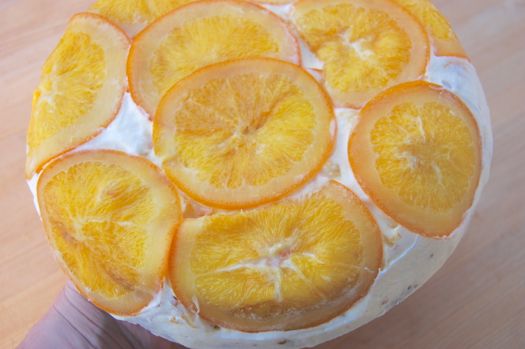
Meh. Not terrible, not great. I think I can do better. There were several problems here. First I was trying to make it in a deep pie plate instead of an aluminum tin like Lenôtre does. The upshot of that was that I needed to apply a longer shot of heat to get the cake to loosen enough to un-mold. In the sustained warmth some of the diplomat cream on the surface liquified and turned runny. So much for that variation, which is a shame since more people have pie plates than old-school foil cake pans.

READ ON

Let it Snow

Things have slowed down a bit here in pastry land since the first of the snows hit on Thursday. A mere four inches sent Louisville reeling, but gave the girls their first taste of sledding and snowball fighting in years. Mrs. Pastry and I certainly aren’t impervious to fun, so we’ve been along for the […]

READ ON

Th Kitchen Yeast Myth

Lots and lots of preferment and starter questions these days as industrious home bakers gear up to make Christmas panettone, stollen and other festive breads. One question keeps recurring and it is: what’s the best way to encourage the unique wild yeasts in my kitchen to grow into a starter? The answer, unfortunately, is that there really is no practical way to culture the wild yeasts that occur in your home.

There’s a pervasive myth out there — and I don’t know where it started or who started it — that homemade starters are local yeast capture devices. Which is to say, that home starters grow because wild yeasts in the kitchen invade the flour slurry and start growing there. In actual fact, home-grow starters grow because the yeast that’s already in the flour when you buy it starts to multiply and thrive.

READ ON

America’s (Formerly) Favorite Drink

Reader Iñigo writes to ask when it was that Americans stopped drinking rum and started drinking corn whiskey instead. That’s a great question and one I’m not totally sure I can answer. For the fact is that Americans never completely stopped drinking rum. Certainly they drank a lot less of it after the American Revolution, as that war largely ended a once vibrant trade between New England and the Caribbean, whereby the Colonies supplied plantation owners with necessities like building materials and food for slaves and in return got sugar and especially molasses for rum-making. Boston was once the rum distilling capital of North America, don’t you know!

READ ON

Speaking of Whiskey…

Reader Paulie wants to know how Kentucky got to be so famous for it, and if it’s true that bourbon is named for a county in Kentucky where whiskey can’t actually be sold. Paulie, let me first say I love your name. It takes me back home to Chicago. Hey yo Paulie! How you doin’?

I’ll take the second part first, as they use to say on the old game shows. There is a Bourbon County, Kentucky. It’s in the northeastern part of the State. A popular myth is that all whiskey that carries the name “bourbon” must be made there for legal reasons, but that the county is — oh irony of ironies! — dry. None of that is true. There are no commercial distilleries there and never have been. Bourbon whiskey can be made anywhere (inside or outside of Kentucky) as long as it meets certain production requirements, and it is definitely legal to buy and consume liquor in Bourbon County, Kentucky.

READ ON

Dang, it’s getting chilly.

Yes, that’s what we’re all saying here in Middle America as a deep freeze sets in. It also happens to be what Italian orange tree cultivators said to one another back in the 1500’s round about November. Most of them were wealthy hobbyists who kept live citrus trees around for decorative purposes. Even the mild winters if Italy were too much for their delicate orange and lemon trees, until one day in 1545 some enterprising chaps over in Padua decided to put up a small heated structure solely for the purpose of keeping orange plants warm during the winter. They called it an “orangery” and before long everyone who was anyone in Europe was building one.

READ ON

The Great Kentucky Bourbon Robbery

Speaking of cornering global markets, you haven’t mentioned the great bourbon heist in your state. What do you know about it?

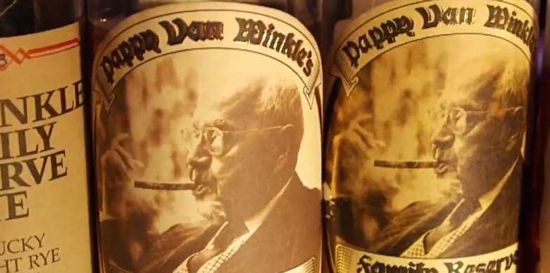
So writes reader Linda. Linda, the reason I haven’t talked about it is because I’ve been mostly weeping quietly to myself. For those of you who haven’t heard about the theft, it happened in mid-October. Some $26,000 worth of bourbon whiskey was stolen from the Buffalo Trace distillery over near Frankfort. But then it wasn’t just any bourbon whiskey, it was Pappy Van Winkle 20-year-old, one of the most coveted bourbons in the Commonwealth. As a rule it isn’t easy to find Van Winkle products outside of Kentucky. I’d never heard of the stuff until I moved here, and was delighted to find that a nearby liquor store/sandwich shop had what you might call a “special relationship” with the master distiller there. They always had a few bottles kicking around in the back if you know who to ask.

READ ON

The Bitter and the Sweet

It wasn’t long after Columbus planted the first few orange groves on Hispaniola that explorers in general started to notice the virtues of freelance citriculture. A few orange seeds scattered here or there at some tropical port of call might make handy food stocks or even cash crops in later years, not to mention scurvy preventatives.

Columbus had Hispaniola, modern-day Haiti and Dominican Republic, covered. Literally. Hernando de Soto brought them to Florida. Later James Cook took them to Australia. George Vancouver, Cook’s shipmate and eventual explorer of the Pacific Northwest, planted the first few orange trees in Hawaii. However as I mentioned below, the earliest explorers planted only bitter oranges, which were the only variety they knew. It wouldn’t be until the mid-1500’s or so that sweeter Chinese oranges would enter Europe and by extension its colonies.

READ ON