Melon Pan Recipe

Melon pan is an oddity (at least for most of us in the U.S.) in that it’s basically a sweet bun surrounded by a cookie crust. Despite what I’d initially heard about melon pan, the cookie dough actually isn’t flavored with melon, but rather vanilla and perhaps a little lemon zest. The first step is […]

READ ON

And now for something completely different.

We spend an awful lot of time in Europe on this blog. Given that, it seems well past time that we took at trip to the other side of the other pond and did something a little different. This week we’ll be making a Japanese delicacy by the name of melon pan. Sure, I scarcely know what it is and have no experience making it. But since when has that ever stopped me? Should be fun!

READ ON

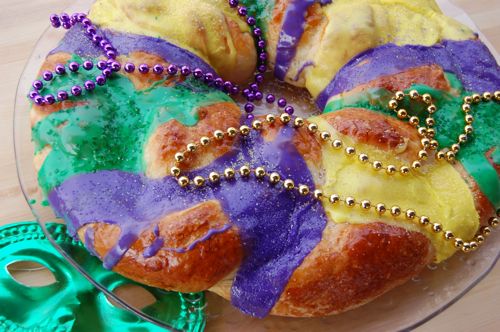
Making New Orleans King Cake

Though certainly not as refined as their continental cousins, king cakes are sweet, garish pleasures. I confess I was surprised at how good this recipe was. Having eaten nothing but dried out mail-order king cakes for years, this one was tender and delicious. The liquid butter yields a slightly denser crumb than a traditional brioche dough would, though I’d still be interested to try this using my standard brioche dough, since I think that would amp up both the color and the flavor (of the interior). Still there’s no beating this recipe for maximum return on a minimum investment of time and effort. Begin by assembling your ingredients. Sift your flour into the bowl of your mixer:

READ ON

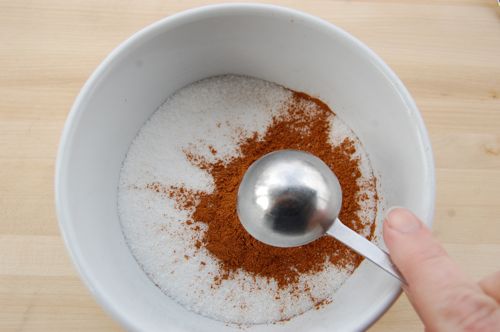
Making Cinnamon Sugar

This is another component that’s frequently called for, but is so easy to make that you don’t see a recipe for it very often. Handy for everything from cinnamon toast to Danishes and king cake, it’s made from what it sounds like: cinnamon and sugar. One tablespoon cinnamon to half a cup of sugar, to be precise. Simply put them together in bowl…

READ ON

Kings of Pastry

I finally caught the movie Kings of Pastry over the weekend, and I can’t say there’s much there to recommend. Which is to say, it’s a movie that teaches you virtually nothing about pastry, the profession of baking or even the ostensible subject of the film, the Meilleurs Ouvriers de France competition. I’m still marveling at how an 80-minute film on pastry managed to miss all that, but it did.

READ ON

On the Purpose of Dry Milk

Reader Vanesa (yes with only one “s”) asks:

Can you tell us more about what the powdered milk is doing in this recipe? Is it for flavor, structure, something else?

Vanesa, I’d be delighted. Flavor is part of the reason for the powdered milk, however it’s mostly there as a tenderizer. Powdered (dry) milk is composed of carbs (lactose), fat and protein. What all those things have in common is that none of them are gluten. Which means that once they’re introduced to the dough, they’ll interfere with the wheat protein networks and keep the crumb from getting too chewy. So I guess you’d say that it’s there to undermine structure more than anything else. Thanks for the question!

READ ON
Spam Spam Spam Spam

A savage band of spammers evidently found the new site late last week. Friday I woke up to well over 1,000 messages waiting for approval. Fully half of them read “Thanks for the awesome posting, it saved MUCH time!”, and were accompanied by links to various porn sites (which I’ll investigate later in order to verify that they are, in fact, the sort of filth that would never be allowed on a blog of this quality). If anyone has any ideas about how I can put a stop to the deluge, please get in touch.

READ ON

Why are king cakes made of brioche?

…asks reader Kendra. That’s a good question, since many other types of kings’ cakes made outside New Orleans (notably galette des rois) are made with flaky dough. To that I’d say that while the brioche ring is the most famous of the New Orleans king cakes, some bakeries do make the French-style flaky galette. In fact I was steered in that direction by more than one local who believed that the French style was both better-tasting and truer to the king cake aesthetic. I’ve already done that one, of course, so my thought was to press on with something new.

READ ON

King Cake History Redux

There’s no question that structurally New Orleans-style king cake is a very different animal than continental kings’ cakes, however the history behind it is nearly identical. I’ve written on the topic here, here and here. What seems true is that the king (or kings’) cake is less about Christianity than it is about parties. Have a look-see if you need a refresher or missed that series of posts entirely.

READ ON

On the Texture of Whipped Cream

Reader Kylie asks:

Why does homemade whipped cream seem to taste lighter or “thinner” than whipped that’s inside pastries that I get from a pastry counter? What are those bakers adding that I’m not?

They might not be adding anything at all, Kylie. Other than a little sugar and vanilla, that is. Oftentimes we home bakers serve whipped cream as soon as we prepare it, which means it’s a little warmer than whipped cream that’s been whipped and then thoroughly refrigerated. Whipped cream that’s chilled has a thicker mouthfeel because the fats have firmed up in the cold.

READ ON