Making Warqa a.k.a. Brik Pastry
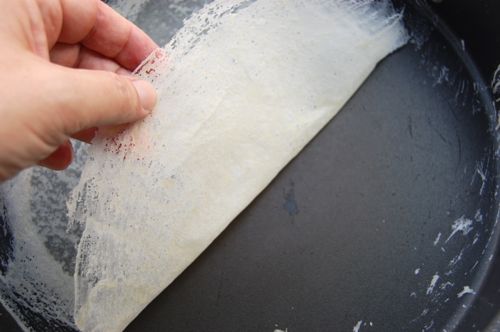
Paper thin Moroccan warqa, used for bastilla and other pastries, is easy once you get the feel of it. The sheets are thinner than phyllo dough, but make a good substitute for those instances when you’re in the mood to impress party guests with an impromptu “You know I make my own pastry, of course!”

Plus it’s fun to do. Provided you have a large, flat pan to paint the batter on, the only thing you need is a broad brush. A new nylon or polyester paint brush from the hardware store will work just fine. Start by assembling your ingredients. Whisking the dry ingredients together…

READ ON
A Dab Will Do You

When it comes to making ultra-thin sheets of pastry, you can go one of two ways. You can roll, which is the Western way, or you can “dab”, which is the Eastern/North African way. For long ago it seems, pastry makers in the East (probably China) realized that rather than trying to compress a dough to a paper-thin thickness, you could instead dab a moistened ball of dough onto a hot surface to make a film. Cooked, that film could then be lifted off, lubricated and used to make pastry.

READ ON

Bastilla (Bisteeya) Recipe

Trying to be as flexible as possible, I’m including equivalents for squab and chicken as well as vegetables (a couple vegetarian readers weighed in on this preemptively).

1 Spanish onion, finely chopped
4 tablespoons butter or vegetable oil
1 teaspoon salt
3/4 teaspoon ground ginger
2 teaspoons ras el hanout (a.k.a. “Moroccan Spice”), optional
2 pigeons (squab) OR about 2 pounds chicken pieces of your choice OR about 1.25 pounds root vegetables of your choice
2 cups chicken or vegetable broth
1 cinnamon stick
Pinch of saffron threads
1/2 cup chopped fresh parsley

READ ON

Pastry with a Thousand Spellings

I mentioned yesterday that there are a lot of spellings for bisteeya. Of all of the ones that are pronounceable in English, it seems to me that “bisteeya” is the most misleading of the bunch. For based on what I’ve been discovering over the last few days, the most common pronunciation of this pastry is something akin to “pastila.” That brings it a lot closer in look and sound to the Spanish word “pastel” which means “cake” in that language. Interestingly, if you look around the Mediterranean you can find more than a few baked items — including many savory pies — that sound quite similar.

READ ON

Polyglot Pie

Combine an Arab sensibility with a European recipe using locally available ingredients, and you pretty much have bisteeya. For indeed under the hood it is very “pie-like” in the old sense of the world: a mixed bag of ingredients inside an edible container, all bound together with egg. Granted it’s not something you see much in Europe these days, but once upon at time at the height of the Age of Pie (i.e. the MIddle Ages), these sorts of preparations were everywhere in Europe and the Mediterranean.

READ ON

Don’t panic!

Pigeon! I don’t know where to get pigeon! Whoa there readers Phil, Tina, Cindy and Kate! I hope you know me a bit better than that. Very very rarely do I pull a Saveur and call for an impossible-to-find ingredient. Mrs. Pastry and I used to love that magazine, by the way, but for as much as we loved it, we also loved to laugh at it. Their ingredients lists were hilarious.

1 cup flour
1 teaspoon salt
1/2 cup chicken stock
1 lb. ox clavicle, smoked

READ ON

A Big Day for Gluten-Free Bakers

I’m constantly fielding requests for gluten-free baking ideas, and constantly letting readers down when I fail to deliver. I don’t get into gluten-free baking much, not because I’m not sympathetic to those who can’t eat gluten, but because there are only so many hours in the day (and I’m under serious pressure to get through the entire classic pastry catalogue before I eventually grow old and die). However I wanted to note that tomorrow marks the release of C4C gluten-free flour. The brainchild of Thomas Keller and culinary researcher Lena Kwak, it’s available from Williams Sonoma starting today.

READ ON

This Week: Bisteeya

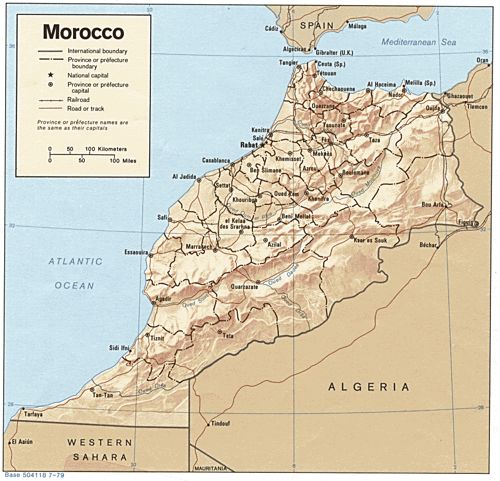
Savory baking, edible birds, pie…when I triangulated those three things on a map, my finger landed squarely on Morocco. Specifically on Morocco’s most famous dish: bisteeya, also spelled b’steeya, bistella, pastilla, pastella, the list goes on. Interestingly, the only time I’ve heard a real Moroccan pronounce the word it sounded like pas-TEL-ah. So I’m all kinds of confused on the name.

However a rose by any other name would still taste like Moroccan pigeon pie. Actually more of a pastry than a pie, it’s a delicate, spicy, savory-sweet combo that works great in either a conventional home or outdoor brick oven (and a lot of you have been bugging me for more brick oven recipes). Let’s make it!

READ ON

On Pie

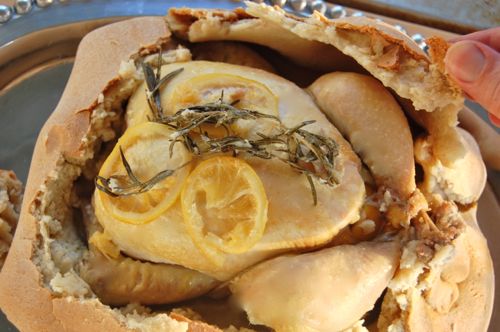
Reader Jonah points out that I failed to make the connection between chicken in a salt crust and Medieval pies, as I promised to do early in the week. Very true, Jonah, thanks for the reminder! My thought was simply this: that once upon time, pie wasn’t so much a “what” as it was a “how.” Which is to say, it was a method, a way to cook and to preserve food. I think of pie as the original Tupperware.

Food historians make the case that pie-eating dates to Greece and Rome. But here it really depends on what you mean by pie. Pies of the ancient world were more akin to modern tarts: open-faced, made for immediate consumption. The Arabs were the next in line to create pie-like baked goods, which is to say pastries with top and bottom crusts. Yet they were not — at least to my way of thinking — true pies. Those evolved in the Middle Ages in Europe.

READ ON