And that should about do it.

Blitz, biscuit, creaming, egg foam, muffin, one-bowl, roll-in, straight dough and whipping. Those are all the mixing methods I can think of, and now they’re all codified under the “Mixing Methods” section of the Baking Basics menu to the left. I think I’ll leave it there unless someone knows of a method I’ve forgotten. Pastry […]

READ ON

The Whipping Method

I think of the whipping method as “European” and I don’t think that’s an inaccurate assessment, since you only tend to come across it when making spongecakes like génoise, joconde, ladyfingers or specialty cakes like rehrücken. I can’t think of any common uses for the whipping method here in the States, except perhaps for flourless chocolate cake. Essentially, the whipping method is how European bakers create very light cake layers in the absence of chemical leaveners.

You need a lot of eggs — plus plenty of sugar, which helps create a thick syrup that keeps the egg foam from collapsing. The neat thing about the whipping method is that it gives lie to the myth that egg foams can only be created with whites. Twaddle. Indeed in most instances where the whipping method is employed you’re whipping either whole eggs or egg yolks plus sugar. Egg whites plus sugar are a rarity in the whipping method universe because, well, then you’d have a meringue, would you not?

READ ON
The Roll-In Method

The “roll-in” method is the description for what you do when you laminate dough for croissants, Danishes and puff pastry. Effectively you’re “rolling” butter into a flour-and-water dough. Personally I think of it as “folding” it in, but there you go. Who am I to argue with decades of established pastry lingo?

There’s no question that laminating seems more like a technique than a “mixing” method, though when you consider that one of the chief aims of mixing is to incorporate fat it all starts to make a little more sense.

READ ON

The “Blitz” or “One Step” Method

This technically isn’t even a method. Rather it’s the opposite of a method. But I made reference to it in the gâteau battu series I did (which seemed to go on for months). The “blitz” method is simply shorthand for putting everything in the mixer bowl at once and turning on the machine. See what I mean about it being a “non-method”? There’s no methodology to it at all.

READ ON

But first a minor detour.

I’ve been getting a lot of flak the last couple of weeks from pastry students who want me to list more mixing methods in the “Baking Basics” section. It must be finals time or something. I’ll admit my Mixing Methods list isn’t exhaustive, though it does contain the five methods that home bakers use the […]

READ ON

Panettone Recipe

That’s “panettone” with two t’s. Profuse apologies to my few — and getting fewer — Italian readers. Panettone has near-sacred status among the Italian-Americans I know. These are people who know how to eat — but who are frequently disappointed by the panettone they find in most stores, both here and in Italy where (they say) mass-produced versions have largely replaced the artisanal kind. Even so, they fear making their own because of the time involved.

It’s true that some panettone recipes have more assembly steps than an Imaginarium Pirate Island Playset (forgive me, Christmas is coming), but between the quick-rise, easy-bake iterations and the slow-rising, multi-day religious ritual versions there is a happy medium. Peter Reinhart strikes it in his masterful book, The Bread Baker’s Apprentice. The recipe is classic Reinhart: starter-based but with a commercial yeast “spike” that delivers the best of both worlds: a voluminous light crumb and a deep, satisfying flavor.

READ ON

Making Crêpes

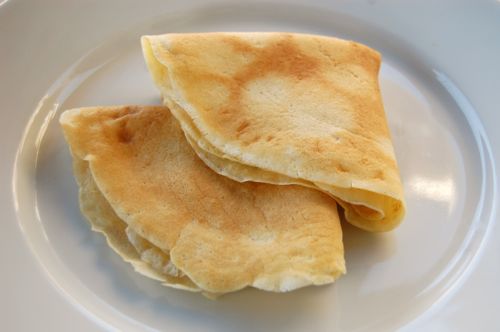
What’s the difference between crêpes, blintzes, blini and just plain ol’ skinny pancakes? Don’t answer that. I don’t want to know. Probably much less than the French, Slavs, Russians or English would ever want to admit.

Ultimately the only difference between all of them is context. Blintzes go with applesauce, blini with caviar, pancakes with sugar and lemon (or syrup) and crêpes…well, with just about anything. For indeed in France a crêpe is a medium…for sweet things, savory things and anything in between. Sort of like sandwich bread, it becomes what it contains.

READ ON

On the Thickness of Caramel

Reader Catherine writes:

Can you tell me how to influence the softness or firmness of homemade caramel? All the best googling I can come up with isn’t producing a satisfying answer.

Typically I make it with a bare minimum of ingredients — dissolving white sugar in water, then boiling until it turns deep amber and adding cream and perhaps a bit of butter, depending on the recipe.

Sometimes it turns out more “pourable” than other times. I need to know how to make sure it will hold its shape (but still be soft), so I get that soft firmness when I need it, and still know

READ ON

Tiny Bubbles

Reader Rick wants to know why air bubbles make crêpes rigid. Rick, it’s as easy as this: think about an air mattress when it’s full of air. You might be able to fold it, but you can’t roll it. That is until you let all the air out…then it rolls up with ease. The tens […]

READ ON